 英语
英语 俄语
俄语
Content
- 1 Bushing vs Coupling: The Direct Answer
- 2 What a Bushing Actually Does
- 3 What a Coupling Actually Does
- 4 Key Differences at a Glance
- 5 When to Choose a Bushing
- 6 When to Choose a Coupling
- 7 Storz Coupling and Quick-Connect Alternatives
- 8 Material and Pressure Rating Considerations
- 9 Installation and Torque Guidelines
- 10 Common Mistakes When Selecting Bushings or Couplings
- 11 Frequently Asked Questions
- 11.1 Is a bushing the same as a reducer?
- 11.2 Can a coupling be used to change pipe size?
- 11.3 Do Storz couplings come in threaded versions?
- 11.4 What causes a threaded bushing to leak after installation?
- 11.5 Are compression couplings as reliable as threaded couplings long term?
- 11.6 How is bushing size written on a part label or order form?
Bushing vs Coupling: The Direct Answer
A bushing reduces or adapts pipe size by fitting a smaller diameter thread or spigot inside a larger female fitting, while a coupling joins two lengths of pipe or hose of the same diameter into one continuous run. If the job is stepping down from a 2 inch line to a 1 inch line, a bushing is the correct part. If the job is extending or repairing a straight run of equal-sized pipe, a coupling is the correct part. Confusing the two is one of the most common ordering mistakes in industrial procurement, and it leads to leaks, thread damage, and pressure loss that show up months after installation.
This article breaks down the mechanical differences, pressure behavior, thread compatibility, and selection logic between bushings and couplings, and also covers quick-connect hardware such as storz coupling systems, which solve a related but different problem: fast, tool-free connection rather than permanent size reduction or extension.
What a Bushing Actually Does
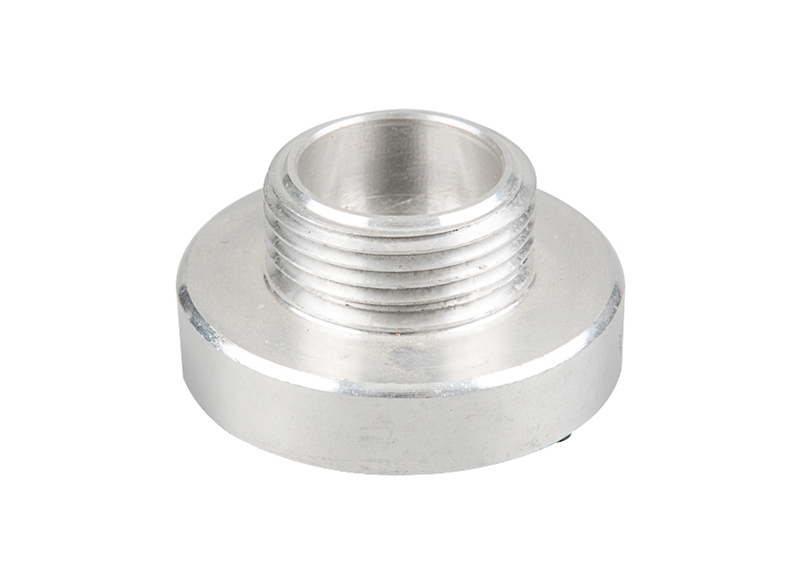
A bushing is a reducing fitting with male threads on the outside and female threads on the inside, sized to two different pipe diameters. It threads into a larger fitting, such as a tee or elbow, and accepts a smaller pipe or nipple on the inside. Bushings are typically classified by their larger outside diameter first and their smaller inside diameter second, for example a 2 inch by 1 inch bushing steps a 2 inch opening down to 1 inch.
Hex Bushings vs Face Bushings
Hex bushings have a hexagonal shoulder that allows a wrench to grip the fitting during installation, which is useful when high torque is needed to seat the threads against a sealant or tape. Face bushings, sometimes called flush bushings, have a flat face with a slot or protruding lug instead of a hex, which keeps the fitting more compact but limits how much torque can be applied without specialized tools.
- Hex bushings suit high-pressure systems where thread engagement must be tight
- Face bushings suit tight enclosures where a hex shoulder would not clear surrounding hardware
- Both types are typically rated to the same pressure class as the base pipe material
What a Coupling Actually Does
A coupling is a short, straight fitting with female threads or slip-fit sockets on both ends, sized identically, used to join two sections of pipe in a straight line. Unlike a bushing, a coupling does not change diameter. It exists purely to extend a run, repair a damaged section, or connect two factory-cut pipe ends that could not otherwise reach a fitting.
Threaded, Slip, and Compression Couplings
Threaded couplings rely on NPT or BSP threads and a sealant such as PTFE tape or pipe dope. Slip couplings, common in PVC and CPVC systems, are solvent-welded and rely on chemical bonding rather than mechanical threads. Compression couplings use a nut and ferrule to grip the pipe wall without threading or welding, which makes them useful for field repairs on metal or poly pipe where cutting new threads is impractical.
| Coupling Type | Typical Material | Installation Method | Best Use Case |
|---|---|---|---|
| Threaded | Steel, brass, malleable iron | Screw and seal with tape or dope | Serviceable connections that need disassembly |
| Slip | PVC, CPVC | Solvent weld, permanent bond | Permanent drainage and irrigation runs |
| Compression | Copper, poly, PEX | Nut and ferrule, no heat or thread | Field repairs and tight access points |
Key Differences at a Glance
Once the physical function is clear, the remaining differences come down to how each fitting behaves under pressure, how it is measured, and where it sits in a piping system. The list below covers the distinctions that matter most when specifying parts for a bill of materials.
- Bushings change pipe diameter; couplings preserve it
- Bushings are almost always threaded on at least one end; couplings can be threaded, slip, or compression
- Bushings introduce a flow restriction at the reduced diameter; couplings do not restrict flow if sized correctly
- Bushings are ordered by two dimensions; couplings are ordered by one
- Bushings are common at fitting-to-pipe transitions; couplings are common mid-run
When to Choose a Bushing
Choose a bushing whenever a system needs to step down from a larger fitting or valve body to a smaller pipe size without replacing the entire fitting. A common example is adapting a 3/4 inch gate valve outlet down to 1/2 inch supply line for a fixture, or reducing a 2 inch pump discharge port to match a 1.5 inch hose barb. Bushings are also used to adapt threaded equipment ports, such as a tank drain or compressor tap, to match whatever hose or pipe size is on hand.
The tradeoff to keep in mind is flow restriction. Every reduction in diameter increases velocity and friction loss at that point, so bushings should not be stacked in series when a single properly sized reducer would do the same job with less turbulence.
When to Choose a Coupling
Choose a coupling when two pipe ends of the same size need to be joined in a straight line, whether that is extending a run to reach a new fixture, repairing a section that was cut for a leak, or connecting factory lengths of pipe during initial installation. Couplings are also the standard part for splicing damaged sections of PVC or copper line without pulling and replacing the entire run.
A repair coupling, sometimes called a slip coupling with no internal stop, is worth stocking separately because it allows the fitting to slide fully onto one pipe end before being centered over the cut, which is not possible with a standard coupling that has an internal ridge at the midpoint.
Storz Coupling and Quick-Connect Alternatives
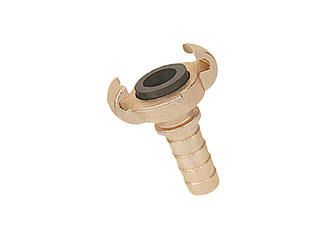
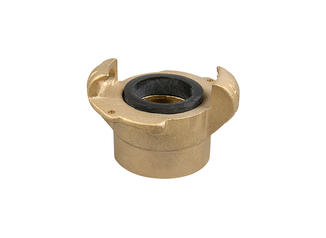
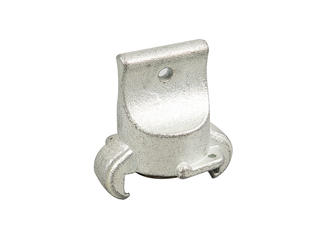
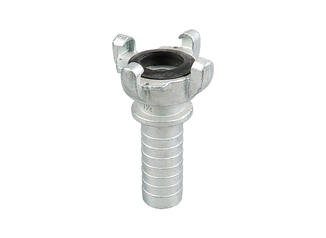
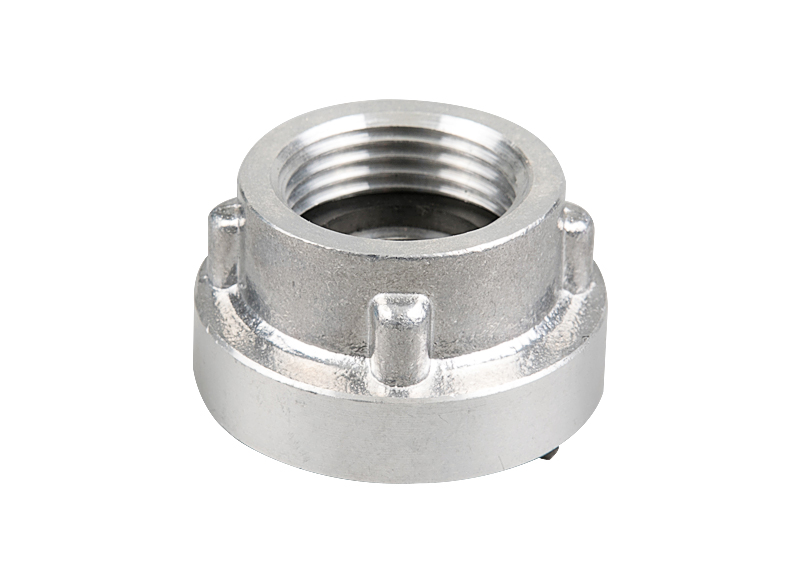
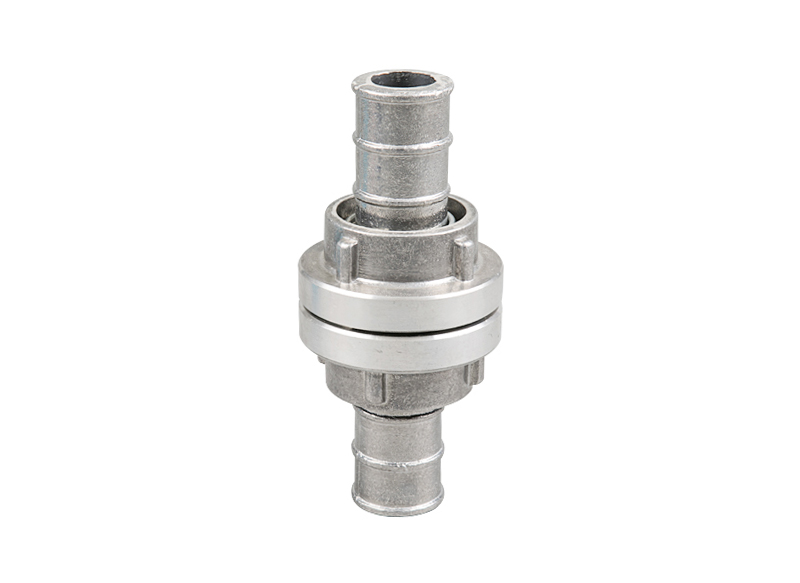
Not every connection problem calls for a threaded bushing or coupling. Fire suppression lines, irrigation systems, and some industrial hose applications rely on storz coupling hardware instead, which uses a symmetrical, sexless design with interlocking lugs that connect and disconnect with a quarter turn and no tools. The design originated in German fire service standards and is now standardized internationally under DIN 14309 and related national fire equipment codes, with common sizes including 1.5 inch, 2.5 inch, 4 inch, and 5 inch for hose and hydrant connections.
Why Storz Fittings Are Not a Bushing or Coupling Substitute
A Storz coupling does not reduce diameter the way a bushing does, and it is not a permanent joint the way a solvent-welded coupling is. It is built for rapid connection and disconnection under field conditions, which makes it standard equipment on fire apparatus, portable pump discharge ports, and some large-diameter irrigation mainlines where crews need to reconfigure hose runs quickly. When a project needs both a size change and a quick-connect function, the correct approach is a Storz adapter that steps from one Storz size to another, paired separately with a threaded bushing if a transition to NPT or BSP threaded pipe is also required.
- Storz fittings connect in roughly one quarter turn without wrenches
- Sexless design means either half can mate with the other, unlike male and female threaded couplings
- Common in fire hose, hydrant, and portable pump applications rather than fixed plumbing runs
Material and Pressure Rating Considerations
Both bushings and couplings must match the pressure class and material of the surrounding system, not just the thread size. A brass bushing threaded into a cast iron fitting can create galvanic corrosion over time in wet environments, and a PVC coupling rated for schedule 40 should not be used on a schedule 80 run where wall thickness and pressure rating differ. Standard NPT taper threads, defined under ANSI/ASME B1.20.1, rely on thread deformation and sealant to achieve a seal, which is why over-tightening a bushing can crack a cast fitting even when the threads appear to engage correctly.
| Material and Schedule | Typical Working Pressure | Common Fitting Style |
|---|---|---|
| PVC Schedule 40 | 150 to 280 psi, size dependent | Slip coupling, threaded bushing |
| PVC Schedule 80 | 210 to 400 psi, size dependent | Threaded or slip coupling and bushing |
| Galvanized Steel | 300 psi and above, size dependent | Threaded hex bushing and coupling |
| Brass | 300 psi and above, size dependent | Threaded hex bushing and coupling |
Installation and Torque Guidelines
Most leaks attributed to a bushing or coupling failure trace back to installation error rather than a defective part. Threaded fittings depend on the correct amount of sealant and the correct number of turns past hand-tight, typically one to two turns for NPT fittings, to achieve a seal without overstressing the fitting body.
Practical Installation Checklist
- Clean and dry threads before applying tape or sealant
- Wrap PTFE tape clockwise when viewed from the pipe end so it does not unwind during installation
- Hand-tighten first, then use a wrench for one to two additional turns, not more
- Support the pipe when applying torque so stress does not transfer to nearby joints
- For solvent-weld couplings, allow full cure time before pressurizing the line
Common Mistakes When Selecting Bushings or Couplings
Procurement and maintenance teams repeat a small set of errors often enough that they are worth listing directly. Avoiding these mistakes prevents callbacks, warranty claims, and repeat orders caused by the wrong part being installed the first time.
- Ordering a coupling when the actual need is a reducer or bushing, resulting in a size mismatch on delivery
- Stacking two or more bushings in series instead of sourcing a single properly sized reducing fitting
- Mixing dissimilar metals between a bushing and its mating fitting without accounting for corrosion risk
- Assuming a Storz adapter can replace a threaded coupling on fixed plumbing, when the two serve different purposes entirely
- Over-tightening face bushings without a hex shoulder, which can crack the fitting or the flush face
Frequently Asked Questions
Is a bushing the same as a reducer?
A bushing and a reducing fitting perform the same basic function of changing pipe diameter, but a bushing threads inside an existing fitting while a standalone reducer typically has its own body with two different end connections, such as a reducing coupling or reducing elbow.
Can a coupling be used to change pipe size?
A standard coupling is designed for equal-diameter connections. If a size change is needed, the correct part is a reducing coupling or a bushing, not a standard coupling forced onto mismatched pipe ends.
Do Storz couplings come in threaded versions?
Yes, Storz to NPT and Storz to BSP adapters are widely available, which allows a quick-connect Storz fitting on one end to transition into a conventional threaded pipe system on the other end.
What causes a threaded bushing to leak after installation?
The most common causes are insufficient sealant, cross-threading during installation, or over-tightening that deforms the threads past the point where they can seal properly against the mating fitting.
Are compression couplings as reliable as threaded couplings long term?
Compression couplings are reliable for their intended use, particularly on copper, poly, and PEX pipe, but they generally have a lower maximum pressure rating than a properly threaded and sealed connection, so system pressure should be checked against the fitting rating before specifying one for a permanent installation.
How is bushing size written on a part label or order form?
Bushing size is written as two dimensions, the larger male thread size followed by the smaller female thread size, such as 1 inch by 1/2 inch, so the fitting can be correctly matched to both the existing opening and the pipe being installed.