 英语
英语 俄语
俄语
Content
- 1 Cam Lock Pipe Fittings: The Direct Answer Before The Details
- 2 Why Cam Lock Couplings Became the Industry Default
- 3 The Six Standard Camlock Part Types Explained
- 4 Choosing a Material: Aluminum, Stainless Steel, Brass, or Polypropylene
- 5 Gasket Compounds and Why the Seal Matters More Than the Body
- 6 Sizing and Pressure Ratings That Actually Matter
- 7 Installing and Sealing a Camlock Joint Correctly
- 8 Storage and Handling Between Uses
- 9 Where Camlock Fittings Are Actually Used
- 10 Maintenance and Common Failure Points
- 11 A Practical Buying Checklist
- 12 Frequently Asked Questions
- 12.1 Are camlock fittings interchangeable between brands?
- 12.2 Can camlock fittings be used for compressed air?
- 12.3 What gasket material should be used for hot fluids?
- 12.4 How often should camlock gaskets be replaced?
- 12.5 Is a locking pin or safety clip necessary on camlock arms?
- 12.6 Can two different materials be mixed on the same hose run, such as an aluminum adapter into a stainless coupler?
- 12.7 Why does a new camlock fitting sometimes leak on first use?
- 12.8 How does altitude or elevation affect camlock performance?
Cam Lock Pipe Fittings: The Direct Answer Before The Details
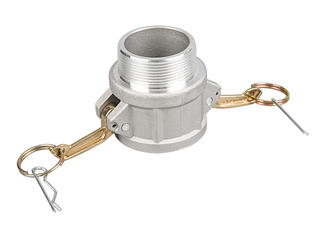
Cam lock pipe fittings, often shortened to camlock fittings, are quick-connect couplings that let a hose or pipe be attached and detached in seconds without wrenches, threading, or tools. A male adapter with two lever arms locks into a female coupler by pressing the arms down, and a rubber gasket inside the coupler seals the joint against leakage. This single mechanism explains why camlock fittings dominate applications where hoses are swapped often, such as tanker truck loading, irrigation lines, chemical transfer, and food-grade liquid handling.
The rest of this article works through the part types, material choices, sizing logic, sealing practice, cost economics, and the situations where a camlock fitting is the right call versus where a threaded or flanged connection still wins. Real numbers are used wherever they help a buyer or engineer make a faster decision, and later sections cover storage, handling, and long-term budgeting so the guide is useful past the first purchase.
Anyone comparing a camlock fitting against a traditional threaded coupling for the first time usually asks the same question: does the speed of a cam-lever connection come at the cost of reliability. The short answer is no, provided the part is sized correctly for the pressure and fluid in question and the gasket is inspected on a routine basis, both of which are covered in detail further down this page.
Why Cam Lock Couplings Became the Industry Default
Quick-connect couplings existed in various forms before the cam-lever design became standard, including twist-lock and bayonet-style couplers. The cam-lever geometry won out for one practical reason: it converts a small hand motion into a large mechanical clamping force through leverage, so a single operator can seal a joint under load without a tool, even while wearing thick work gloves.
This matters most in mobile and outdoor settings. A tanker driver connecting a discharge hose in the rain, a field irrigation technician moving a coupling every few minutes across a large plot, or a fire crew assembling a supply line under time pressure all benefit from a connection that seals reliably in under five seconds. Threaded connections, by comparison, typically take thirty seconds to several minutes depending on thread pitch and the number of turns needed, and they degrade faster when repeatedly cross-threaded by hand in a hurry.
Cam Lock Versus Threaded Connections
Threaded pipe joints remain the right choice for permanent, static installations where the connection is made once and left in place for years, since threads distribute load around the full circumference of the joint and tolerate very high pressures when properly torqued. Camlock fittings are built for the opposite scenario: repeated connection cycles where speed and operator convenience outweigh the marginal pressure advantage of a threaded joint.
Cam Lock Versus Flanged Connections
Flanged joints, bolted together with a gasket between two flat faces, handle the highest pressures and largest bore sizes reliably, which is why they dominate fixed plant piping. A camlock fitting trades some of that pressure ceiling for a connection that can be made and broken hundreds of times without replacing bolts, gaskets, or requiring a wrench and torque sequence each time.
The Six Standard Camlock Part Types Explained
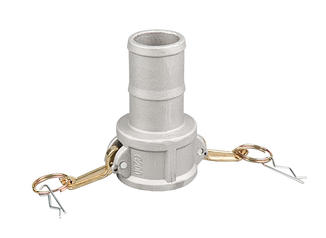
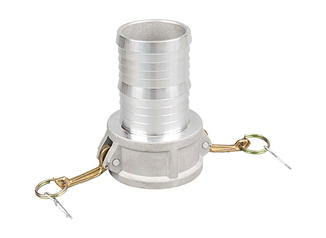
Every camlock fitting on the market is built around six standardized part configurations, labeled Part A through Part F. Knowing the letter tells you instantly what the fitting connects to and how it seals, which is the fastest way to avoid ordering the wrong hardware.
| Part Letter | Configuration | Common Use |
|---|---|---|
| Part A | Female coupler x male threaded end | Connecting a hose end to a threaded pipe outlet |
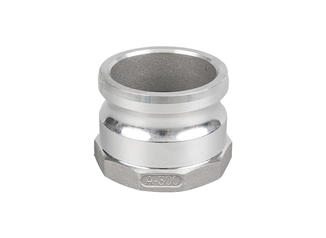
| Part B | Male adapter x female threaded end | Attaching a hose to a threaded pump or tank inlet |
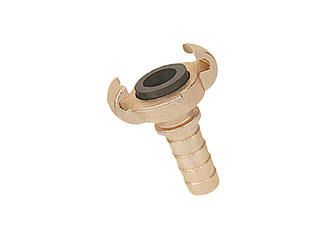
| Part C | Female coupler x hose shank | Barbed end for clamping directly onto hose |
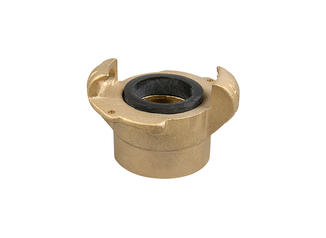
| Part D | Female coupler x female threaded end | Bulkhead or panel-mounted transfer point |
| Part E | Male adapter x hose shank | Barbed male end for the opposite hose run |
| Part F | Male adapter x male threaded end | Joining two threaded pipe sections through a quick disconnect |
Two further variants, Dust Cap (DC) and Dust Plug (DP), are not connection points at all. They exist purely to keep grit, insects, and moisture out of an idle coupler or adapter between transfers, which matters most in dusty agricultural yards and outdoor tank farms. A dust cap fits over an exposed female coupler while a dust plug fits into an exposed male adapter, and both should be used any time a fitting is disconnected and left sitting for more than a few minutes in an outdoor or dusty environment.
How to Read a Camlock Part Number in a Catalog
A typical catalog listing reads something like Part B, 2 inch, aluminum, Buna-N gasket. Reading left to right: the letter tells you the configuration described in the table above, the number is the nominal bore size, the material describes the body construction, and the gasket compound tells you which fluids and temperatures the seal is rated for. Missing any one of these four details when placing an order is the single most common cause of receiving the wrong part.
Choosing a Material: Aluminum, Stainless Steel, Brass, or Polypropylene
Aluminum
The lightest and lowest-cost option, aluminum camlock fittings suit water transfer, dry bulk powders, and general irrigation. A 2-inch aluminum coupler typically weighs under 250 grams, which keeps hose assemblies manageable for one person on a job site. Aluminum is not the right choice for saltwater, strong acids, or caustic cleaning chemicals since it corrodes under sustained exposure, and repeated exposure to alkaline cleaning solutions above roughly pH 10 will visibly pit an aluminum body within a matter of months.
Stainless Steel (304 / 316)
316 stainless resists chlorides, mild acids, and repeated steam cleaning, which is why it shows up in dairy processing, brewery transfer lines, and marine bilge systems. It costs roughly three to four times more than an equivalent aluminum part, but the service life in corrosive duty can be five to ten times longer, so the lifetime cost often favors stainless once a line runs daily. 304 stainless is a lower-cost alternative to 316 and performs well in most general chemical and food contexts, but 316 is the safer pick anywhere chlorides or higher acid concentrations are involved.
Brass
Brass camlock fittings hold up well against fuel, oil, and general petroleum products, and the material machines to tight tolerances, giving a slightly better seal fit on worn hoses. It is heavier than aluminum and carries a moderate price point between aluminum and stainless. Brass is not recommended for ammonia-based fluids, since ammonia attacks copper alloys and can cause stress cracking in the fitting body over time.
Polypropylene
Polypropylene is the standard choice for aggressive chemicals such as concentrated acids and alkalis where metal parts would corrode within weeks. It is lighter than brass and stainless, resists a wide chemical range, but has a lower working pressure ceiling and a narrower usable temperature range, generally topping out well below what a metal fitting can take. Because it is non-conductive, polypropylene is also the preferred choice around static-sensitive fluid transfer where a metal body could create an ignition risk.
Side-by-Side Cost and Service Life Comparison
| Material | Relative Cost Index | Typical Weight (2 inch) | Best Fit Fluids |
|---|---|---|---|
| Aluminum | 1x (baseline) | Approx. 230 g | Water, dry solids, mild irrigation chemicals |
| Brass | 2x to 2.5x | Approx. 620 g | Fuel, oil, general petroleum products |
| 316 Stainless Steel | 3x to 4x | Approx. 540 g | Food, beverage, chlorides, steam cleaning |
| Polypropylene | 1.2x to 1.5x | Approx. 160 g | Strong acids, alkalis, static-sensitive fluids |
Gasket Compounds and Why the Seal Matters More Than the Body
The fitting body determines mechanical strength, but the gasket determines whether the joint actually holds a seal against the specific fluid running through it. A stainless steel coupler with the wrong gasket compound will still leak, so gasket selection deserves the same attention as body material.
Buna-N (Nitrile)
Buna-N is the default gasket compound supplied with most stock camlock fittings and performs well with water, mild chemicals, and petroleum-based fluids at moderate temperatures. It is a reasonable general-purpose choice but is not the best option for strong acids or high-temperature steam service.
Viton (FKM)
Viton gaskets tolerate higher temperatures and a broader range of aggressive chemicals, including many solvents and fuels that would swell or degrade a Buna-N gasket over time. The tradeoff is a noticeably higher unit cost, which is justified once the fluid or temperature exceeds what Buna-N reliably handles.
EPDM
EPDM gaskets hold up well against water-based chemicals, steam, and many cleaning agents, but they degrade quickly in contact with petroleum oils and fuels, so the compound choice depends entirely on the fluid family being transferred, not on temperature alone.
Silicone
Silicone gaskets are common in food and beverage service because the compound is inert with most food-grade fluids and tolerates a wide temperature swing without hardening. It is a soft material, however, so it wears faster under abrasive slurries compared to Viton or EPDM.
A practical rule that avoids most gasket-related failures: identify the fluid family first, then the temperature range, and only then select the gasket compound rated for both. Ordering a fitting on body material alone while ignoring the gasket compound is the most frequent avoidable mistake in camlock specification.
Sizing and Pressure Ratings That Actually Matter
Camlock fittings are sized by nominal bore diameter, most commonly from 0.75 inch up through 6 inches, matching standard hose and pipe sizing so no reducer is needed in most layouts. The number stamped on the part is the bore size, not the outer coupling diameter, so always match this figure to the hose ID rather than the outer sleeve.
Working pressure drops as bore size increases, since a larger sealing area under the same cam-arm clamping force sees more total load. A typical aluminum coupler:
- 0.75 to 1 inch bore: rated around 150 to 250 psi working pressure
- 1.5 to 2 inch bore: rated around 100 to 150 psi working pressure
- 3 to 4 inch bore: rated around 75 to 100 psi working pressure
- 6 inch bore: rated around 50 to 75 psi working pressure
Stainless and brass parts generally run 20 to 40 percent higher than the aluminum figures above at the same bore size because the metal wall and cam-arm hinge points tolerate more stress before deforming. Always check the burst pressure separately from the working pressure; a safe design keeps working pressure at or below one-quarter of the stamped burst rating.
Matching Bore Size to Flow Rate
Undersizing a camlock fitting relative to the hose it is attached to creates a flow restriction that raises system pressure upstream and can strain the pump. As a rough planning figure, a 2 inch fitting comfortably passes flow in the range of 150 to 200 gallons per minute at typical transfer velocities, while a 3 inch fitting comfortably passes 300 to 400 gallons per minute under the same velocity assumptions. Matching the fitting bore to the hose ID, rather than defaulting to whatever size is in stock, avoids both excess pressure drop and unnecessary turbulence at the joint.
Temperature Effects on Working Pressure
Every pressure rating on a camlock fitting is stated at a reference temperature, usually room temperature. As operating temperature rises, both the gasket and, to a lesser extent, the fitting body lose some mechanical strength, so the safe working pressure should be de-rated at elevated temperature rather than assumed constant. This is particularly relevant for polypropylene fittings, where the pressure ceiling can drop noticeably once fluid temperature climbs into the upper end of the material's usable range.
Installing and Sealing a Camlock Joint Correctly
- Inspect the gasket inside the female coupler before every connection; a cracked, flattened, or missing gasket is the single most common cause of camlock leaks in the field.
- Wipe both sealing faces clean of grit, since a trapped particle under the gasket creates a pinhole leak that is easy to miss at low flow rates.
- Insert the male adapter fully into the female coupler before closing the arms; a partial insertion is the second leading cause of blow-off under pressure surges.
- Press both cam arms down until they click past center; a single-arm lock leaves the joint able to rock loose under vibration from pumps or vehicle movement.
- For hose shank ends (Part C and Part E), use two hose clamps rather than one, offset by roughly a quarter turn, which spreads clamping load more evenly around the barb.
- Support long or heavy hose runs near the coupling point rather than letting the fitting itself bear the full weight of the hose, since sustained side-load on the cam arms accelerates hinge wear.
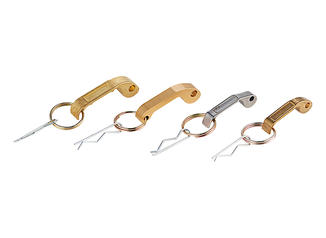
- On overhead or vibration-prone installations, add a safety clip or locking pin through the cam arms so the joint cannot be knocked open accidentally during operation.
A quick pull-test after locking, tugging the hose firmly in the direction of expected flow, catches the majority of improperly seated joints before product is running through the line. It is also good practice to run a short low-pressure test through a newly assembled line before bringing it up to full operating pressure, since this surfaces any seating problems while the consequences of a leak are still minor.
Common Installation Mistakes to Avoid
The most frequent mistake is mixing gasket compounds across a multi-joint hose run, for example using a Buna-N gasket on one coupling and an EPDM gasket on the next, which leaves one joint under-rated for the fluid even though the rest of the line is correctly specified. A second common mistake is reusing a gasket that has taken a permanent compression set from a previous installation instead of replacing it, which almost always results in a slow leak that only becomes obvious once the line is under full pressure.
Storage and Handling Between Uses
Camlock fittings that sit disconnected in an outdoor yard between jobs are exposed to more wear from grit and moisture than fittings that stay connected in a fixed line. Fitting a dust cap or dust plug over any disconnected coupling or adapter, even for a short break between transfers, keeps the sealing face free of the debris that causes premature gasket wear.
For fittings stored longer term, keeping the cam arms in the open position rather than clamped shut on an empty coupler avoids putting a lasting compression set into the gasket. A dry, temperature-stable storage area extends gasket life meaningfully compared with fittings left outdoors where UV exposure and temperature swings accelerate rubber aging.
Handling Fittings in Cold Weather
Rubber gaskets stiffen in cold conditions, and a stiff gasket is more prone to cracking when the cam arms are forced closed quickly. In cold-weather operations, warming a fitting slightly before connection, or simply working the cam arms slowly rather than snapping them shut, reduces the chance of gasket damage during the coldest months of the year.
Where Camlock Fittings Are Actually Used
The common thread across every one of these settings is frequency of connect-and-disconnect cycles. A camlock fitting rated for repeated field use can typically handle several thousand connect cycles before the cam-arm hinge or gasket needs replacement, far outperforming a threaded joint that wears its threads down with every wrench-tightened cycle.
Agricultural Use in Detail
On a working farm, camlock fittings move between irrigation risers, tanker fill points, and chemical mixing tanks throughout a single day, often reconnected dozens of times across a growing season. Aluminum bodies dominate here because the fluids are mostly water and mild fertilizer solutions, and the lighter weight matters when a technician is carrying several fittings across a field.
Tanker and Bulk Transfer Use in Detail
Fuel and chemical tanker operations favor brass or stainless fittings paired with a gasket compound matched to the specific product being hauled, since a single tanker may carry different cargo from one trip to the next. Fast, tool-free connection at the loading rack also reduces vehicle turnaround time at busy terminals, which is one of the practical reasons camlock connections replaced threaded loading arms at many facilities.
Food and Beverage Use in Detail
Dairy, brewing, and beverage lines lean toward 316 stainless bodies with silicone or EPDM gaskets because these lines are washed down frequently with hot water and cleaning solutions. The smooth interior bore of a well-made stainless camlock fitting also resists product buildup better than a rougher-finished aluminum or brass part.

Maintenance and Common Failure Points
| Symptom | Likely Cause | Fix |
|---|---|---|
| Steady drip at the joint | Worn or torn gasket | Replace gasket; keep spares in the tool kit since this is the highest-wear part |
| Arms will not close fully | Debris in coupler groove or bent cam arm | Clean groove; replace the arm if bent, since forcing it accelerates hinge failure |
| Hose slips off the shank | Single clamp or under-tightened clamp | Use two offset clamps rated for the hose outer diameter |
| Corrosion pitting on the body | Wrong material for the transferred fluid | Switch to stainless or polypropylene for the specific chemical in use |
| Cam arm hinge feels loose | Repeated cycling wearing the hinge pin | Replace the arm assembly before it fails to lock under pressure |
| Gasket looks swollen or soft | Chemical incompatibility with gasket compound | Re-check the fluid against the gasket compatibility chart and switch compounds |
A simple field practice that extends service life across the board is rinsing couplers with clean water immediately after transferring anything corrosive or sticky, before the residue dries inside the cam-arm hinge points. Keeping a basic inspection log, even a simple note of the date and condition each time a high-use fitting is checked, makes it far easier to spot a fitting that is wearing faster than expected and replace it before it fails during an actual transfer.
Frequently Asked Questions
Are camlock fittings interchangeable between brands?
Yes, in most cases. Because the Part A through Part F dimensions follow a widely adopted standard, a Part B from one manufacturer will generally mate with a Part A from another, provided both are the same nominal bore size and both meet the same dimensional standard.
Can camlock fittings be used for compressed air?
They can, and are common on portable compressor lines, but the working pressure of the specific fitting must be checked against the compressor's discharge pressure, since air systems often run higher psi than liquid transfer lines of the same bore size.
What gasket material should be used for hot fluids?
Standard Buna-N gaskets handle moderate heat well, but for consistently hot transfer, such as heated food-grade liquids, a silicone or Viton gasket holds its seal and elasticity at higher temperatures without hardening and cracking as quickly.
How often should camlock gaskets be replaced?
There is no fixed calendar interval; the right trigger is visual inspection at every connection. A gasket that has flattened, cracked, or lost its spring-back should be swapped immediately rather than waiting for a visible leak.
Is a locking pin or safety clip necessary on camlock arms?
For high-vibration mobile equipment or overhead lines, a safety clip through the cam arm prevents accidental opening from bumping or vibration, and is worth the small added cost anywhere the joint is not under constant visual supervision.
Can two different materials be mixed on the same hose run, such as an aluminum adapter into a stainless coupler?
Mechanically this works fine since the dimensions are standardized across materials, but it is worth checking that the less-resistant material of the two can still handle the fluid and environment, otherwise the weaker part becomes the limiting factor for the whole assembly.
Why does a new camlock fitting sometimes leak on first use?
This is almost always a seating or debris issue rather than a defective part. Reopening the joint, wiping both sealing faces, checking the gasket sits fully in its groove, and reconnecting typically resolves a first-use leak.
How does altitude or elevation affect camlock performance?
Elevation itself does not meaningfully change how a camlock fitting seals; what matters is the actual system pressure and fluid temperature at the point of use, both of which should be measured directly rather than estimated from elevation.