 英语
英语 俄语
俄语
Content
- 1 What Are Camlock Adapters and How Do They Work
- 2 Anatomy of a Camlock Adapter: The Parts That Make It Work
- 3 The Part Letter System: A, B, C, D, E, F, DC, and DP Explained
- 4 Material Options and Where Each One Belongs
- 5 Camlock Coupling Sizes and Pressure Ratings
- 6 Gasket Selection: The Part Everyone Forgets
- 7 Standard Arms, Locking Arms, and Safety Clips: Choosing the Right Locking Style
- 8 Where Camlock Adapters Are Used in the Field
- 9 How to Choose the Right Camlock Adapter
- 10 Common Buying Mistakes to Avoid
- 11 Camlock Coupling vs. Other Quick-Connect Options
- 12 Installation and Handling Tips That Extend Service Life
- 13 Troubleshooting Guide: Common Problems and Their Causes
- 14 Storage, Inventory, and Total Cost Considerations
- 15 Frequently Asked Questions
- 15.1 What is the difference between a camlock adapter and a camlock coupling?
- 15.2 Can camlock adapters be used with steam?
- 15.3 Are camlock adapters interchangeable between different manufacturers?
- 15.4 Why is my camlock coupling leaking even though the arms are fully closed?
- 15.5 How often should camlock gaskets be replaced?
- 15.6 Can different materials be mixed in the same hose assembly, such as an aluminum adapter with a stainless coupler?
- 15.7 Do camlock adapters work for vacuum or suction applications?
- 15.8 What is the best all-around material if I only want to stock one type?
- 15.9 Why do my camlock arms feel stiff after sitting unused for a season?
- 15.10 Should I choose locking arms for every application to be safe?
What Are Camlock Adapters and How Do They Work
Camlock adapters are quick-connect fittings that join hoses to pipes, tanks, or other hoses in seconds without tools, using a male-female design locked by two or four spring-loaded arms. The full name for this hardware is cam and groove coupling, and it is built around a simple mechanical idea: a male adapter is pushed into a female coupler, and the arms are pressed down by hand to seat cam lugs into a groove machined around the male end. Once the arms snap flat against the body, the connection is sealed and locked against separation, and it stays that way until someone lifts the arms again.
This tool-free locking action is the entire reason the fitting exists. Threaded pipe connections need wrenches, take time, and risk cross-threading under pressure or in a rush. A camlock coupling swaps that process for a two-second motion that any operator can repeat hundreds of times a shift without training. That is why the format shows up wherever hoses are connected and disconnected constantly rather than installed once and left alone.
A second reason the design has spread so widely is repeatability under field conditions. Gloved hands, wet surfaces, low light, and time pressure all make threaded connections slower and more error-prone. The cam arm geometry gives a clear tactile and visual signal of a completed connection: the arms lie flat, and there is no ambiguous half-tightened state the way there can be with a pipe thread. That single design detail removes a whole category of accidental disconnections and misconnections from daily operations.
Anatomy of a Camlock Adapter: The Parts That Make It Work
Every camlock coupling, regardless of material or size, is built from the same handful of components. Understanding what each part does makes it much easier to diagnose a leak or a stuck connection later.
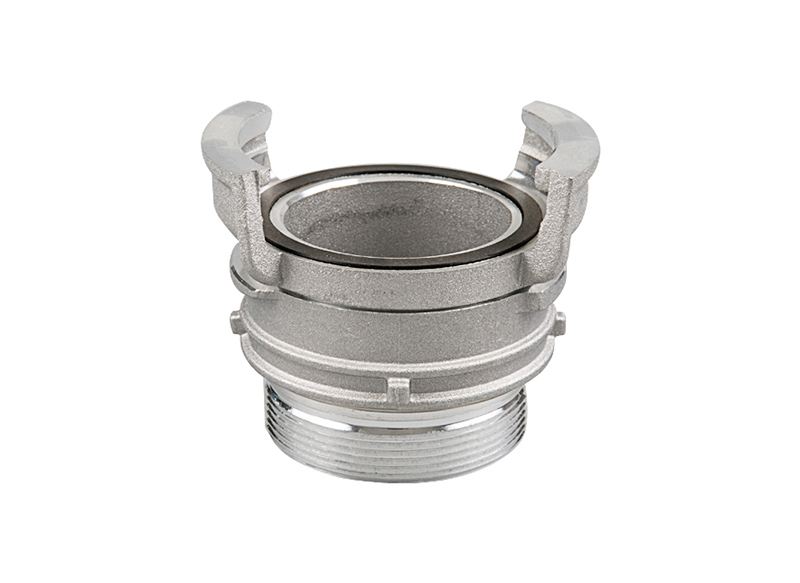
- Body: the main casting or machined housing, sized to the nominal hose diameter and holding the gasket seat.
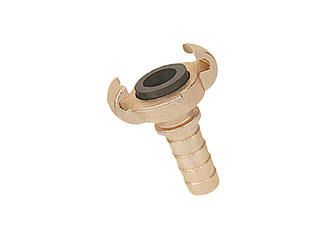
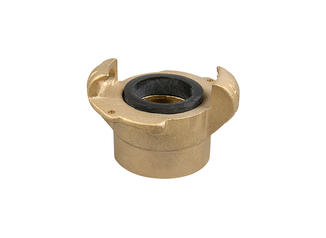
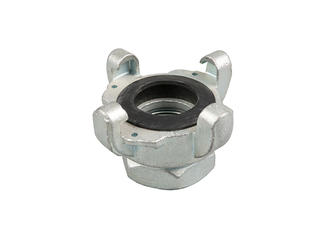
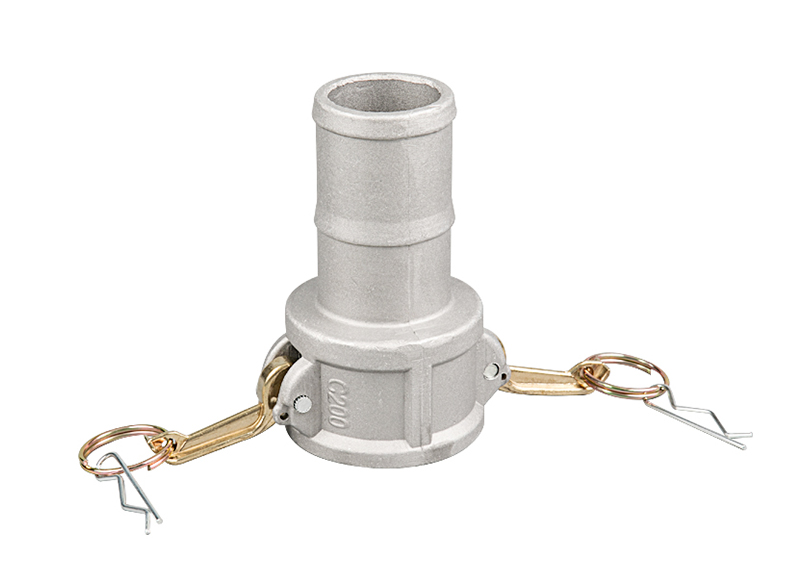
- Cam arms: the two or four hinged levers on the female coupler that pivot around a pin and press cam lugs into the male adapter's groove.
- Arm pin: the small pivot pin that holds each cam arm to the coupler body; a bent or corroded pin is a common reason an arm becomes stiff.
- Locking groove: the machined channel around the male adapter that the cam lugs engage; wear or damage here is what causes an arm to pop back open under vibration.
- Gasket seat: the recessed groove inside the female coupler that holds the sealing gasket in place against the male adapter's face.
- Shank or thread end: the opposite end of the fitting, which may be a hose barb, male NPT thread, or female NPT thread depending on the part letter.
Most field problems trace back to just two of these components: a worn gasket or a damaged groove. Everything else on the fitting is largely maintenance-free for the working life of the part.
The Part Letter System: A, B, C, D, E, F, DC, and DP Explained
Every camlock adapter on the market is identified by a part letter that describes which ends are male, female, threaded, or barbed. Buyers who learn this system once never need to guess again when ordering replacement parts or building a new hose assembly.
| Part Letter | Configuration | Common Application |
|---|---|---|
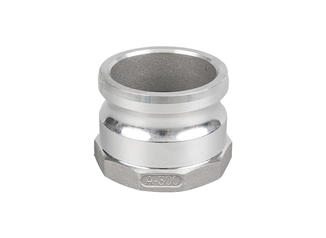
| Part A | Female coupler x male adapter (threaded) | Attaching a hose end to a threaded pipe outlet |
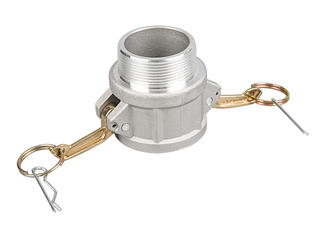
| Part B | Female coupler x female threaded adapter | Connecting a hose to a threaded female fitting |
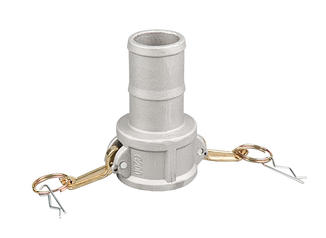
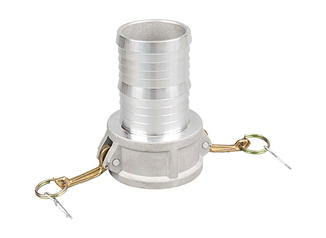
| Part C | Female coupler x hose shank | Terminating one end of a hose for quick disconnect |
| Part D | Female coupler x female threaded (NPT) | Manifold and tank outlet connections |
| Part E | Male adapter x hose shank | Opposite hose end from a Part C fitting |
| Part F | Male adapter x male threaded (NPT) | Connecting into a pipe with male output |
| Part DC | Dust cap for the female coupler | Protecting an idle coupler from debris |
| Part DP | Dust plug for the male adapter | Protecting an idle adapter from debris |
A common assembly pattern is a Part C on one end of a hose and a Part E on the other, giving a hose two male-side connections that can plug into female couplers mounted on a tank or pump. Another frequent pairing is a Part A on a fixed pipe outlet mated to a Part B on the hose, so the female-to-female threaded design lands in the middle of the run rather than at the very end.
When ordering a full hose assembly rather than loose fittings, it helps to sketch the run from source to destination and label each end with its expected part letter before placing an order. This single step avoids the most common ordering mistake, which is receiving two matching male ends or two matching female ends that cannot connect to each other.
Material Options and Where Each One Belongs
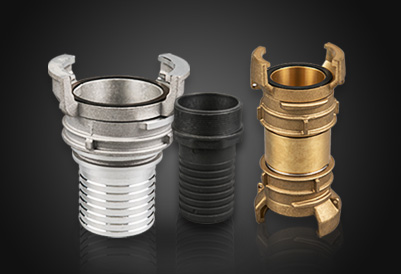
Choosing the wrong material is the single most common reason a camlock adapter fails early, so this decision deserves more attention than size or brand.
Aluminum
Aluminum camlock adapters are the lightest option and the most widely stocked for general water transfer, dewatering, irrigation, and fuel handling. A 3-inch aluminum coupling typically weighs well under half of an equivalent stainless steel part, which matters on job sites where hoses are connected and disconnected by hand dozens of times a day. Aluminum is not suited to strong acids, chlorinated solvents, or continuous salt water exposure, since it corrodes under those conditions. It is also the most economical option for large-diameter fittings, which is one reason it dominates dewatering and irrigation markets where 4-inch and larger couplings are common.
Stainless Steel (304 and 316)
Stainless steel camlock couplings, particularly 316-grade, handle food processing lines, pharmaceutical transfer, chemical plants, and marine environments where corrosion resistance outweighs weight savings. 316 stainless resists chloride pitting far better than 304, making it the standard choice for anything touching brine, cleaning-in-place chemicals, or coastal air. The extra molybdenum content in 316 is what gives it that pitting resistance, and it is worth the added cost anywhere the fitting will see repeated washdown cycles or humid salt air.
Brass and Bronze
Brass camlock adapters are common in fuel transfer and lower-pressure water applications where cost matters more than chemical range. Bronze versions add better resistance to seawater and are frequently specified for marine bilge and ballast transfer. Brass also has natural anti-spark properties that make it a frequent choice around flammable vapors, though it should not be mistaken for a substitute in genuinely explosive atmospheres without a proper engineering review of the whole system.
Polypropylene and Nylon
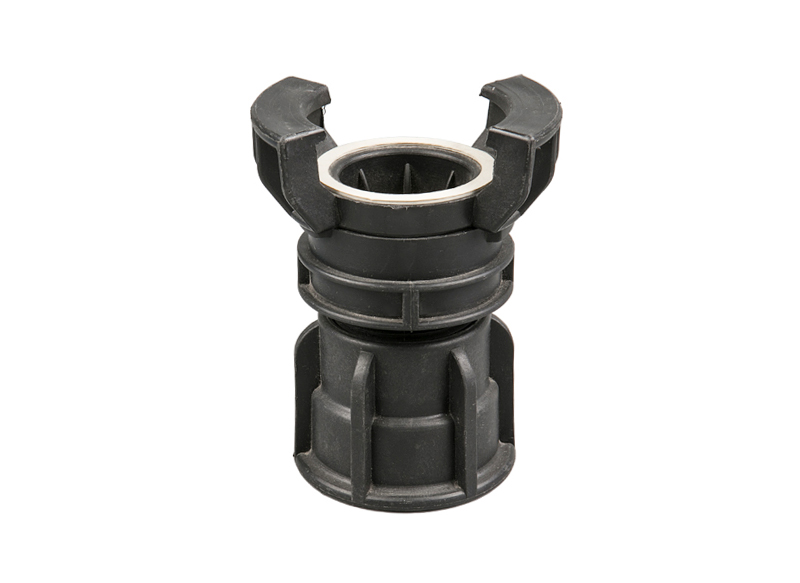
Polypropylene camlock fittings are the go-to choice for aggressive acids, caustics, and many solvents that would eat through metal, and they are noticeably cheaper than stainless for the same chemical resistance range. Nylon offers similar chemical tolerance with slightly better impact strength in cold weather, though both plastics have lower pressure and temperature ceilings than metal equivalents and should be checked against the fluid's temperature before ordering. Plastic bodies are also lighter than any metal option, which is worth considering on assemblies that get carried by hand over long distances.
| Material | Relative Cost | Corrosion Resistance | Typical Weight |
|---|---|---|---|
| Aluminum | Low | Fair, avoid strong acids | Lightest metal option |
| Brass / Bronze | Moderate | Good, better in bronze | Moderate to heavy |
| Stainless Steel (316) | High | Excellent | Heaviest option |
| Polypropylene / Nylon | Low to moderate | Excellent against chemicals, poor with heat | Lightest overall |
Camlock Coupling Sizes and Pressure Ratings
Camlock adapters are manufactured in standardized diameters running from 1/2 inch up to 6 inches, with 2, 3, and 4 inch sizes covering the majority of hose transfer work in agriculture, construction dewatering, and tanker loading. Pressure capacity drops as diameter increases and varies by material, so the numbers below should be treated as general working ranges rather than a substitute for the specific manufacturer's data sheet for a given part.
| Size Range | Aluminum / Brass | Stainless Steel | Polypropylene / Nylon |
|---|---|---|---|
| 1/2 in to 1 in | Up to roughly 250 psi | Up to roughly 250 psi | Up to roughly 100 psi |
| 1.5 in to 2 in | Up to roughly 150 to 200 psi | Up to roughly 150 to 200 psi | Up to roughly 80 to 100 psi |
| 3 in to 4 in | Up to roughly 100 to 125 psi | Up to roughly 100 to 150 psi | Up to roughly 60 to 80 psi |
| 5 in to 6 in | Up to roughly 75 to 100 psi | Up to roughly 75 to 100 psi | Up to roughly 50 psi |
Pressure rating is not the same as burst pressure. Working pressure already includes a safety margin, and running a system near or above the rated figure accelerates arm wear and gasket extrusion long before the fitting fails outright.
Vacuum service is a separate consideration from positive pressure and is often overlooked. A camlock coupling pulling suction, such as on a tanker truck offloading through a bottom valve, needs a gasket and arm engagement in good condition to prevent air from being drawn in around the seal, which shows up as reduced flow rate rather than a visible leak. Worn gaskets that would only cause a slow drip under positive pressure can cause a significant loss of suction efficiency, so vacuum applications deserve more frequent gasket inspection than pressure-only lines of the same size.
Gasket Selection: The Part Everyone Forgets
The camlock adapter body gets all the attention, but the gasket seated inside it is what actually stops leaks, and it is the single most common point of chemical failure in the entire assembly. A stainless steel coupling with the wrong gasket will leak just as fast as a mismatched plastic one.
- Buna-N (Nitrile): the default general-purpose gasket for petroleum products, oils, and mild water transfer.
- EPDM: the correct choice for water, steam, and many chemical cleaning agents, but it swells and fails quickly in petroleum products.
- Viton (FKM): used for aggressive solvents, fuels, and higher-temperature chemical transfer where nitrile and EPDM both fall short.
- PTFE (Teflon-faced): the broadest chemical resistance available, chosen for highly corrosive or high-purity transfer where cross-contamination is a concern.
- Silicone: favored for food-grade and pharmaceutical lines because it tolerates repeated steam cleaning without hardening.
| Gasket Material | Approximate Temperature Range |
|---|---|
| Buna-N (Nitrile) | Roughly minus 30F to 250F |
| EPDM | Roughly minus 60F to 300F |
| Viton (FKM) | Roughly minus 15F to 400F |
| PTFE-faced | Roughly minus 100F to 450F |
| Silicone | Roughly minus 65F to 400F |
A useful habit is keeping a small stock of spare gaskets in each material already in use on site, since a gasket that has hardened or taken a permanent compression set is the most frequent cause of a camlock coupling that suddenly starts weeping fluid after months of trouble-free service.
Standard Arms, Locking Arms, and Safety Clips: Choosing the Right Locking Style
Not every camlock adapter uses the same arm design, and this detail is easy to overlook until a connection separates unexpectedly.
Standard cam arms
Standard arms rely on spring tension alone to stay closed. They are fast to operate and work well for the large majority of stationary or low-vibration applications, but they can be lifted open by an accidental bump or a snagged hose if nothing else holds them shut.
Locking arm variants
Locking arm couplings add a secondary latch, a screw collar, or a positive detent that must be deliberately released before the arms can move. These cost more per fitting but are worth it anywhere vibration, movement, or crowded foot traffic could catch an open arm, such as tanker trucks in transit, pump skids on vibrating equipment, or fittings mounted at ankle height on a busy job site.
Safety clips and whip checks
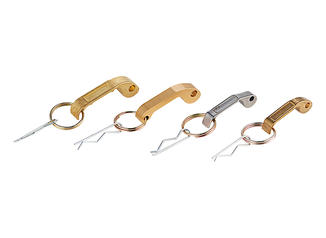
Some operations add an external safety clip over standard arms as a low-cost retrofit rather than buying dedicated locking-arm hardware. This is a reasonable stopgap for existing inventory, though a purpose-built locking arm coupling is generally more durable over repeated cycles than an add-on clip.
Where Camlock Adapters Are Used in the Field
The tool-free lock is what pushes camlock couplings into industries where hose changes happen constantly rather than once during installation.
Agriculture and irrigation
Farms rely on quick hose swaps between fields, pumps, and tanker trucks during planting and spraying seasons. Aluminum camlock adapters dominate here because irrigation runs are often long, large-diameter, and moved frequently between fields as the growing season progresses.
Construction dewatering
Pumping groundwater away from excavation sites requires hose runs that change daily as work progresses. Dewatering crews typically standardize on one or two adapter sizes across an entire fleet of pumps so any hose can connect to any pump on site without a special-order fitting.
Chemical and industrial processing
Plants use camlock couplings to transfer raw materials between tanks, tote bins, and rail cars. Polypropylene and stainless steel dominate this segment because of the wide range of aggressive fluids involved, and gasket selection is treated as seriously as the body material.
Tanker truck loading and unloading
Fuel, water, and liquid food product delivery all depend on drivers connecting and disconnecting at every stop. Locking arm variants are especially common in this segment since the fitting travels with the vehicle and is exposed to road vibration between stops.
Fire suppression and emergency response
Pumper trucks and portable pump setups use camlock adapters for rapid hose connections where seconds genuinely matter, and standardized sizing across a department's equipment fleet is treated as a core operational requirement.
Food and beverage transfer
Stainless and silicone-gasketed assemblies move milk, juice, or brewing liquids between vessels. Fittings in this space are chosen as much for how easily they clean and sanitize between batches as for pressure rating.
Marine and offshore operations
Bilge pumping, fuel bunkering, and ballast transfer on vessels and platforms rely heavily on bronze and 316 stainless steel adapters, since aluminum and standard steel corrode too quickly in a continuous salt air environment.
How to Choose the Right Camlock Adapter
A short checklist prevents most of the return requests and mid-job fitting failures that show up when a coupling is picked on size alone.
1. Match the fluid to the material and gasket first
Identify what is flowing through the line, its concentration, and its temperature before looking at diameter. Chemical compatibility charts from the gasket manufacturer are the fastest way to rule out unsuitable options.
2. Size to the hose, not the pipe
Camlock adapters are sized to match hose inside diameter. Undersizing creates a flow restriction and pressure drop at the connection point, while oversizing wastes money and can leave excess dead space where sediment collects.
3. Confirm the working pressure with margin
Choose a coupling rated comfortably above expected peak pressure, including surge pressure from pump startup, not just the steady-state flow figure.
4. Decide on locking arm style
Standard arms work for most jobs, but locking-arm variants with a positive latch are worth the extra cost anywhere vibration or accidental bumping could lift the arms and break the seal, such as on a moving vehicle or a vibrating pump skid.
5. Plan for cycle count, not just peak load
A fitting connected and disconnected fifty times a day wears differently than one installed once and left alone. High-cycle applications benefit from slightly heavier-duty arms and a stocked supply of spare gaskets rather than the lightest available part.
Common Buying Mistakes to Avoid
- Buying by hose diameter alone without checking the gasket material against the fluid.
- Ordering two identical part letters that cannot physically connect to each other.
- Ignoring surge pressure and only checking against steady-state flow pressure.
- Mixing metals long-term in wet outdoor conditions without accounting for galvanic corrosion.
- Choosing standard arms for a mobile or vibrating application where a locking variant would prevent accidental disconnection.
- Skipping spare gaskets at time of purchase and then facing downtime later waiting on a small part.
Camlock Coupling vs. Other Quick-Connect Options
Camlock adapters are not the only quick-connect format, and knowing where they win and lose against the alternatives avoids a costly mismatch.
| Connection Type | Connect Speed | Typical Pressure Range | Best Fit |
|---|---|---|---|
| Camlock coupling | Seconds, tool-free | Low to moderate | Frequent hose changes, large diameters |
| Threaded NPT fitting | Minutes, tools required | Moderate to high | Permanent or rarely disturbed connections |
| Flanged connection | Minutes to hours, tools required | High | Fixed process piping, high pressure systems |
| Hydraulic quick coupler | Seconds, tool-free | Very high | Small-diameter hydraulic lines |
The pattern here is straightforward: camlock adapters trade some pressure ceiling for connection speed and larger available diameters, which is exactly the trade most bulk fluid transfer applications want to make.
Installation and Handling Tips That Extend Service Life
- Inspect the gasket for nicks, flat spots, or a permanent compression set before every connection on high-cycle applications.
- Wipe grit and sand off the male adapter groove before mating, since trapped debris is a leading cause of arms that will not close fully.
- Press both arms down evenly rather than one at a time to avoid cocking the male adapter at an angle inside the coupler.
- Store unused couplers and adapters with dust caps and plugs fitted to keep the sealing surface free of scratches and grit.
- Never use a pipe wrench or hammer to force stuck arms closed; a stuck arm almost always means the gasket or groove needs cleaning, not extra force.
- Relieve line pressure before disconnecting whenever the system allows it, even though camlock arms are designed to resist accidental release under pressure.
- Rinse fittings used in dusty or muddy conditions before storage rather than after the next job, since dried residue is much harder to clean out of the arm pivots.
Troubleshooting Guide: Common Problems and Their Causes
| Symptom | Likely Cause | Suggested Fix |
|---|---|---|
| Arms will not close fully | Debris in the groove or misaligned adapter | Clean the groove and gasket seat, realign, then retry |
| Leaking with arms fully closed | Worn, hardened, or chemically damaged gasket | Replace gasket with the correct material for the fluid |
| Arm pops open under vibration | Standard arms used in a high-vibration setting | Switch to a locking arm variant or add a safety clip |
| Reduced flow with no visible leak | Air ingress on vacuum service from a worn gasket | Inspect and replace gasket, check for groove wear |
| Visible corrosion or pitting on the body | Material mismatched to the fluid or environment | Replace with a more resistant material for that service |
| Stiff or squeaking arm hinge | Corroded or dry pivot pin | Clean the pin area and apply a compatible lubricant |
Storage, Inventory, and Total Cost Considerations
The purchase price of a camlock adapter is a small fraction of what it actually costs an operation over its working life once downtime, gasket replacement, and inventory management are factored in.
Standardize sizes across a fleet
Operations that settle on one or two sizes across all their pumps and hoses spend far less time chasing adapters and far less money on odd-size replacement stock than operations that let each piece of equipment accumulate its own unique fitting size.
Keep gaskets as a separate stocked item
Gaskets wear out long before the metal or plastic body does. Treating gaskets as a consumable stocked in bulk, separate from the couplings themselves, keeps a single worn part from taking an entire hose assembly out of service while a replacement is ordered.
Protect idle fittings
Dust caps and plugs cost very little compared to a coupling that has to be replaced because grit scored the sealing face during storage. Any fitting not actively connected should have its cap or plug fitted.
Frequently Asked Questions
What is the difference between a camlock adapter and a camlock coupling?
In everyday use the two terms describe the same product family. Some suppliers reserve "coupling" for the female half with the locking arms and "adapter" for the male half or for threaded conversion pieces, but the industry uses both words interchangeably for the full range of parts.
Can camlock adapters be used with steam?
Metal camlock adapters with EPDM or silicone gaskets can handle low-pressure steam and hot water, but plastic bodies should not be used with steam due to heat softening. Always confirm the gasket's temperature rating rather than relying on the body material alone.
Are camlock adapters interchangeable between different manufacturers?
Camlock adapters that follow the standard part-letter dimensions are generally interchangeable across manufacturers within the same nominal size, since the cam arm geometry and groove dimensions are widely standardized across the industry. Mixing brands is common practice, though matching gasket material to the fluid still matters more than matching brand.
Why is my camlock coupling leaking even though the arms are fully closed?
A fully closed arm confirms the mechanical lock but says nothing about the gasket. The most common causes of a leak with closed arms are a hardened or flattened gasket, grit trapped on the sealing face, or a gasket material that is chemically incompatible with the fluid and has started to swell or degrade.
How often should camlock gaskets be replaced?
There is no fixed calendar interval, since wear depends on cycle count, fluid type, and temperature. A practical approach is visual inspection at every connection on high-cycle lines and replacement as soon as a gasket shows flattening, cracking, or loss of resilience when pressed with a finger.
Can different materials be mixed in the same hose assembly, such as an aluminum adapter with a stainless coupler?
Mechanically the parts will mate since the dimensions are standardized, but mixing dissimilar metals in a continuously wet or humid environment can accelerate galvanic corrosion at the contact points. For long-term outdoor or marine use, keeping both halves in the same material family is the safer choice.
Do camlock adapters work for vacuum or suction applications?
Yes, camlock couplings are widely used on suction lines such as tanker offloading, but the gasket condition matters more on vacuum service than on positive pressure, since even a slightly worn gasket can allow air to be drawn in and reduce flow efficiency without producing a visible external leak.
What is the best all-around material if I only want to stock one type?
For general water, dewatering, and light-duty transfer work, aluminum with a nitrile or EPDM gasket covers the widest range of everyday needs at the lowest cost. Any application involving chemicals, food product, or continuous salt exposure should move to stainless steel or polypropylene regardless of the extra cost.
Why do my camlock arms feel stiff after sitting unused for a season?
Stiffness after storage is almost always dried residue or light surface corrosion around the pivot pin rather than a defect in the fitting. Cleaning the pivot area and working the arms by hand a few times usually restores smooth movement; persistent stiffness after cleaning points to a pin that needs replacement.
Should I choose locking arms for every application to be safe?
Not necessarily. Locking arms add cost and a small amount of extra time to connect and disconnect, which is unnecessary on stationary, low-vibration setups. They earn their cost specifically where movement, vibration, or crowded work areas create a real risk of an arm being bumped open.