 英语
英语 俄语
俄语
Content
- 1 What Is A Camlock Hose Coupling
- 2 How The Cam Arm Mechanism Actually Works
- 3 Camlock Coupling Types From A To F Explained
- 4 How Camlock Compares To Other Quick-Connect Hose Fittings
- 5 Matching Camlock Hose Coupling Material To The Fluid And Environment
- 6 Sizing A Camlock Hose Coupling Correctly
- 7 Pressure And Temperature Limits Change With Size And Material
- 8 Flow Rate And Velocity Considerations
- 9 Choosing The Right Gasket Material For The Fluid Being Transferred
- 10 Industries That Depend On Camlock Hose Coupling Hardware
- 11 Installing A Camlock Hose Coupling Step By Step
- 12 Maintenance And Inspection Checklist
- 13 Common Mistakes That Shorten Camlock Coupling Lifespan
- 14 Troubleshooting Common Camlock Coupling Problems
- 15 Cost Factors To Weigh When Specifying Camlock Hardware
- 16 Frequently Asked Questions About Camlock Hose Coupling
- 16.1 What does camlock actually mean in a hose coupling?
- 16.2 Can different brands of camlock hose coupling be mixed on the same line?
- 16.3 How do I know if my camlock coupling is leaking because of the gasket or the fitting itself?
- 16.4 Is a camlock hose coupling suitable for compressed air or gas lines?
- 16.5 What size camlock hose coupling do I need for a 2 inch hose?
- 16.6 How often should camlock coupling gaskets be replaced?
- 16.7 Why does my camlock coupling leak only under high flow, not at rest?
- 16.8 Do camlock couplings need lubrication to operate smoothly?
- 16.9 Can a camlock hose coupling be repaired, or does the whole part need replacing?
- 16.10 What is the difference between a camlock coupling and a Storz coupling?
- 16.11 Why does my camlock coupling corrode faster than expected?
What Is A Camlock Hose Coupling
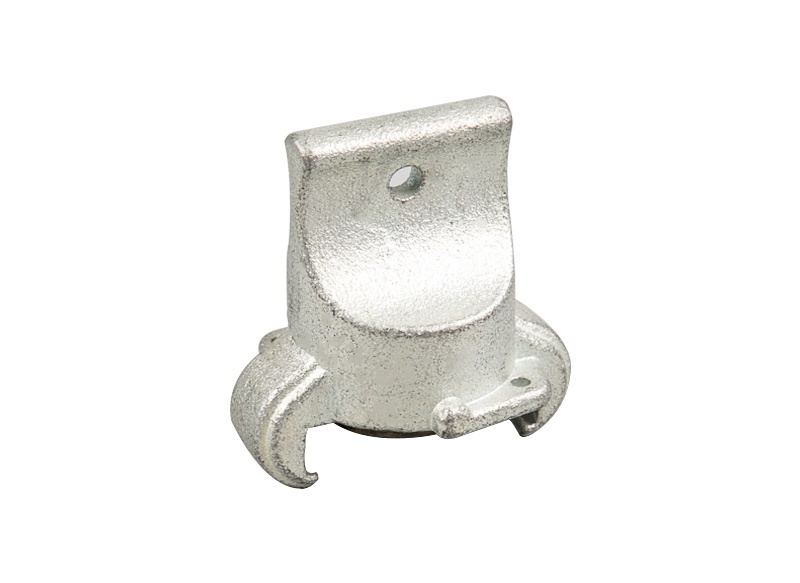
A camlock hose coupling is a quick-connect fitting built from a grooved male adapter and a female coupler fitted with two or four hinged cam arms. Pressing the male end into the female body and snapping the arms down locks the two halves together and compresses a rubber gasket, sealing the joint without tools, tape, or thread sealant of any kind. This single mechanism is why camlock hose coupling hardware has become the default choice anywhere a hose gets connected and disconnected many times a day rather than left permanently plumbed in one place.
The short version: if a job involves swapping hoses between tanks, tankers, pumps, or totes on a regular basis, a camlock hose coupling will almost always outperform a threaded fitting on speed and operator fatigue, though it trades away some of the pressure ceiling that a fully threaded connection can reach. The rest of this guide walks through the letter-coded types, material choices, sizing, pressure and flow behavior, gasket selection, installation habits, troubleshooting, and the FAQ questions that come up most often when a facility is specifying camlock hardware for the first time.
Camlock hose coupling systems are sometimes called cam-and-groove fittings, and the two names describe the same hardware: a groove machined into the male adapter that the cam arms lock into, holding the joint under tension until an operator manually lifts the arms again. Nothing about the connection relies on rotation, which is what separates it from NPT, BSP, or any other threaded hose fitting family.
How The Cam Arm Mechanism Actually Works
Threaded hose connections rely on torque. An operator has to turn a fitting several full rotations, apply sealant or tape, and check for cross-threading before the joint can be trusted under pressure. A camlock hose coupling skips all of that: the male adapter slides straight into the female body, and closing the two cam arms takes under three seconds even with gloved hands. The arms function as levers, driving the male adapter's groove tight against the gasket face and holding that compression until the arms are manually released. No rotation, no sealant, and no risk of stripped threads from repeated connect-disconnect cycles.
Mechanically, each cam arm pivots on a pin and has a cam profile machined or cast into its inner face. As the arm rotates down, the cam profile pushes against the male adapter's collar, drawing it deeper into the female body and squeezing the gasket between the two sealing faces. The farther the arm travels, the tighter the seal becomes, which is why a coupling that feels loose usually has a worn cam profile or a bent arm rather than a bad gasket. Two-arm couplings are standard on sizes up to about three inches, while four-arm designs appear on larger diameters where the sealing face is bigger and needs more evenly distributed clamping force around the circumference.
That speed matters most in operations where a single hose gets moved between six or eight different tanks in a shift, such as tanker offloading, mobile water transfer, or chemical tote filling. Facilities that track downtime commonly report connection times measured in seconds per swap rather than minutes, which adds up quickly across dozens of daily transfers, and it also reduces the physical strain on operators who would otherwise be wrenching threaded joints tight by hand for an entire shift.
Camlock Coupling Types From A To F Explained
Every camlock hose coupling on the market follows the same lettered system, and understanding it removes almost all of the guesswork when ordering. The rule that matters most: a male camlock adapter, identified by the two projecting lugs, always mates with a female camlock coupler, identified by the cam arms, and both halves must be the same nominal size.
| Type | Configuration | Pairs With | Typical Use |
|---|---|---|---|
| A | Male adapter x female pipe thread | Type B | Threading onto a hex nipple or pipe bushing |
| B | Female coupler x male pipe thread | Type A | Threading into a pipe union or elbow |
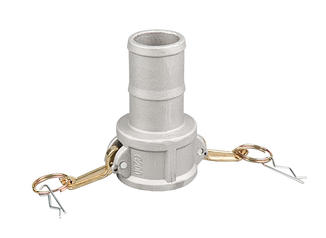
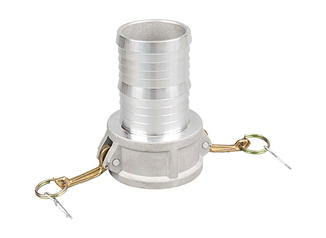
| C | Female coupler x hose shank | Type E or Type A/F | Attaching directly to a hose barb |
| D | Female coupler x female pipe thread | Type A | Connecting to male-threaded pipework |
| E | Male adapter x hose shank | Type C or Type D | Attaching directly to a hose barb |
| F | Male adapter x male pipe thread | Type B, C, or D | Threading into female-threaded pipework |
| DC | Dust cap | Type A adapters | Protecting an idle male adapter from grit |
| DP | Dust plug | Type B, C, or D couplers | Sealing an idle female coupler against dirt |
Type A And Type B: The Threaded Foundation Of The System
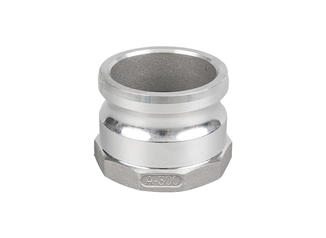
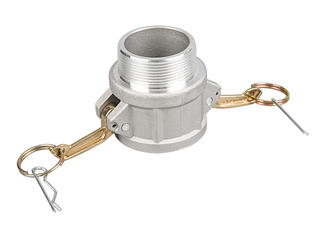
Type A is the piece most people picture when they hear "camlock adapter": a male cam end on one side and a female pipe thread on the other, meant to screw onto a nipple, bushing, or hose barb fitting that already has male threads cut into it. Type B is its mirror image, a female cam coupler with a male pipe thread tail, designed to thread into a fitting that presents a female thread, such as a pipe union or an elbow. Together, A and B are what convert an existing threaded pipe network into a quick-connect point without re-plumbing anything.
Type C And Type E: The Hose-Ready Options
Type C and Type E skip threads entirely and are built with a hose shank, sometimes called a barb, meant to be pushed into flexible hose and secured with a clamp or ferrule. Type C is the female coupler version and Type E is the male adapter version. Because most camlock hose coupling purchases are for actual hose assemblies rather than rigid pipework, C and E are typically the two highest-volume parts ordered across agricultural, industrial, and tanker supply chains.
Type D And Type F: The Less Common But Still Useful Pair
Type D is a female coupler with a female pipe thread tail, used when the mating pipe end already presents male threads. Type F is a male adapter with a male thread tail, used when the mating pipe end presents female threads. Both exist to cover thread orientation combinations that A, B, C, and E do not, and they show up most often in retrofits where the existing plumbing was not originally designed with camlock connections in mind.
Dust Caps And Dust Plugs Are Not Optional Extras
A Type DC dust cap protects an idle male adapter, and a Type DP dust plug seals an idle female coupler. Two extra shortcuts save time when specifying parts: anything with a hose shank (Types C and E) is meant to be clamped straight onto flexible hose, and leaving a coupling open to airborne grit for even a single shift is one of the most common causes of premature gasket wear reported by field technicians. Treating dust caps as consumables rather than optional accessories is one of the cheapest ways to extend coupling life.
How Camlock Compares To Other Quick-Connect Hose Fittings
Camlock is not the only quick-connect system on the market, and understanding where it fits relative to the alternatives helps confirm it is the right choice for a given job before ordering hardware.
| System | Connection Method | Best Fit | Trade-off Versus Camlock |
|---|---|---|---|
| Camlock (cam and groove) | Hinged cam arms compress a gasket | Frequent hose swaps, moderate pressure transfer | Reference point |
| Storz coupling | Quarter-turn interlocking lugs | Firefighting and emergency water supply | Faster single-hand connection but narrower size range in general industrial use |
| Bayonet fitting | Push and twist lock | Low-pressure air and light fluid lines | Lower pressure ceiling than most metal camlock couplings |
| Hydraulic quick-disconnect | Spring-loaded ball or poppet valve | High-pressure hydraulic circuits | Handles far higher pressure but at a significantly higher unit cost |
| Threaded NPT or BSP | Torque and thread sealant | Permanent or rarely disturbed joints | Higher pressure tolerance but far slower to connect and disconnect |
The pattern that emerges from this comparison is straightforward. Camlock wins on speed and simplicity for the vast majority of fluid transfer tasks that sit in the low-to-moderate pressure range and change configuration often. Once a job pushes into high-pressure hydraulics or needs a fully sealed permanent joint, other fitting families take over.
Matching Camlock Hose Coupling Material To The Fluid And Environment
Material choice affects three things at once: chemical compatibility, pressure ceiling, and cost per fitting. Getting this wrong is the single most common reason a coupling fails early, usually through gasket swelling or body corrosion rather than mechanical breakage.
| Material | Typical Pressure Range | Best Suited For | Watch Out For |
|---|---|---|---|
| Aluminum | Roughly 50-250 psi, dropping as size increases | Petroleum transfer, water, general agricultural use | Weaker against strong acids and some solvents |
| Stainless steel | Roughly 100-300 psi depending on size | Food and beverage lines, corrosive chemicals, high-temperature fluids | Higher upfront cost per fitting |
| Brass | Up to roughly 250 psi in smaller sizes | Fuel, coolant, and water transfer, marine service | Not ideal for strongly acidic or ammonia-based fluids |
| Polypropylene | Roughly 50-100 psi | Aggressive chemicals, low-pressure agricultural spraying | Lower mechanical strength and impact resistance than metal |
| Glass-reinforced nylon | Roughly 100 psi in mid-range sizes | Solvents, hydrocarbons, general chemical transfer | Poor resistance to acid-based fertilizers |
Aluminum: The Default Choice For General-Purpose Transfer
Aluminum camlock couplings are lightweight, inexpensive relative to stainless steel, and hold up well against water, diesel, and most agricultural chemicals. Their main limitation is corrosion resistance against strong acids and certain solvents, along with a pressure ceiling that falls off more sharply than stainless steel as diameter increases. For general water transfer, irrigation, and fuel handling where the fluid list is not aggressive, aluminum remains the most widely purchased material worldwide because it balances weight, cost, and durability well enough for the majority of jobs.
Stainless Steel: The Choice For Corrosive Or Sanitary Duty
Stainless steel camlock couplings, most commonly in the 304 or 316 grade families, cost more per fitting but resist a far wider range of chemicals and hold their pressure rating better as temperature rises. This makes stainless the standard choice in food and beverage processing, where lines are broken down and cleaned frequently, and in chemical transfer where the fluid list includes anything mildly to moderately corrosive. Stainless also tolerates a wider temperature swing than any other common camlock material, making it the safer pick for hot fluid transfer or outdoor use in climates with large seasonal temperature shifts.
Brass: A Middle Ground For Fuel And Marine Applications
Brass camlock couplings sit between aluminum and stainless steel on cost, and they are particularly well suited to fuel, coolant, and general marine water transfer thanks to good corrosion resistance in those specific fluid categories. Brass threads also tend to be easier to cut cleanly during manufacturing, which is part of why brass Type A and Type B adapters are common in retrofit situations where thread precision matters. Brass is not the first choice for strongly acidic or ammonia-heavy fluids, where the metal can degrade faster than expected.
Polypropylene And Glass-Reinforced Nylon: The Non-Metal Options
Polypropylene and glass-reinforced nylon couplings exist specifically for situations where metal, even stainless steel, would corrode too quickly against the fluid being handled. Polypropylene in particular tolerates a wide range of aggressive chemicals and is common in agricultural spraying and chemical tote handling, though it comes with a lower pressure ceiling and less impact resistance than any metal option, meaning it is not the right choice where a coupling might get dropped, dragged over rough ground, or run over by equipment. Glass-reinforced nylon splits the difference somewhat, offering better mechanical strength than plain polypropylene while still resisting solvents and hydrocarbons well, though it shares the same weakness against acid-based fertilizers that affects most non-metal options.
A Simple Rule For Choosing Between Materials
A practical rule that experienced buyers rely on: when the fluid list includes anything acidic, choose stainless steel or polypropylene and never aluminum. When the job needs both chemical resistance and a real pressure ceiling, stainless steel is worth the extra unit cost. When budget is the deciding factor and the fluid is benign, such as clean water or diesel, aluminum remains the most common choice across agricultural and construction sites worldwide. When mechanical abuse, such as dragging or occasional impact, is likely, metal will always outlast plastic regardless of chemical compatibility.
Sizing A Camlock Hose Coupling Correctly
Camlock hose coupling sizes are described by nominal diameter, most commonly running from half an inch up to six inches, with some manufacturers extending as far as eight or twelve inches for bulk transfer lines. The sizing convention itself trips up a surprising number of first-time buyers: a female coupler is measured by its internal bore, while a male adapter is measured by its external diameter at the sealing face. Both numbers should match the nominal size printed on the part, but if a fitting is being matched visually against an existing hose, checking the actual bore against the hose's inside diameter avoids a mismatch.
| Nominal Size | Common Hose Match | Typical Application |
|---|---|---|
| 1/2 in to 3/4 in | Small-diameter garden or chemical hose | Spraying, small tote transfer, sampling lines |
| 1 in to 1.5 in | Standard suction and discharge hose | General water transfer, small pump discharge |
| 2 in to 3 in | Mid-size suction hose | Irrigation, dewatering, tanker offloading |
| 4 in to 6 in | Large-bore suction hose | Bulk fuel or water transfer, high-volume dewatering |
| 8 in and above | Heavy industrial suction hose | Large-scale bulk liquid or slurry transfer |
- Match the coupling size to the hose's inside diameter, not the outside diameter of the hose wall.
- Undersized couplings restrict flow and increase pump load, which shows up as slower fill times and higher energy use.
- Oversized couplings on a hose that has been reinforced with a wire helix can create a gap that promotes leaks under vibration.
- When two different hose sizes must be joined, a reducing camlock adapter is almost always a better long-term solution than forcing an oversized shank into an undersized hose.
- Always confirm bore size against a physical measurement when ordering from a new supplier, since minor dimensional variance between manufacturers is common even at the same nominal size.
Pressure And Temperature Limits Change With Size And Material
One detail that catches operators off guard: the pressure rating printed on a camlock coupling's datasheet is almost always for the smallest available size at room temperature. As diameter increases, the rated pressure drops, because the cam arms have to hold back proportionally more force across a larger sealing face. A half-inch aluminum coupling might carry a rating close to 250 psi, while an eight-inch coupling in the same material family can drop to 50 psi or less.
| Size Range | Aluminum | Brass | Stainless Steel |
|---|---|---|---|
| 1/2 in to 2 in | Around 250 psi | Around 250 psi | Around 300 psi |
| 2.5 in to 4 in | Around 100 to 150 psi | Around 100 to 150 psi | Around 150 to 200 psi |
| 5 in to 6 in | Around 75 psi | Around 75 psi | Around 100 to 150 psi |
| 8 in and above | Around 50 psi | Around 50 psi | Around 75 to 100 psi |
Temperature works against the rating too. A coupling rated for 250 psi at room temperature may only be safely rated for 200 psi once the fluid climbs toward 150°F, since both the metal body and the rubber gasket lose some of their sealing force as heat increases. Stainless steel tolerates this best, often remaining serviceable from well below freezing up to 400°F or more, while polypropylene is generally limited to under 180°F and can turn brittle in freezing conditions. Aluminum sits in between, generally performing well at moderate temperatures but showing reduced performance above roughly 250°F.
The safest approach is to select a coupling rated at least 20 to 30 percent above the system's actual maximum working pressure, which builds in a margin against pressure spikes from valve closures, pump surges, or water hammer. Facilities that operate near the upper edge of a coupling's rated pressure without that margin tend to see a much higher rate of unexpected arm failures, since the safety buffer that would normally absorb a brief spike simply is not there.
Flow Rate And Velocity Considerations
Sizing a camlock hose coupling correctly is not only about matching hose diameter; it also determines how efficiently fluid moves through the system. A coupling that restricts the internal bore relative to the hose creates a pressure drop at that exact point, forcing the pump to work harder to maintain the same flow rate downstream. This shows up most noticeably in long transfer runs, where even a modest bore restriction at each connection point compounds across multiple couplings in series.
As a general guideline, keeping fluid velocity in the 5 to 10 feet per second range for most liquid transfer applications avoids excessive turbulence and erosion inside the coupling body, while staying well below the point where cavitation or hammer effects become a concern. Higher-viscosity fluids, such as heavier oils or slurries, generally need a larger coupling than a simple diameter match would suggest, since viscosity itself adds resistance that a properly sized bore helps offset.
Choosing The Right Gasket Material For The Fluid Being Transferred
The gasket, not the metal body, is usually the first part of a camlock hose coupling to fail, and matching it to the fluid is just as important as matching the coupling body itself.
| Gasket Material | Good Against | Approximate Temperature Ceiling |
|---|---|---|
| Buna-N (nitrile) | Petroleum products, oils, water | Around 250°F |
| EPDM | Acids, alkalis, many water-based chemicals | Around 300°F |
| Viton | Aggressive solvents, higher-temperature fluids | Around 400°F |
| PTFE | Most aggressive chemical duty, extreme temperature swings | Widest range, typically special order |
- Buna-N handles petroleum products, oils, and water well and is the standard gasket supplied with most metal couplings.
- EPDM performs better with acids, alkalis, and many water-based chemicals, and is the default choice on polypropylene bodies.
- Viton resists a wider range of aggressive solvents and higher temperatures, at a higher cost per gasket.
- PTFE is reserved for the most aggressive chemical duty and extreme temperature swings, typically on special order.
A coupling body rated for a chemical means little if the gasket inside it swells, hardens, or dissolves on contact with that same chemical, so checking gasket compatibility separately from body material compatibility is worth the extra two minutes during specification. Keeping a small stock of spare gaskets in each material on hand is one of the least expensive forms of insurance against unplanned downtime, since a gasket swap takes minutes while waiting on a replacement coupling can halt a transfer job for hours.
Industries That Depend On Camlock Hose Coupling Hardware
Camlock hose coupling systems show up wherever a hose needs to move between multiple connection points rather than staying fixed in one place.
Agriculture
Irrigation lines, tank filling, and chemical spraying equipment all get reconfigured field to field throughout a growing season, and the speed of a camlock connection matters directly to how much daylight is spent moving equipment rather than actually irrigating or spraying.
Petroleum And Fuel Distribution
Tanker loading and offloading depend on rapid, repeatable connections at the rack, where turnaround time per truck directly affects how many loads a terminal can process in a day.
Food And Beverage Processing
Stainless steel camlock couplings are common on sanitary lines that get broken down and cleaned between batches, since the smooth cam arm mechanism is easier to disassemble fully for washdown than many threaded alternatives.
Construction And Dewatering
Temporary water transfer around an active construction site changes layout on a weekly or even daily basis as work progresses, making quick reconfiguration far more valuable than the higher pressure ceiling of a permanently threaded line.
Chemical Processing And Tote Handling
Polypropylene or stainless steel couplings moving corrosive fluids between totes and process tanks need a fitting that can be broken down, cleaned, and reused across many different chemical batches without degrading.
Firefighting And Emergency Water Supply
Rapid hose-to-hydrant or hose-to-pump connections under time pressure are exactly the scenario camlock couplings were designed to solve, though Storz-style couplings remain more common specifically within fire apparatus itself.
Installing A Camlock Hose Coupling Step By Step
- Inspect both the male adapter and the female coupler for dirt, debris, or damage before attempting a connection.
- Check the gasket inside the female coupler for cracking, flattening, or swelling, and replace it if any of these signs are present.
- Open both cam arms fully so they sit clear of the coupler's mouth.
- Align the male adapter's lugs with the open channel in the female coupler and push the two halves together firmly and squarely.
- Close each cam arm by hand, pressing down until it seats fully against the coupler body; a properly seated arm should sit flush and resist being pried open with light finger pressure.
- Pressurize the line gradually rather than opening a valve fully at once, allowing the seal to settle under load.
- Watch the joint briefly under initial pressure for any sign of weeping before leaving it unattended.
Maintenance And Inspection Checklist
A correctly installed camlock hose coupling should require no tools at all, which makes it easy to overlook the handful of habits that actually extend its service life.
- Inspect the gasket before every connection; a nicked or flattened gasket is the leading cause of camlock leaks and costs almost nothing to replace compared to the fluid lost through a slow drip.
- Wipe grit off the male adapter's sealing groove before insertion, since trapped debris prevents the cam arms from seating fully.
- Close both arms fully and check for the seated position; a partially closed arm can hold pressure briefly before releasing under vibration.
- Store spare couplings with dust caps and plugs fitted, even in a parts bin, to avoid gasket contamination before first use.
- Replace worn cam arm pins promptly; a loose pin is what allows an arm to pop open under pressure, which is the most common failure mode reported in the field.
- Rinse couplings used with corrosive or sticky fluids promptly after use rather than letting residue dry on the sealing face.
- Keep a basic log of which couplings see the heaviest daily cycling, since those are the ones that will need gasket and pin replacement first.
Storage And Handling Between Jobs
Couplings that sit idle between jobs still degrade if stored poorly. Keeping fittings off bare ground, out of direct sun for long stretches, and away from stacked heavy equipment prevents the two most common storage-related problems: gasket hardening from UV and heat exposure, and bent cam arms from being crushed under other gear. A simple rack or bin that keeps couplings separated by size and material also speeds up the next job, since matching parts do not need to be hunted for under a pile of mixed hardware.
Common Mistakes That Shorten Camlock Coupling Lifespan
Most premature camlock hose coupling failures trace back to a small number of repeated habits rather than a defective part. Forcing a mismatched size together by hammering the male adapter into an undersized female coupler stretches the cam arms out of tolerance. Leaving a connection open to sun and weather accelerates gasket hardening, particularly on Buna-N seals. Dragging a hose across gravel while the coupling is still attached is a common source of thread damage on Type A, B, D, and F fittings. Using a metal tool to force a stuck cam arm closed, rather than cleaning the debris causing the resistance, tends to bend the arm permanently. None of these are material defects; all of them are handling habits that a short pre-shift check can eliminate.
Troubleshooting Common Camlock Coupling Problems
| Symptom | Likely Cause | Suggested Fix |
|---|---|---|
| Steady drip at rest | Worn or damaged gasket | Replace gasket and confirm sealing groove is clean |
| Leak only under high flow | Marginal gasket or slightly undersized coupling | Inspect gasket condition and confirm bore matches hose ID |
| Arm will not close fully | Debris in the sealing groove or bent arm | Clean groove thoroughly; replace arm if bent |
| Arm pops open under pressure | Worn or loose cam arm pin | Replace the pin or the full coupler assembly |
| Corrosion or pitting on body | Material mismatch with the fluid handled | Switch to a more chemically resistant material |
| Reduced flow versus expected rate | Undersized coupling or partial blockage | Confirm sizing and inspect bore for buildup |
Cost Factors To Weigh When Specifying Camlock Hardware
Unit price is only part of the real cost of a camlock hose coupling program. Material choice drives the largest swing in upfront price, with stainless steel typically costing several times more per fitting than aluminum in the same size. Replacement frequency matters just as much: a cheaper material that needs replacing twice a year because it is mismatched to the fluid can easily cost more over time than a pricier material that lasts several years without issue. Gasket stock is a smaller but recurring cost that is easy to underbudget, since gaskets wear out far faster than the coupling body itself and need to be kept on hand in the correct material for whatever fluids are in active use. Finally, downtime cost, meaning the value of production time lost to an unplanned coupling failure, is usually far larger than the price difference between coupling materials, which is why matching material and gasket to the actual fluid and pressure conditions from the start is almost always the better financial decision even when it costs more upfront.
Frequently Asked Questions About Camlock Hose Coupling
What does camlock actually mean in a hose coupling?
It refers to the cam-and-groove locking mechanism: hinged arms on the female coupler that lever the male adapter's groove tight against a gasket when closed, replacing a threaded connection with a quarter-turn-free lock.
Can different brands of camlock hose coupling be mixed on the same line?
Yes, in most cases. The letter-and-size system is standardized enough that a Type A adapter from one manufacturer will generally seat correctly in a Type B coupler from another, as long as both are the same nominal size and neither has been damaged.
How do I know if my camlock coupling is leaking because of the gasket or the fitting itself?
Disconnect the joint and inspect the gasket first, since a cracked, flattened, or swollen gasket accounts for the large majority of camlock leaks. If the gasket looks intact and the leak continues, check the sealing groove on the male adapter for pitting or damage before assuming the coupler body itself is at fault.
Is a camlock hose coupling suitable for compressed air or gas lines?
Camlock couplings are built for liquid transfer and are not generally recommended for compressed air, gas, or other applications where a sudden release could cause the arms to disengage unexpectedly; a threaded or purpose-built pneumatic fitting is the safer choice for those lines.
What size camlock hose coupling do I need for a 2 inch hose?
Match the coupling's nominal size to the hose's inside diameter, so a 2 inch ID hose pairs with a 2 inch camlock coupling. Always confirm the actual bore of the female coupler against the hose ID rather than relying on the nominal label alone, since minor manufacturing variance can occur between suppliers.
How often should camlock coupling gaskets be replaced?
There is no universal calendar interval; replacement should be driven by inspection. A gasket that shows flattening, cracking, or a loss of elasticity when pinched should be swapped immediately, and high-cycle operations such as tanker offloading often replace gaskets on a rotating schedule to avoid unplanned downtime.
Why does my camlock coupling leak only under high flow, not at rest?
This usually points to a slightly undersized coupling or a gasket that is marginal but not yet failed; static pressure is often within the gasket's remaining sealing capacity, while the added turbulence and pressure spikes during high flow push it past the point where it can maintain a seal.
Do camlock couplings need lubrication to operate smoothly?
Most camlock couplings do not require regular lubrication, though a light coating of a fluid-compatible lubricant on the gasket can make repeated connections easier in dusty or gritty environments, as long as the lubricant itself does not react with the fluid being transferred.
Can a camlock hose coupling be repaired, or does the whole part need replacing?
Gaskets, cam arm pins, and sometimes individual cam arms can be replaced without discarding the entire coupling body, which is usually the more economical path unless the sealing groove itself is damaged or corroded beyond a smooth finish.
What is the difference between a camlock coupling and a Storz coupling?
A camlock coupling uses hinged cam arms that must be manually closed around a grooved male adapter, while a Storz coupling uses interlocking lugs joined with a quarter turn and no separate locking arm; Storz is more common specifically in fire service hose, while camlock covers a much broader range of industrial and agricultural fluid transfer.
Why does my camlock coupling corrode faster than expected?
Corrosion faster than expected almost always points to a material mismatch with the fluid being handled, residue left to dry on the fitting after use, or exposure to a chemical the coupling was never rated for in the first place; switching to a more resistant material or improving post-use rinsing typically resolves it.