 英语
英语 俄语
俄语
Content
- 1 Drip Irrigation Filters Are Not Optional
- 2 Why Drip Systems Clog Without a Proper Filter
- 3 Choosing the Right Mesh Rating
- 4 Filter Types: Screen, Disc, and Sand Media
- 5 Filter Materials and Construction
- 6 Size and Flow Rate Matching
- 7 Where to Install Drip Irrigation Filters
- 8 Maintenance and Cleaning Schedule
- 9 Troubleshooting Common Filter Problems
- 10 Frequently Asked Questions
- 10.1 Can I use a simple sprinkler filter for my drip irrigation system?
- 10.2 What is the difference between a strainer and a filter?
- 10.3 How often should I backwash my drip irrigation filter?
- 10.4 Does a finer mesh filter reduce flow very much?
- 10.5 What happens if I install no filter at all?
- 10.6 Can I install the filter after the pressure regulator?
- 10.7 Are stainless steel or plastic filter housings better?
- 11 Final Selection Checklist
Drip Irrigation Filters Are Not Optional
Most clogging problems in drip irrigation systems start with one simple mistake: using a filter that is too coarse for the emitters installed in the field. A drip irrigation filter is not an optional accessory. It is the primary device that determines whether your emitters will keep delivering water evenly over months of continuous use. In practice, a 155 mesh (0.10 mm opening) filter is the minimum specification for most emitters and drip tape used in agriculture and horticulture.
The reason is straightforward: drip emitters have tiny water passages, often measuring only 0.2 mm to 0.5 mm. Sand particles, algae flakes, rust fragments, and organic silt are frequently larger than one-tenth of that opening. Once such particles lodge inside a dripper, the emitter either stops delivering water completely or reduces its flow to a fraction of the design rate. In a large field with hundreds or thousands of drippers, even a 5–10% clogging rate can visibly reduce crop uniformity and yield.
So here is the direct answer: if you plan to install or upgrade a drip system, select a filter with at least 150 to 200 mesh, and match the filter housing size to your system flow rate. The rest of this article explains exactly how to choose the mesh rating, filter type, material, and size, and how to install and maintain it properly.
Why Drip Systems Clog Without a Proper Filter
Drip irrigation delivers water directly to the root zone through small outlets. These outlets are the weakest point of the whole system. The table below summarizes the main contaminants commonly found in irrigation water and how they behave inside a drip network.
| Contaminant | Typical Particle Size | Consequence When Unfiltered |
|---|---|---|
| Coarse sand | 0.25 mm – 2.0 mm | Blocks drippers immediately; causes visible flow loss within days |
| Fine silt | 0.05 mm – 0.25 mm | Accumulates inside drip tape; reduces flow gradually over weeks |
| Algae and organic debris | 0.1 mm – >2 mm (aggregates) | Forms biofilms; hard to remove chemically; causes permanent emitter failure |
| Rust and corrosion flakes | 0.05 mm – 3.0 mm | Scratches internal labyrinth; accelerates wear of drip mechanisms |
The failure pattern is not sudden in most cases. A moderately sized emitter might lose 20–30% of its flow after a few weeks of operation with a 100 mesh filter, while a neighboring emitter remains intact. The result is uneven water distribution, under-watered plants in one zone, and over-watered plants in another. In many studies of drip performance, an emitter flow variation of more than 10% is already considered a sign of clogging.
A well-chosen filter reduces this risk dramatically. A 155 mesh screen retains particles down to approximately 0.10 mm, and a 200 mesh screen retains particles down to 0.074 mm. For most emitter types, a 150–200 mesh filter keeps the passage clear without creating a noticeable pressure drop.
Choosing the Right Mesh Rating
Mesh rating is the most important specification on a drip irrigation filter. A higher mesh number means a finer opening. The relationship between mesh, opening size, and appropriate use is shown in the table below. Use this as a quick reference when you are comparing filters at a supplier or planning a new installation.
| Mesh | Equivalent Opening | Recommended Use |
|---|---|---|
| 80 mesh | 0.177 mm | Large-drip systems, sprinkler micro-sprays, and primary filtration for very clean well water |
| 120 mesh | 0.125 mm | Small drip emitters, drip tape, and secondary filtration after a sand media filter |
| 150 mesh | 0.105 mm | Most agricultural drip systems; adequate protection for 0.2 mm emitters |
| 155 mesh | 0.100 mm | Commonly recommended minimum for emitters and drip tape in commercial agriculture |
| 200 mesh | 0.074 mm | Fine emitters, high-frequency irrigation with treated water, and horticultural applications |
A common misconception is that a finer filter is always better. While a 200 mesh filter provides excellent protection, it also creates a higher pressure drop. If your pump has limited margin, the additional loss may cause emitters at the far end of the field to operate below their design pressure. In contrast, a 150 mesh filter offers a good balance between protection and flow capacity.
For very challenging water, such as surface water containing large amounts of algae, you may need a two-stage approach: a sand media filter or disc filter as the first stage, followed by a 150 or 200 mesh screen filter as the second stage. This combination removes both large organic matter and fine sand without overloading a single cartridge.
Filter Types: Screen, Disc, and Sand Media
Three principal types of filters are used in drip irrigation. The selection depends on the water source, contamination type, and flow rate. The table below gives a straightforward comparison.
| Type | How It Works | Best For | Maintenance |
|---|---|---|---|
| Screen / strainer | Water passes through a woven mesh element; particles larger than the openings are retained on the screen surface | Well water, municipal water, and as a second-stage filter after sand media | Visual inspection and washing; replacement of screen element when damaged |
| Disc / stacked disc | A stack of grooved plastic discs compresses under pressure; particles collect in the grooves | Surface water with algae, organic matter, and fine silt | Backwashing or manual disassembly; discs need thorough cleaning |
| Sand media / hydrocyclone | Water passes through a bed of graded sand or a cyclonic chamber; heavy particles are trapped or flung outward | High-flow systems, river or canal water with heavy sand and silt load | Periodic backwashing; sand replacement every season or two |
Screen filters are the simplest and most popular choice in drip irrigation, especially when the water source is a well or a clean municipal supply. Disc filters are the preferred option when algae or organic debris is present. Sand media filters are typically used at large commercial installations where flow rates exceed 20–30 m³/h, such as in open-channel water supply.
One useful rule from practical fieldwork: if you can see floating debris in the water during the season, choose a disc filter; if the water looks clear but you know the well carries fine sand, choose a fine mesh screen. When in doubt, run a two-stage setup, which is always safer and keeps the downstream screen cartridge easy to clean.
Filter Materials and Construction
The material of the filter body and the screen element matters as much as the mesh rating. Agricultural environments expose filters to UV radiation, chemical fertilizers, soil moisture, and temperature fluctuations. A filter that is not resistant to these conditions will fail unusually early.
- Stainless steel screen elements are the most common and provide excellent corrosion resistance. 304 and 316 grades are both suitable; 316 gives better performance in coastal or water with high chloride levels.
- Polypropylene (PP) bodies are lightweight, resistant to fertilizer chemicals, and inexpensive. They are a solid choice for small-scale farms and horticulture.
- Carbon steel and stainless steel bodies are preferred in large commercial systems where mechanical strength and long service life are required.
- Brass and bronze fittings add durability and are often used for threaded connections, although they are not compatible with all water chemistries.
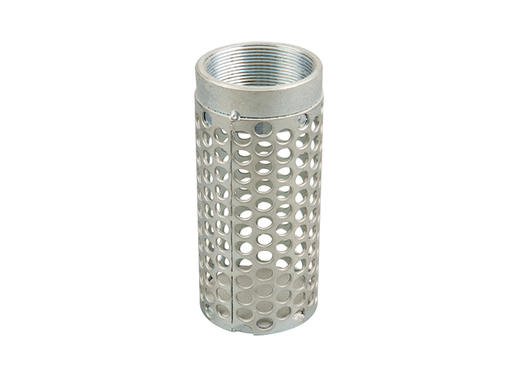 Stainless Steel Strainer for High-Pressure Agricultural UseBuilt with a stainless steel screen in a heavy-duty steel housing, this inline strainer handles abrasive particles and sustained pressure, making it a reliable choice for irrigation systems exposed to chemicals, UV, and temperature swings.View Product →
A stainless steel filter element mounted inside a heavy-duty steel housing can handle high working pressures and abrasive particles. This type of construction is common in agricultural headers and industrial irrigation installations, where the filter body is installed inline and remains under pressure for long periods.
Pay attention to the sealing mechanism as well. Many drip filters use an O-ring seal between the cap and the body. Over time, UV light and fertilizer chemicals can degrade the rubber, causing tiny leaks. Spare seal rings are inexpensive. Replace them annually, or whenever you notice a slight weep during operation.
Size and Flow Rate Matching
Filter size does not mean the physical diameter alone. The main thing to match is the maximum flow rate to the filter housing. A filter that is too small forces water through a small screen area, which raises the pressure drop and accelerates clogging. A filter that is too large wastes money and makes maintenance awkward.
Use the following table as a general guide. These ranges are based on common industry practice for a clean, working filter, and they assume the filter is installed with a pressure drop of no more than 0.3–0.5 bar when new.
| Inlet / Outlet Size | Recommended Clean Flow | Typical Use |
|---|---|---|
| 1/2 inch | 10 – 20 L/min | Small garden drip kits and low-flow irrigation lines |
| 3/4 inch | 20 – 50 L/min | Small farm plots, greenhouse benches, and home landscapes |
| 1 inch | 50 – 100 L/min | Medium fields and multi-zone irrigation systems |
| 1 1/2 inch | 100 – 200 L/min | Larger field blocks and commercial nurseries |
| 2 inch | 200 – 400 L/min | Main header lines and high-output agricultural systems |
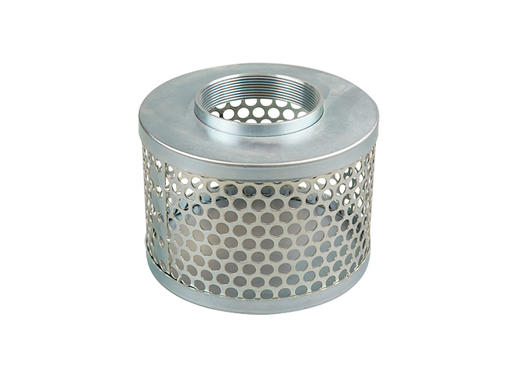 Female Thread Strainer for Peak Flow FiltrationA female-threaded strainer designed for accurate sizing in automated irrigation zones, this unit manages peak flow rates without excessive pressure loss, ensuring consistent system capacity and efficient filtration.View Product →
When sizing, always use the peak flow rate, not the average flow. Automated irrigation zones often draw water for short periods at a high rate. If you select a filter based on the average flow, it may be overloaded every time the pump runs, quickly increasing the pressure loss and reducing the total system capacity.
A practical habit: install a pressure gauge on both sides of the filter. A pressure difference of more than 0.5 bar between the inlet and outlet indicates that the filter needs cleaning. This is a much more reliable signal than waiting until your sprinklers are visibly weak.
Where to Install Drip Irrigation Filters
The location of the filter affects the whole system. In most cases, a single main filter is installed immediately after the pump and pressure regulator. In large installations, it is common to add smaller secondary filters at the inlet of each irrigation zone. The following list shows the typical sequence of components in a standard drip system.
- Water source (well, pond, tank, or municipal connection)
- Pump or pressure booster, if required
- Primary filter at the pump output
- Pressure regulator
- Pressure gauge
- Main distribution pipe
- Secondary filters at zone valves (for large systems)
- Drip lines and emitters
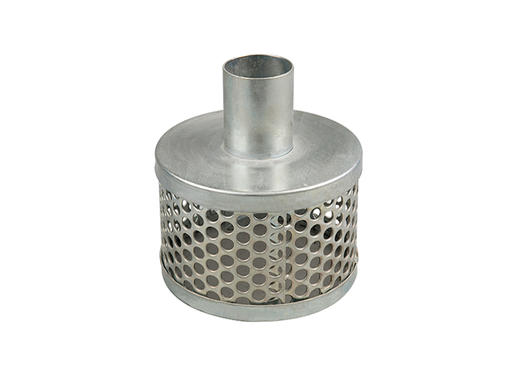 Strainer with Hose for Flexible Post-Pump InstallationEquipped with a hose connection, this strainer offers flexible placement in drip systems, allowing installation after the pump and before the regulator to maintain pressure control even with heavy sand loads.View Product →
When the water source contains a heavy sand load, placing the filter before the pressure regulator is not always ideal. The filter itself adds pressure loss, which can affect the regulator performance if the total head is not sufficient. A sound approach in these situations: install the filter after the pump, then set the pressure regulator downstream. This way the filter does not interfere with the pressure control.
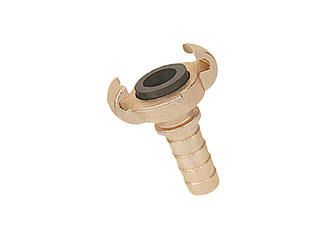
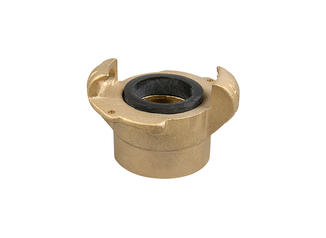
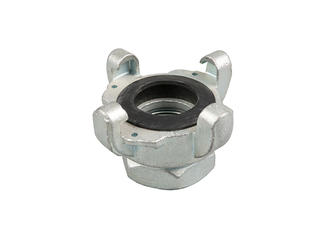
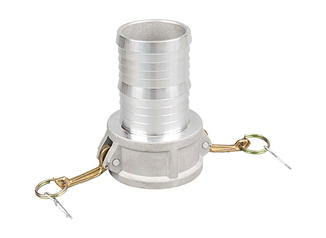
For long lengths of agricultural hose, quick couplings and adapters are often used to create a simple, serviceable layout. Bauer couplings provide a quick and straightforward solution for joining long lengths of hose, which is a practical detail when you need to remove or replace a filter section during heavy seasonal use.
At least one flush valve should be installed at the end of the main line and at the end of each lateral line. Flushing the lines regularly removes sediment that settles on the floor of the pipe. This is a separate task from filter cleaning, but it keeps the whole network healthier and reduces the load on the filter.
Maintenance and Cleaning Schedule
A filter that is never cleaned is a filter that slowly destroys the whole irrigation system. Even a 200 mesh screen can become build up with fine silt after a few hundred hours of operation. Establishing a regular cleaning routine is far less expensive than replacing even a single row of drippers.
- Check the pressure drop weekly with your two gauges. A difference of more than 0.5 bar means it is time to clean.
- Remove and wash the screen using clean water. A soft nylon brush works well. Never use a hard wire brush on a stainless steel screen element because it can distort the mesh openings.
- If you use a disc filter, separate the disc stack and rinse it thoroughly. Algae can creep into the grooves and cannot be removed by simple backwashing.
- Inspect the O-rings during every cleaning. A small scratch or flattened profile is enough to cause a leak.
- Before winter, remove the filter, drain all water, and store it in a dry place. Freezing water can crack a carbon steel body or damage a plastic housing.
The frequency of cleaning depends on the water quality. In clean well water, ten weeks between cleanings is possible. In surface water with algae, a screen filter may need cleaning every one or two weeks. This is not a flaw of the filter, it is simply the price of protecting the emitters.
Troubleshooting Common Filter Problems
When something goes wrong, the filter is often the first component to blame. In many cases, the real problem is an incorrectly sized filter, a broken screen element, or a clogged cartridge that was simply ignored for too long. Here is a solid reference for diagnosing symptoms quickly.
| Symptom | Probable Cause | Corrective Action |
|---|---|---|
| Pressure gauge inlet reading normal, but outlet pressure drops sharply | Filter screen is clogged or the housing is overfilled | Remove and clean the screen immediately; check pressure differential |
| Emitters at the end of the line stop watering first | Filter restricts flow, or the line has settled sediment causing blockage | Flush the lines and clean the filter; verify the filter is not undersized |
| Visible debris appears on the other side of the filter | Filter screen element is torn or the seal is not seated | Replace screen element and check the O-ring; look for cracks in the housing |
| Water leaks from the filter cap during operation | Worn or cracked O-ring, or the cap was not tightened enough | Replace the O-ring and re-seat the cap; inspect the cap for damage |
If you see a sudden loss of flow after a heavy storm, check the filter first. The storm may have washed soil particles into an uncovered pond or reservoir. If you run an uncovered canal system, the filter may need to be cleaned shortly after every rainfall event. This is a known pattern in fields with surface water sources.
Frequently Asked Questions
Can I use a simple sprinkler filter for my drip irrigation system?
Not recommended. Sprinkler filters are typically designed for coarse filtration around 120 mesh or even lower, while drip emitters need finer protection. A sprinkler filter may also have a small screen area, which chokes quickly when you run a large drip zone. Use a dedicated drip irrigation filter with the appropriate mesh rating from the table above.
What is the difference between a strainer and a filter?
In practice, the terms are often used interchangeably for small drip irrigation components. Technically, a strainer is usually a coarse screening device that removes large particles, while a filter performs fine filtration. In the context of drip irrigation, a 155 or 200 mesh screen is a fine filter, but many manufacturers still call it a strainer. Always verify the mesh number, not the name.
How often should I backwash my drip irrigation filter?
For disc and sand filters, backwash every one to three weeks depending on water quality. For screen filters, manual cleaning is common at the same interval. The surest indicator is a pressure gauge: when the pressure differential across the filter reaches 0.5 bar, it is time to clean.
Does a finer mesh filter reduce flow very much?
A clean 200 mesh stainless steel filter typically creates only a modest pressure drop of around 0.1–0.3 bar at its designed flow. The issue is not the mesh rating itself but the surface area. A properly sized filter with a 200 mesh element performs well. However, a small 200 mesh filter pushed beyond its rated flow can lose the same amount as an undersized filter. Choose the size correctly first.
What happens if I install no filter at all?
Short-term, you may not notice any problem. Over a full season, you will likely see partial clogging of emitters, uneven watering, and increasing pressure loss. The cost of replacing drip tape and emitters is many times higher than the cost of a quality filter. In this case, skipping the filter is a false saving.
Can I install the filter after the pressure regulator?
Yes, and it is often better. When the filter is placed after the regulator, it is not subject to the full pump pressure and the regulator remains protected from debris. Just remember that this configuration does not protect the pressure regulator from foreign particles. If the source is very dirty, use a coarse pre-filter before the regulator.
Are stainless steel or plastic filter housings better?
Both are valid. Stainless steel and carbon steel housings offer high durability and can withstand higher working pressures. Plastic housings are lighter, cheaper, and often sufficient for residential or small-scale agricultural use. The decision depends on your operating pressure and the expected service life. For commercial operations, a metal housing is usually the more cost-effective long-term choice.
Final Selection Checklist
Choose a drip irrigation filter with confidence when you can confirm the following points. This is a practical summary for procurement and field installation.
- Mesh / micron rating: 150–200 mesh for most emitters and drip tape; check details against your emitter specification.
- Filter type: screen filter for clean water; disc filter for algae; sand media filter for large surface water systems.
- Body and screen material: stainless steel screen; stainless steel, carbon steel, or PP body based on operating pressure and budget.
- Size / flow rate: match the filter to the peak flow of the zone; install pressure gauges on both sides.
- Installation location: after the pump, before emitters; add a secondary filter for larger systems.
- Maintenance plan: inspect pressure drop weekly, clean at 0.5 bar differential, check seals and O-rings during every service visit.
When you buy from a supplier, ask for the exact mesh specification and the rated flow table. A good manufacturer will supply both. Using the correct filter is a worthwhile investment because it protects every emitter in your field for years. For long-term reliability, align your choice with our quality commitment and manufacturing approach, which focuses on durable components built for demanding outdoor use.