 英语
英语 俄语
俄语
Content
- 1 Drip Irrigation Filtration: The Direct Answer
- 2 Why Filtration Is Not Optional in Drip Irrigation
- 3 Mesh Size and Micron Rating Explained
- 4 Types of Filtration Systems
- 5 How to Select the Right Filter Size
- 6 The Role of Couplings and Strainers in Drip Irrigation Filtration
- 7 Installation and Maintenance Best Practices
- 8 Troubleshooting Filtration Problems
- 9 Frequently Asked Questions
- 9.1 What mesh size do I need for drip irrigation?
- 9.2 What is the difference between mesh and micron?
- 9.3 Can I use a simple Y-strainer as the only filter for drip irrigation?
- 9.4 How frequently should I clean my drip irrigation filter?
- 9.5 Do I still need filtration if I use municipal water?
- 9.6 Is a disc filter better than a screen filter for drip irrigation?
- 9.7 Can I run one large filter for the entire drip system?
Drip Irrigation Filtration: The Direct Answer
If you need one sentence in response to "what filtration does drip irrigation need," here it is: drip irrigation filtration must remove particles down to at least 125 microns (120 mesh) for typical drip emitters, and 74 microns (200 mesh) for thin-walled drip tape. This specification is based on the smallest water passage in each emitter type, which is the actual orifice where clogging happens. Published irrigation filter buying guides widely use the 120-mesh baseline for emitters, sprayers, and drip line, while drip tape gets the stricter 200-mesh requirement because its wall thickness and flow path are even more sensitive to fine particles.
The logic behind this is simple: filtration is designed around the smallest opening in the system. A drip emitter with a 0.3 mm orifice will permanently clog if a particle of similar size reaches it. Irrigation industry reference points confirm that particles measured in micrometers are the real threat, not the larger stones or leaves that are easy to see. Because a 125-micron particle is barely visible to the human eye, the filter you choose must be rated by micron or mesh number, not just by smell or visual water clarity.
Three practical consequences follow from this rule. First, you need filtration at the point where the water enters the delivery pipeline, not just at the field edge. Second, the filter must be sized for your peak flow rate, not the average flow. Third, you should plan for a secondary strainer or screen at the pump intake or hose connection, because even a single piece of gravel can damage the circulating pump or the filter screen itself. For a complete drip irrigation setup, the filtration chain is pump intake strainer, primary filter (120-200 mesh), then couplings and fittings that connect the assembly without introducing leaks or pressure losses.
Why Filtration Is Not Optional in Drip Irrigation
Drip emitters deliver water through small, precisely machined openings. Standard button emitters typically operate at 1 to 8 liters per hour, while the orifice behind the pressure-compensating membrane can be as small as 0.2 to 0.4 mm in diameter. When you have an agricultural field with thousands of these emitters, any contamination in the water supply becomes a quality problem that affects the whole crop.
The clogging mechanisms in a drip irrigation system fall into three main categories, and each one requires a different filtration response.
- Physical clogging is caused by sand, silt, clay, rust, plant debris, and other inorganic particles. Well water with high sand content is a common source, especially in shallow wells or aquifers near riverbeds. Surface water from ponds, dams, and canals carries even higher loads of suspended solids.
- Biological clogging is caused by algae, bacteria, and organic material. In open reservoirs and canals, algae can grow rapidly in warm weather. Bacterial slime builds up inside pipes and at the emitter outlet, and it attracts more particles, creating a gradual but severe blockage.
- Chemical clogging is caused by dissolved minerals that precipitate when water chemistry changes. Calcium carbonate scale is common in hard water. Iron and manganese oxides form when water is exposed to oxygen. These chemical deposits can bind to the surfaces of the emitter and are often more difficult to remove than plain sand.
The impact on irrigation uniformity is significant. If emitters clog at a rate of 30 percent across a block, the water distribution uniformity can drop by more than 20 percent compared to a clean system. This leads to dry patches and overwatered zones in the same field. Crop yield suffers from water stress, fertigation becomes uneven, and labor costs rise because growers must hand-water or replace individual emitters. Published agricultural engineering estimates suggest that up to 10 to 15 percent of emitter failures in drip systems can be traced back to inadequate filtration, making the filter one of the most cost-effective components you can install.
From a water source perspective, the risk hierarchy is clear. Municipal water is usually pre-treated and carries a low particle load, but it can still contain suspended rust particles from older pipes. Groundwater from a deep well is relatively clean, though iron precipitation is a risk if the water is aerated. Surface water from a dam or pond carries the highest level of biological and physical contamination, which is why systems using surface water should consider sand media filtration as the first stage.
Mesh Size and Micron Rating Explained
Two terms are used to describe filtration quality in irrigation: mesh size and micron. Agriculture Victoria explicitly frames these two terms as the standard vocabulary when discussing drip irrigation filtration. Mesh is the count of openings per linear inch of the screen, while micron is a physical measurement of the opening size in micrometers. A higher mesh number means a finer screen with smaller openings, and therefore higher particulate removal.
The relationship between mesh and micron is not linear across all screen types, but a practical conversion table can help you select the correct filter. The table below shows common mesh ratings, the approximate micron equivalent, the particle size they capture, and the typical drip irrigation application for each level.
| Mesh Size | Micron (μm) | Particle Size Removed | Typical Application |
|---|---|---|---|
| 20 mesh | 850 μm | Coarse sand and debris | Primary filtration before fine filters |
| 40 mesh | 420 μm | Fine sand and large silt | Pre-filter stage for surface water |
| 80 mesh | 177 μm | Fine sand | Micro-sprinkler and small emitter systems |
| 100 mesh | 149 μm | Fine sand and coarse silt | Low-flow drip emitters |
| 120 mesh | 125 μm | Very fine sand and silt | Standard drip emitters |
| 150 mesh | 105 μm | Fine silt | Systems requiring higher cleanliness |
| 200 mesh | 74 μm | Silt and fine clay | Drip tape and precision emitters |
When choosing between a 120-mesh and a 200-mesh filter, consider the trade-off. A finer screen captures more particles, but it also restricts flow more, which increases pressure loss. If your system uses drip tape, the 200-mesh level is the safer choice because tape orifices are typically smaller than button emitter orifices. If you use standard drip emitters at low flow rates, 120 mesh is usually sufficient and creates less pressure drop.
Types of Filtration Systems
Different water conditions call for different filter technologies. Selecting the wrong filter type is one of the most common reasons a drip system clogs even after a filter has been installed. The four main types used in agriculture are screen filters, disc filters, sand media filters, and centrifugal separators.
Screen Filters
Screen filters are the most widely used type for drip irrigation because they are simple, affordable, and effective for inorganic particles. Water passes through a stainless steel or nylon mesh cylinder, and particles accumulate on the surface. The screen must be cleaned periodically, either by opening the housing and rinsing the cartridge or by using a backwash system. Screen filters are ideal for well water with a low to moderate concentration of sand and silt, but they can blind quickly when organic matter from surface water is present.
Disc Filters
Disc filters consist of a stack of grooved discs compressed inside a housing. Water flows through the slots between the discs, and particles are trapped in the grooves. The key advantage of a disc filter is that it can retain more organic matter before needing cleaning. When the stack is opened, the discs can be washed quickly. Disc filters are commonly used in drip irrigation on fields that draw from ponds or recycled water, where algae and organic sediment are present. They are also more forgiving when pressure drops occur because the discs can separate slightly and self-clean during backwashing.
Sand Media Filters
Sand media filters use a tank filled with graded sand or a similar medium. Water enters the top of the tank, flows through the sand bed, and exits at the bottom. The sand bed traps suspended particles in the entire depth of the bed, not just on a single surface. This makes them capable of handling high turbidity loads and makes them a good primary filter for surface water. The downside is that they require backwashing with clean water, and the backwash flow can be significant. Sand filters also have a higher initial cost and take up more space than screen or disc filters.
Centrifugal Separators
Centrifugal separators, also known as cyclone separators, do not use a filter element. They spin the water at high velocity, and the centrifugal force pushes heavier sand particles outward against the wall, where they settle into a collection chamber that can be purged. They are excellent for removing sand from well water before the water reaches a finer filter. However, they are not effective at removing organic matter or lightweight particles, so they must be combined with a downstream screen or disc filter.
| Filter Type | Best Water Source | Cleaning Method | Relative Cost |
|---|---|---|---|
| Screen filter | Clean well water | Manual rinse | Low |
| Disc filter | Surface water with organics | Open and wash discs | Medium |
| Sand media filter | Turbid surface water | Backwash | High |
| Centrifugal separator | Sand-heavy well water | Purge collection chamber | Low to medium |
How to Select the Right Filter Size
Filter selection follows a structured process, and skipping a single step can lead to either an expensive undersized filter or a noisy, high-pressure-loss system that wastes energy. The recommended process is to start from your emitter requirements, then work backward to the filter rating and flow capacity.
- Determine the peak flow rate. Sum the flow rates of all emitters in the zone or the whole system. For example, a 1-hectare vineyard with 5,000 emitters at 4 liters per hour each has a total flow of 20,000 liters per hour, or 20 cubic meters per hour.
- Apply a safety factor. Increase that number by 20 to 25 percent to account for system expansion and daily peak demand. In the vineyard example, the filter should handle 24 to 25 cubic meters per hour.
- Check the required filtration level. Use the table above and match the mesh rating to the smallest emitter passage in your system. This step is critical because choosing a 100-mesh filter for drip tape will still allow clogging.
- Evaluate water quality. Ask yourself whether the water is clean, has sand, or contains organic matter. This informs the filter type (screen vs. disc vs. sand media) and whether a pre-filter or centrifugal separator is needed.
- Calculate pressure loss. The filter should add no more than 0.5 bar (about 7 psi) of pressure loss at peak flow. If you exceed that, the filter area is too small for your flow rate and you need a larger filter body.
- Plan for backwashing or cleaning. The filter cartridge area must be sufficient to allow the recommended backwash velocity. A common design guideline is to maintain a maximum product velocity of about 1.3 liters per minute per square centimeter of screen area.
If you are working with a multi-zone irrigation system, you have two valid approaches. You can install one large filter at the central pump station, which is easier to maintain but requires all flow to pass through one unit. Alternatively, you can install a primary filter at the pump and a secondary filter at each zone valve. The second approach offers more protection and is especially useful when one zone draws from a different water source or runs at a different time.
The Role of Couplings and Strainers in Drip Irrigation Filtration
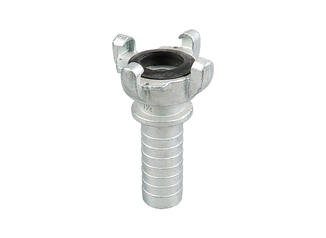
Filtration does not end with the filter cartridge. In a real drip irrigation installation, the pump, filter, and field are connected by quick couplings, clamp fittings, and strainers. These components are part of the filtration system because they either prevent contamination from entering or allow the filter to be serviced efficiently.
Strainers are the simplest level of protection. They are placed at the pump intake or at the beginning of a hose line to catch gravel, stones, small leaves, and other debris before the water reaches the filter. Without a strainer, a single piece of gravel can damage the pump impeller or tear the filter screen. In many applications, a strainer is installed directly on the suction hose or at the inlet of the pump to extend the service life of the primary filter.
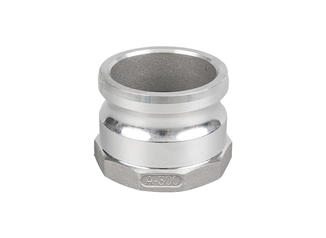
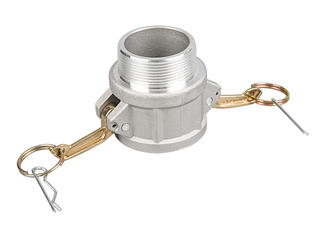
Quick couplings are equally important. When a drip irrigation filter screen must be cleaned weekly, the ability to disconnect and reconnect the filter housing without cutting hoses saves significant labor. Couplings that allow quick release also reduce the risk of dirt getting into the pipe during maintenance.
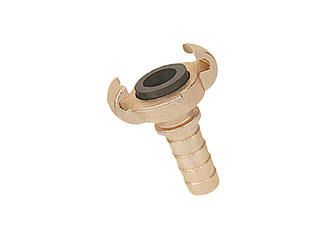
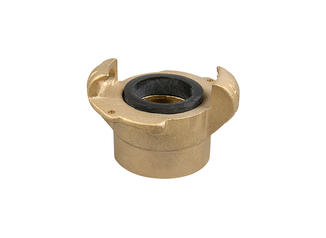
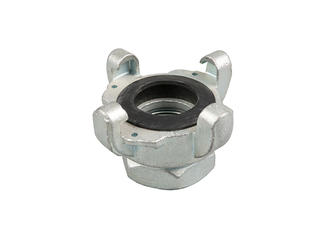
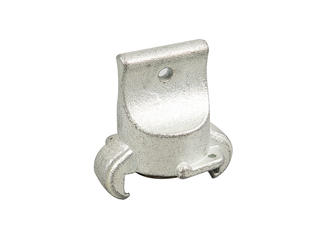
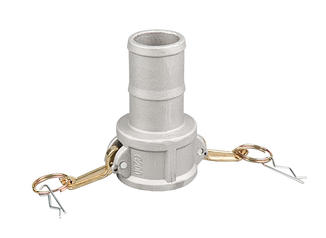
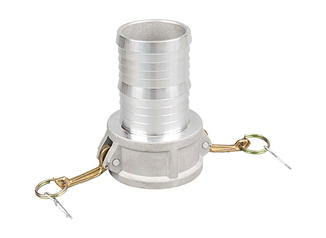
Bauer couplings are one of the most common connection systems in large agricultural irrigation, especially on soft hoses 75 mm and above. They are particularly useful for joining long lengths of irrigation hose to a pump or filter. The Bauer connection system is fast to operate, leak-resistant, and the same coupling can connect a pump outlet, a filter in-line, and a mainline feed. For growers who use portable irrigation units, Bauer couplings offer a straightforward solution to joining long lengths of hose and are designed for repeated connect and disconnect cycles.
Strainers and couplings also help with pressure management. A correctly sized strainer in the hose line prevents debris from entering the filter, while a well-assembled coupling prevents air from being drawn into the suction side of the pump. When selecting these fittings, material choice matters too. Stainless steel strainers are preferred for long service life in exposed environments, while nylon or polypropylene couplings are lighter and more economical for portable irrigation units. If a grower needs to combine different hose sizes or connect a non-threaded pipe to a threaded filter, a careful approach to choosing the right hose coupling will save time and reduce leaks.
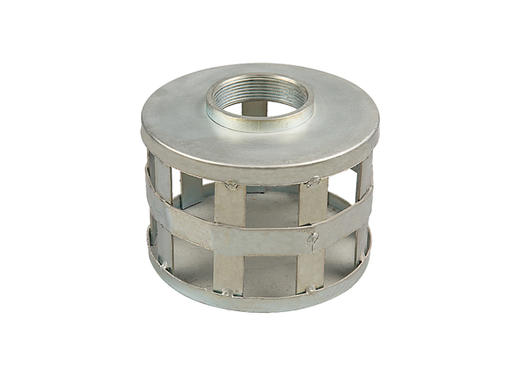 3 Inch Stainless Steel Strainer for Irrigation SystemsThis strainer prevents debris from entering your filter, helping maintain proper pressure. Its stainless steel build ensures long service life in exposed environments, ideal for irrigation setups.View Product →
 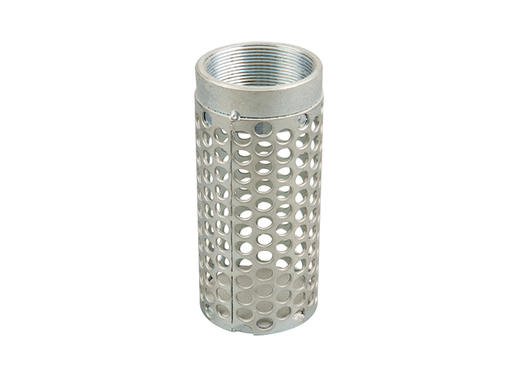 Steel Strainer for Durable Filtration in IrrigationBuilt for long-lasting performance, this steel strainer protects downstream equipment. Its robust design suits exposed installations, reducing debris and supporting efficient pressure management.View Product →
 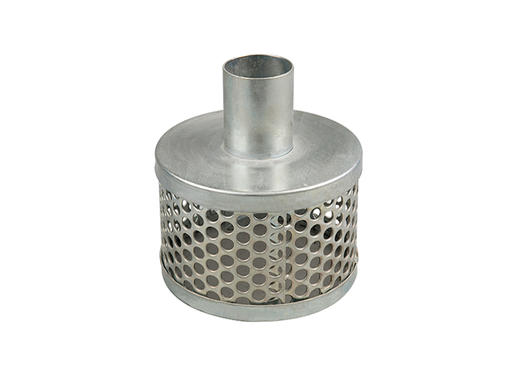 Strainer with Hose Connection for Portable IrrigationThis strainer pairs with a hose for easy installation in portable units. It stops debris from reaching the filter, helping maintain flow and reducing leaks when properly fitted.View Product →
Installation and Maintenance Best Practices
Once the filter and fittings are selected, the way they are installed determines how effective the entire filtration system will be. The most common installation errors are placing the filter on the wrong side of the pump, installing it too close to the pump outlet, or failing to install pressure gauges that show the actual pressure drop across the filter.
Filter placement should follow this sequence: water source, pump intake strainer, pump, primary filter, mainline, then optional secondary filter at the zone valve. The secondary filter is especially valuable when you are using surface water that contains organic matter, because the secondary filter catches particles that pass through the sand media and keeps the fine emitter screens clean. In every installation, a pressure gauge should be mounted both before and after the filter. The gauge before the filter can show upstream pressure issues, while the gauge after the filter reveals how much pressure the filter is consuming.
- Weekly inspection: In the peak irrigation season, check the pressure differential across the filter at least once a week. A pressure drop of 0.5 bar or 7 psi above the clean filter reading indicates that the cartridge is collecting material and needs cleaning.
- Monthly screen inspection: Open the filter housing once every month and visually inspect the screen or disc stack. Look for tears in the mesh, damaged O-rings, or deformed disc grooves. A small tear will let sediment pass straight through to the emitters.
- Seasonal deep-cleaning: At the end of the growing season, remove the filter cartridge and soak it in a mild acid solution if you are dealing with calcium or iron deposits. Rinse thoroughly and inspect the housing seals before storage.
- Backwash sand media systems: Sand media filters should be backwashed at the point where the pressure differential rises to 0.5 bar above the clean starting point. Continue backwashing until the discharge water is completely clear. In most cases this takes 2 to 4 minutes, but the exact interval will depend on the filter specification.
- Winterizing: At the end of the season, drain all water from the filter housing and couplings to protect them from freezing. In cold climates, a slightly loosened filter bowl will prevent ice from cracking the housing.
A clean filter alone is not enough. You must also make sure that all connection points are tight. Couplings that loosen over time can allow air into the system, which not only causes pressure fluctuations but creates conditions for biological growth in the pipe. Regular checking of coupling tightness is part of responsible drip irrigation management.
Troubleshooting Filtration Problems
Even with proper planning, filtration problems can occur. The table below lists the most common symptoms growers encounter, along with the likely causes and the recommended response.
| Symptom | Likely Cause | Recommended Solution |
|---|---|---|
| High pressure drop across the filter | Clogged cartridge or undersized filter for the flow rate | Clean the cartridge, verify the flow capacity, and consider upgrading to a larger filter body |
| Low downstream pressure even after cleaning | Torn screen, loose O-ring, or a bypass in the filter housing | Inspect the mesh for tears and replace the screen or O-ring |
| Emitters clogging despite the filter | Wrong mesh rating, filter bypass, or particulate entering from a connection point | Verify the mesh rating against your emitter specification and inspect all couplings upstream of the filter |
| Cloudy or dirty water after the filter | Mesh too coarse for the application or cartridge not fully engaged in the housing | Check the mesh grade printed on the screen and ensure the cartridge is seated correctly |
| Filter housing crack or leak | Water hammer, over-tightening, or freezing | Install a pressure relief valve, use the recommended tightening torque, and drain in winter |
One of the most overlooked troubleshooting steps is checking the filter bypass, which can happen during backwash. If the backwash valve is left partially open when the system re-enters service, the water will take the path of least resistance around the filter instead of through the screen. The result is unfiltered water flowing directly to the emitters. Always verify that backwash valves are fully closed during normal operation.
Frequently Asked Questions
What mesh size do I need for drip irrigation?
Standard drip emitters should be protected by a filter at 120 mesh (125 microns). For thin-walled drip tape, use 200 mesh (74 microns). Micro-sprinklers can usually run on 80 to 100 mesh. The correct value matches the smallest passage inside the emitter or tape you have selected.
What is the difference between mesh and micron?
Mesh is the number of wire or screen openings per linear inch. Micron is the physical size of one opening measured in micrometers, where 1 micron equals one thousandth of a millimeter. As the mesh number increases, the micron value decreases, and the filtration becomes finer.
Can I use a simple Y-strainer as the only filter for drip irrigation?
Y-strainers are acceptable as a first-stage pre-filter, especially at the pump intake, but they typically offer a coarse mesh of 40 to 60, which is far too coarse to protect drip emitters. You still need a downstream filter rated at 120 to 200 mesh for the actual emitter protection.
How frequently should I clean my drip irrigation filter?
Clean the filter whenever the pressure drop across it exceeds 0.5 bar (7 psi) above the reading of a clean cartridge. In sandy or turbid water this might be every 2 to 3 days, while in clean well water it may be every 2 weeks. Monitoring the pressure gauges tells you when cleaning is needed.
Do I still need filtration if I use municipal water?
Municipal water is generally treated, but older distribution mains can contain rust particles and scale flakes. If your emitters are small, install at least a 100 to 120 mesh screen filter to protect them. The cost is low, and it protects valuable irrigation hardware.
Is a disc filter better than a screen filter for drip irrigation?
Disc filters handle biological and organic matter better, and they are less likely to be permanently blinded by fine sediment. Screen filters are easier to inspect visually and better for removing inorganic sand. If your water source is a pond or dam, a disc filter is often the better investment.
Can I run one large filter for the entire drip system?
Yes, as long as the filter is sized for the peak flow of all zones combined. A central single filter is convenient for maintenance, but it creates a single point of failure. For larger properties, a filter at the pump plus a smaller secondary filter at each zone is more resilient.