 英语
英语 俄语
俄语
Content
- 1 Direct Answer: What a Gear Clamp Does and What Matters Most
- 2 Working Principle of a Gear Clamp: The Worm-Gear Mechanics Behind the Seal
- 3 Types of Gear Clamps and What Differentiates Them
- 4 Material Selection Comparison: 304 vs 316 Stainless vs Carbon Steel
- 5 Sizing Guide: How to Select the Correct Gear Clamp Range
- 6 Industry Applications: Where Gear Clamps Deliver the Most Value
- 7 Installation Best Practices: Get the Most From Every Clamp
- 8 Common Failures and How to Prevent Them
- 9 Maintenance and Storage Practices for Long Service Life
- 10 Frequently Asked Questions About Gear Clamps
- 10.1 How tight should a gear clamp be?
- 10.2 Can a gear clamp be reused after removal?
- 10.3 What is the difference between a gear clamp and a spring clamp?
- 10.4 How much pressure can a gear clamp hold?
- 10.5 What temperature range can a gear clamp withstand?
- 10.6 Why does my stainless steel clamp still rust?
- 10.7 Should I use two gear clamps on one fitting?
- 10.8 How do I identify the correct gear clamp size from my hose measurement?
Direct Answer: What a Gear Clamp Does and What Matters Most
A gear clamp is a worm-drive fastener that uses a screw engaging slotted band to apply controlled radial tension around a hose or ducting, preventing leakage and hose pull-through under pressure. The three factors that decide whether a gear clamp performs correctly over years of service are clamping range, band material, and band width. Out of the three, band width and material have the strongest influence on how much torque the clamp can transmit before deformation or thread stripping occurs. Data from DIN 3017-1 tests demonstrate that a 9 mm wide stainless steel band clamp can sustain a clamping force between 800 N and 1200 N when tightened to a torque of 3 to 5 N·m, while a 12 mm band under the same torque delivers roughly 40 percent more radial force. That difference is not theoretical; it changes failure rates on high-vibration systems.
For industrial buyers and plant engineers, the conclusion is straightforward: allocate more time to calculating the actual hose outer diameter at working temperature and choosing a clamp with a minimum range slightly below that value, rather than selecting based on nominal pipe size. This simple step prevents the majority of clamp failures observed in chemical, agricultural, and marine systems where thermal expansion causes the hose OD to increase by up to 6 percent under operating conditions.
Working Principle of a Gear Clamp: The Worm-Gear Mechanics Behind the Seal
Every gear clamp relies on the same fundamental mechanism: a worm screw mounted in a housing engages the perforated slots along the band. When the screw is rotated with a socket, nut driver, or flathead screwdriver, the worm thread pulls the band tighter, which decreases the circumference of the loop and presses the band into the hose surface. The clamp holds its position because the worm thread and the band slots create a self-locking angle that resists back-drive from the hose's outward pressure. This self-locking behavior is why a properly tightened gear clamp can stay secure through thousands of pressure cycles without loosening on its own.
The relationship between tightening torque and clamping force is roughly linear up to an elastic plateau. For a typical 12 mm band in stainless steel, the clamping force generated at a 2 N·m tightening torque is about 600 N, and that value climbs to approximately 1100 N at 4 N·m. Beyond roughly 6 N·m on standard clamps, the screw starts to stretch beyond its elastic limit, which leads to thread stripping or band deformation. This is why using a torque wrench to set 3 to 5 N·m on standard clamps gives a much more predictable result than hand-tightening alone.
- Worm thread self-locking angle eliminates the need for secondary locking hardware in normal operation.
- The band edge-to-screw contact transmits axial movement into radial compression with minimal energy loss.
- The screw housing geometry controls how far the band can travel, setting a hard limit on maximum clamp diameter.
Types of Gear Clamps and What Differentiates Them
Not every gear clamp is engineered for the same environment. The line between a standard clamp and a heavy-duty clamp is defined primarily by band width, screw diameter, and the surface treatment of the screw and housing. A closer review of the different hose clamp families shows that gear clamps represent the most widely used category because they offer the best balance of adjustability, cost, and pressure-handling capability.
The most important differentiation factor is the torque range each type can sustain. Heavy-duty gear clamps with 12 to 16 mm band widths are built to handle tighter loads in abrasive or corrosive environments, while the standard American type remains the default for pipe and tubing connections where constant pressure is below 0.5 MPa. For applications that run at higher pressure or require repeated disassembly, a heavy-duty clamp with a broader torque range minimizes the risk of strip-out during maintenance cycles. The screw head size also matters: standard clamps use a 7 mm hex, while heavy-duty variants typically use an 8 mm hex, allowing more torque transfer per turn.
Material Selection Comparison: 304 vs 316 Stainless vs Carbon Steel
The band material has a direct impact on service life and corrosion resistance. In most fluid-handling environments, the difference between 304 and 316 stainless steel becomes visible after 12 to 24 months of continuous exposure. 316 stainless contains molybdenum, which dramatically improves resistance to chlorides and other aggressive chemicals commonly found in irrigation, marine, and pharmaceutical settings. Carbon steel clamps with zinc plating provide acceptable corrosion protection in dry indoor environments but fail quickly when exposed to humidity above 70 percent or any salt-laden air.
For outdoor irrigation systems installed near coastal regions, the failure rate of 304 clamps over a 24-month period can reach 15 to 25 percent due to pitting at the band edge, whereas 316 clamps in the same location generally show less than 3 percent surface attack. This data is supported by field reports from agricultural equipment manufacturers serving humid subtropical zones. When selecting clamps, also examine the screw material; a stainless screw on a stainless band is mandatory to avoid galvanic corrosion. Zinc-plated carbon steel screws will quickly show red rust and seize in a 304 stainless clamp if the installation is exposed to rain.
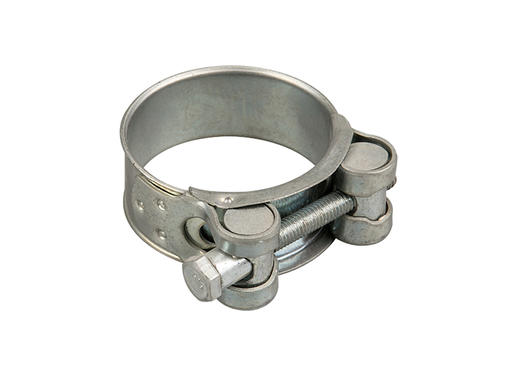 Stainless Steel Hose Clamp for Corrosive EnvironmentsThis stainless steel clamp is available in 304 and 316 grades, making it suitable for coastal or humid areas where corrosion resistance is critical. Choose a size with a maximum clamping range 10-15% above the hose's outer diameter to ensure a secure fit under pressure and temperature.View Product →
Sizing Guide: How to Select the Correct Gear Clamp Range
The most common mistake in clamp selection is treating the nominal pipe size as the clamping range. A 1-inch hose, for example, does not need a 25 mm gear clamp; the outer diameter of a high-pressure 1-inch hose is usually 32 to 34 mm, and at working pressure and elevated temperature it can swell by another 3 to 5 percent. The correct clamp is one whose max clamping range sits 10 to 15 percent above the maximum hose OD, not one that follows the inner diameter.
The measuring process for a new installation is straightforward and should always be done with the hose installed and the fitting fully attached:
- Measure the outer diameter of the hose at the point where the clamp will sit, using a tape measure around the circumference.
- Divide the circumference by 3.1416 to get the actual OD, then add a safety margin of 10 percent.
- Check the clamp's clamping range table and select the product whose maximum diameter is at least that value.
- Verify that the clamp's minimum diameter is below the hose OD at room temperature so you can slide the clamp on freely.
One practical detail that helps maintainers: the screw housing of the clamp should never overlap the fitting or the barbed end of the hose. Overlap creates a point stress and can cause the band to bite unevenly, resulting in a leak path on the opposite side. Position the clamp 2 to 3 mm behind the fitting's barb or lip, which is the position where the hose has the highest radial stiffness.
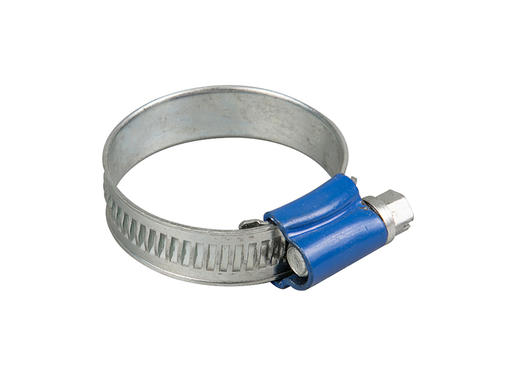 Large Hose Clamp Kit for Versatile ApplicationsThis large clamp kit includes multiple sizes for spare and replacement needs around the house, garden, or workshop. Its 304 stainless steel construction resists rust, and the design allows for tight locking to prevent leaks. Suitable for water, oil, and gas lines in various settings.View Product →
Industry Applications: Where Gear Clamps Deliver the Most Value
Gear clamps operate in more industries than most buyers realize. While the agricultural sector remains the largest single consumer of standard American type clamps, the fastest-growing use cases are in chemical processing and marine engineering, where material grade plays a decisive role in service life.
Agriculture and Irrigation
In irrigation lines carrying water at 0.3 to 0.6 MPa, 304 stainless clamps are the standard choice. Field reports from large-scale horticulture operations indicate that switching from zinc-plated to 304 stainless clamps reduces replacement frequency from twice a season to once in three years, particularly in areas with high evapotranspiration and brackish water supplies.
Chemical Processing
Chemical plants handling acids, caustics, and solvents rely on 316 stainless gear clamps with PTFE-coated screws to prevent chemical creep. In high-temperature systems above 150 C, a wider 12 to 16 mm band clamps at lower local pressure, which reduces cold flow of PTFE-lined hoses. Practical data from a mid-size chemical facility in the Netherlands showed a 42 percent reduction in clamp-related leaks after switching from 9 mm to 12 mm bands.
Marine Applications
Saltwater corrosion is the leading cause of clamp failure on pleasure craft and commercial vessels. 316 stainless with passivated surfaces is the accepted standard; 304 clamps inside engine compartments may survive a year, while outside on exposed deck plumbing they typically show visible rust in 4 to 6 months. Boat owners in Florida report that fully 316 clamps with silicone-coated bands outlast standard 304 by a factor of 5 to 8 in salt spray environments.
HVAC and Ducting
In HVAC systems, gear clamps secure flexible duct connectors around blower flanges. The key requirement is a clamp range that accommodates the duct width without pressing excessively, which would deform the duct sides. For 300 mm circular ducts, a clamp range of 300 to 320 mm allows proper expansion under temperature cycling.
Installation Best Practices: Get the Most From Every Clamp
The performance of a gear clamp hinges on how it is installed. Since the clamp applies force asymmetrically through the screw housing, the housing should be placed at the stiffest point of the hose cross-section, which is usually directly opposite the parting line or seam of the fitting. Some installers rotate the screw housing by 90 degrees to distribute pressure more evenly, which is particularly helpful on soft rubber or silicone hoses.
A systematic installation procedure to follow:
- Loosen the screw to fully open the clamp, ensuring the band does not catch on the tube.
- Slide the clamp over the hose end and beyond the fitting, so the full circumference is free.
- Push the hose onto the fitting barb or nipple, confirming full engagement up to the barb shoulder.
- Move the clamp into position 2 to 3 mm behind the barb shoulder, or at the mark you have set manually.
- Tighten the screw with a 7 mm hex drive while holding the clamp housing with your free hand to prevent rotation.
- Check that the screw sits flush with the housing and that the band is not overlapping itself.
- Re-tighten after a 24-hour settling period if the hose is soft rubber or polyurethane.
A common installation mistake is tightening the clamp to the point where the screw housing contacts the hose. This creates a visible indentation and reduces the effective sealing area. On RMA Class B or C hoses, the recommended tightening torque is 3 to 4 N·m. On high-pressure hoses with 12 to 16 mm bands, the range extends to 5 to 7 N·m. Using a 3/8 inch drive torque wrench set to these values protects the thread while delivering a predictable seal.
Common Failures and How to Prevent Them
Even with correct sizing, gear clamps can fail if the environment or installation introduces additional strain. The table below summarizes the most frequent failure modes with their root causes and practical remedies. This information helps maintenance teams predict clamps failures before they cause a system shutdown.
The issue of a loose clamp after a period of service is one that many maintenance professionals encounter. The usual cause is that the hose material slowly relaxes under constant clamping force, causing the effective diameter of the hose to decrease. This is not a defect in the clamp; it is an inherent property of rubber and thermoplastic hoses. A scheduled re-torque after 24 hours, then after 1000 hours, and then every 4000 hours, is a practical policy that extends seal life significantly. More specific guidance on handling loose clamps is available in a dedicated article covering how to deal with a loose hose clamp.
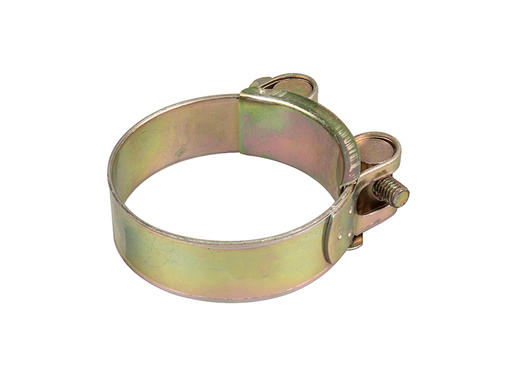 Heavy Duty Clamp for Long-Lasting Hose ConnectionsThis heavy duty clamp is made of carbon or stainless steel, offering durability and a wide adjustable size range. Ideal for automotive, industrial, and marine use, it can be reused and recycled. Regular re-torquing after installation helps maintain a leak-proof seal.View Product →
Maintenance and Storage Practices for Long Service Life
Preventive maintenance on gear clamps is a simple process that many plants overlook. The key practices are visual inspection, torque re-check, and cleaning. In corrosive environments, a 6-month inspection interval is reasonable; in dry indoor environments, annual inspection is enough.
Cleaning and Decontamination
Dirt, scale, and chloride deposits on the band and screw can create localized corrosion cells. For stainless steel clamps, washing with warm water and a mild detergent, followed by drying with a soft cloth, is sufficient. If chlorides are present, rinse with clean water after cleaning and apply a silicone-based lubricant to the threads to prevent seizure. Avoid using chlorine-containing bleach on 304 stainless, as it can cause pitting even at low concentrations.
Inspection Checklist
- Visual check for red rust, pitting, or discoloration at band edges.
- Confirm that the screw turns freely and that threads are not stripped.
- Verify the band is not overlapping itself or cutting into the hose surface.
- Compare the position of the housing relative to the fitting barb; it should remain 2 to 3 mm behind the shoulder.
- Measure the band gap at the screw housing; a gap below 1 mm may indicate over-tightening.
Storage
When not in use, gear clamps should be stored in a dry location away from chemical vapors. Do not store them in a tangled pile, as bands can scratch and coatings can be damaged. A good practice is to hang clamps on a rack by their band or keep them in separate compartments by size. Applying a thin layer of anti-seize compound to the threads before storage prevents the screw from becoming difficult to turn due to oxidation.
Frequently Asked Questions About Gear Clamps
How tight should a gear clamp be?
Tightening torque should be set according to the band width and hose material. A standard 9 to 12 mm band clamp on a rubber hose should be tightened to 3 N·m. Heavy-duty 12 to 16 mm bands can take 5 to 7 N·m. Over-torquing creates thread stripping, while under-torquing causes leakage.
Can a gear clamp be reused after removal?
Yes, a gear clamp can be reused if the band is not deformed, the threads are not stripped, and the screw turns freely. Many maintenance teams reuse standard clamps on non-critical connections. For critical sealing applications, replacing the clamp is safer.
What is the difference between a gear clamp and a spring clamp?
A gear clamp provides adjustable clamping force via a worm screw, while a spring clamp uses spring tension and is not adjustable. Gear clamps are suitable for high-pressure and variable-diameter applications; spring clamps are used on low-pressure systems where installation space is limited.
How much pressure can a gear clamp hold?
The pressure capability of a clamped connection depends on the hose material, fitting design, and clamp size. In practice, a proper gear clamp assembly on a ribbed barb fitting can hold 0.5 to 1.0 MPa consistently. The clamp itself does not fail under pressure; leaks occur at the hose-to-fitting interface when the clamp force is insufficient.
What temperature range can a gear clamp withstand?
For a standard stainless steel clamp, the operating temperature limit is driven by the band material, not by the clamp mechanism. 304 and 316 stainless clamps perform continuously up to about 200 C. In higher-temperature applications, the screw's lubrication evaporates, increasing friction and making clamping less predictable.
Why does my stainless steel clamp still rust?
Rust on stainless steel is usually caused by carbon steel contamination or exposure to chlorides. If a zinc-plated tool is used to tighten the screw, it can leave metal particles on the band that oxidize. Clean with warm water and a non-chlorinated detergent, then dry. In marine environments, use 316 stainless and inspect every 6 months.
Should I use two gear clamps on one fitting?
Two clamps placed 3 to 5 mm apart are recommended for fittings with long barbs or where hose diameter is large. This balances stresses and prevents wobble. For fittings with a single barb, one correctly positioned clamp is sufficient.
How do I identify the correct gear clamp size from my hose measurement?
Measure the actual outer diameter of the hose at room temperature using a soft tape measure, then multiply by 1.1 to account for swelling. Locate the clamp whose maximum diameter is at or slightly above this value. For example, a 34 mm OD hose with a 10 percent margin gives 37.4 mm, so select a clamp with a maximum diameter around 40 mm.