 英语
英语 俄语
俄语
Content
- 1 What Are Cam Locks — The Short Answer
- 2 The Anatomy of a Camlock Coupling
- 3 Standard Types of Camlock Couplings (MIL-C-27487 / EN 14420-7)
- 4 Materials Used in Cam Lock Fittings
- 5 Where Cam Locks Are Used — Industry Applications
- 6 Cam Lock vs. Other Quick-Connect Coupling Systems
- 7 How to Select the Right Camlock Coupling
- 8 Installation, Safety, and Maintenance Best Practices
- 9 Pressure Ratings, Temperature Limits, and What the Numbers Mean
- 10 Cam Lock Couplings in Hazardous and Regulated Environments
- 11 Cam Lock Furniture Locks vs. Industrial Cam Lock Couplings
- 12 Frequently Asked Questions About Cam Locks
- 12.1 Are all camlock couplings interchangeable between brands?
- 12.2 Can cam lock couplings be used with compressed air?
- 12.3 What is the difference between a cam lock and a Storz coupling?
- 12.4 How often should cam lock gaskets be replaced?
- 12.5 What size cam lock do I need?
- 12.6 Do cam lock couplings require any tools to connect?
What Are Cam Locks — The Short Answer
Cam locks are quick-connect fastening mechanisms that use rotating cam arms to create a secure, leak-resistant seal between two fittings — no tools, no threads, no wasted time. In fluid handling, the most common form is the camlock coupling, a standardized connector that allows hoses, pipes, and tanks to be joined or disconnected in under three seconds. They are used in agriculture, petroleum, chemical processing, food production, fire suppression, and dozens of other industries where speed, safety, and reusability matter.
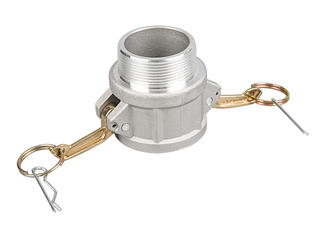
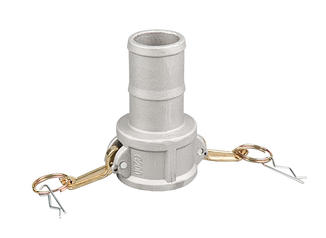
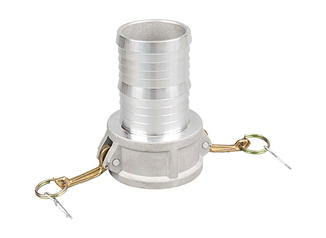
The core mechanism is simple: a female adapter (the "coupler") has two spring-loaded arms on its outer body. When the male half (the "plug") is inserted and the arms are pressed down, internal cams rotate and lock the plug in place, compressing a gasket to form a tight seal. Releasing the arms reverses the motion and frees the connection instantly.
Beyond fluid handling, the term "cam lock" also refers to a cylindrical locking mechanism widely used in furniture, cabinets, and enclosures — but in industrial and process contexts, the camlock coupling is by far the dominant application. This article focuses primarily on the industrial coupling type.
The Anatomy of a Camlock Coupling
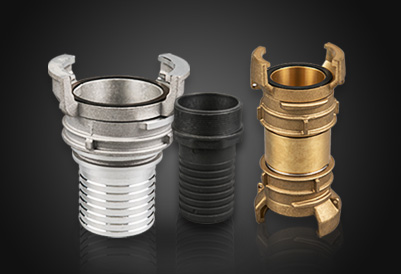
Understanding how a camlock coupling is built explains why it performs so reliably across millions of daily connections and disconnections worldwide. Each coupling consists of two halves:
The Coupler (Female Half)
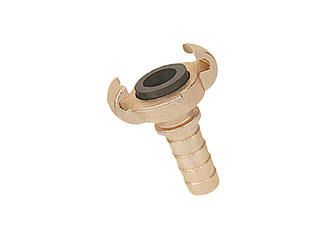
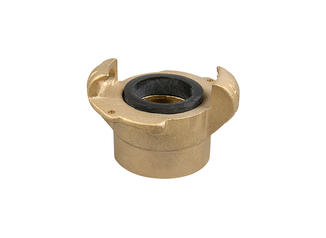
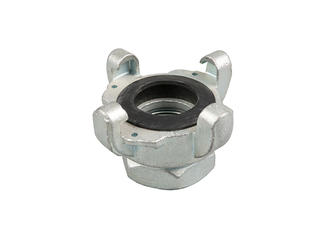
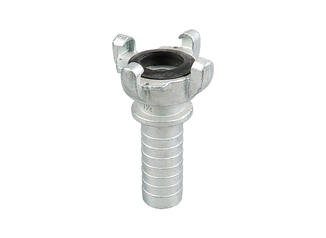
The coupler is the receiving end. It features a smooth internal bore sized to accept the plug, two external cam arms that pivot on pins, and a groove inside the bore that accepts the locking groove on the plug. The cam arms are spring-loaded so they automatically return to the open position when released. Inside the bore sits a gasket — typically EPDM, Buna-N (nitrile), Viton, silicone, or PTFE — that compresses against the face of the plug to create a positive seal.
The Plug (Male Half)
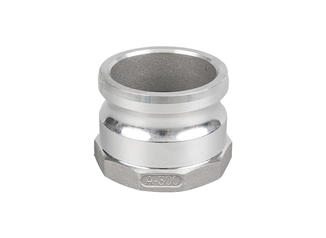
The plug slides into the coupler and has a machined groove or collar that the cam arms engage. When locked, the plug cannot pull free without deliberately releasing the cam arms. The plug end opposite the coupling face connects to a hose, pipe, or tank via threads, hose shank, or flange.
The Gasket
Gasket selection is one of the most critical decisions when specifying a camlock coupling. The wrong material can degrade rapidly, contaminate the product stream, or fail catastrophically. Key gasket choices include:
- Buna-N (Nitrile): General-purpose, excellent for petroleum products and water; operating range roughly −40°F to 250°F (−40°C to 121°C).
- EPDM: Best for water, steam, and mild acids; poor with petroleum-based fluids.
- Viton (FKM): Premium chemical resistance, handles fuels, acids, and elevated temperatures up to 400°F (204°C).
- Silicone: Food-grade applications, excellent at extreme temperatures.
- PTFE (Teflon): Inert to virtually all chemicals; used in aggressive chemical transfer.
Standard Types of Camlock Couplings (MIL-C-27487 / EN 14420-7)
The international standard for camlock couplings — originally MIL-C-27487, now widely referenced as EN 14420-7 in Europe and ANSI/ASME B31.3-aligned specifications in North America — defines seven distinct types, each describing a different end configuration. This standardization means a Type C coupler from one manufacturer will mate with a Type C plug from another, regardless of brand or country of origin.
| Type | Coupler End | Adapter/Plug End | Typical Use Case |
|---|---|---|---|
| A | Female coupler | Male NPT thread | Connect to threaded pipe/equipment |
| B | Male plug | Female NPT thread | Connect to female-threaded tank outlets |
| C | Female coupler | Hose shank (barbed) | Hose-end connection; most common type |
| D | Female coupler | Female NPT thread | Pump inlets with female thread |
| E | Male plug | Male NPT thread | Equipment with male threads |
| F | Male plug | Hose shank (barbed) | Hose-to-coupler male adapter |
| DC (Dust Cap) | Sealing cap | Covers female coupler | Protect open couplers from contamination |
Size ranges run from ½ inch (DN13) up to 6 inches (DN150) for standard commercial products, with specialty manufacturers producing up to 12-inch cam lock fittings for large-volume bulk liquid transfer applications. Pressure ratings vary widely: a typical aluminum 2-inch camlock coupling is rated at 150 PSI working pressure, while stainless steel versions of the same size often handle 200–250 PSI depending on temperature.
Materials Used in Cam Lock Fittings
Material selection for a camlock coupling is driven by the fluid being transferred, operating pressure and temperature, and environmental exposure. The most common materials are:
Aluminum
By far the most widely used material. Lightweight, corrosion-resistant to many media, easy to machine, and cost-effective. Aluminum cam locks are the standard choice for agriculture (irrigation, fertilizer), petroleum transfer, and general industrial use. They are, however, unsuitable for strong acids, alkalis, and certain solvents that attack aluminum oxide.
Stainless Steel (304 and 316)
304 stainless is used where moderate chemical resistance and hygienic surfaces are needed — dairy, beverage, and food processing. 316 stainless steel contains molybdenum, which dramatically improves resistance to chlorides and acids, making it the material of choice for chemical plants, marine environments, and pharmaceutical processing. Stainless cam lock couplings typically cost 2–4× more than equivalent aluminum parts but last significantly longer under aggressive conditions.
Brass
A traditional choice for water, compressed air, and petroleum systems. Brass cam lock fittings offer good corrosion resistance and are preferred in some fire service and municipal water applications. They are heavier than aluminum but denser, which some operators prefer for high-cycle connections.
Polypropylene (PP) and Nylon
Non-metallic cam locks made from polypropylene or nylon are lighter and resist many acids and alkalis that would attack metals. They are commonly used in chemical transfer, water treatment, and applications where spark risk must be eliminated. Pressure ratings are generally lower — typically 75–100 PSI — and these materials should not be used above 150°F (65°C).
PVDF (Kynar)
A high-performance fluoropolymer used for highly aggressive chemicals including strong acids and oxidizers. PVDF cam lock couplings are significantly more expensive but deliver exceptional chemical inertness and UV resistance.
Where Cam Locks Are Used — Industry Applications
The camlock coupling has found a home in virtually every industry that moves fluids in bulk. Below are the primary sectors and how cam lock fittings serve them:
Agriculture and Irrigation
Cam locks are ubiquitous in agricultural irrigation systems, where farmers need to connect and disconnect large-diameter hoses quickly during planting and harvesting seasons. Aluminum Type C and Type D couplings in 2-inch and 3-inch sizes are the backbone of lay-flat hose irrigation systems. They also appear on nurse tanks and chemical applicator equipment used for fertilizer and pesticide transfer. A single farmhand can connect a 3-inch cam lock in about 2 seconds — a task that would take over a minute with threaded fittings.
Petroleum and Fuel Transfer
Bulk fuel terminals, tank trucks, and fuel depots rely heavily on cam lock couplings for gasoline, diesel, aviation fuel, and lubricating oils. The American Petroleum Institute (API) recognizes cam lock-style fittings in several petroleum transfer standards. Color-coded anodized aluminum cam locks are often used to prevent cross-contamination — red for diesel, black for gasoline, green for aviation fuel — reducing operator error in high-volume fuel depots.
Chemical Processing
Chemical plants transfer dozens of different substances — acids, solvents, alkalis, and polymers — often through the same hose stations at different times. Stainless steel and polypropylene cam lock couplings make it practical to switch fluids quickly without decommissioning an entire pipe run. The tight gasket seal minimizes vapor escape, supporting worker safety and regulatory compliance under OSHA 29 CFR 1910.119 (Process Safety Management).
Food, Beverage, and Dairy
Sanitary-grade stainless steel cam lock fittings with silicone or FDA-approved EPDM gaskets are used extensively in breweries, dairy plants, juice processing, and confectionery manufacturing. Cam locks are favored here because they can be cleaned in place (CIP) and sanitized in place (SIP) — the smooth internal bore and replaceable gasket make them easier to keep sterile than many alternative fittings.
Fire Fighting and Water Transfer
Municipal water authorities and fire departments use cam lock-style couplings on portable pump systems, temporary water mains, and dewatering equipment. The speed of connection is a literal life-safety issue in firefighting — every second spent on equipment setup is a second the fire is spreading. While Storz couplings dominate fire attack hose in many regions, cam lock fittings are standard on large-diameter supply and tanker lines.
Construction and Dewatering
Construction sites frequently use submersible pumps to remove groundwater from excavations. Cam lock couplings allow discharge hoses to be assembled rapidly across uneven terrain and then quickly broken down and moved to the next site. The rugged construction of aluminum cam locks handles the rough treatment typical of jobsite environments.
Marine and Offshore
Offshore oil platforms and ship bunkering operations use cam lock couplings for fuel and ballast water transfer. Marine environments demand 316 stainless steel construction to withstand chloride-laden salt air, and all cam locks in these settings should be rated for ATEX or IECEx hazardous area classification if used near flammable vapors.
Cam Lock vs. Other Quick-Connect Coupling Systems
Cam lock couplings are not the only quick-connect option on the market. Understanding how they compare to alternatives helps engineers and procurement teams make the right choice:
| Feature | Camlock Coupling | Storz Coupling | Dry Break Coupling | Threaded NPT Fitting |
|---|---|---|---|---|
| Connection speed | ~2–3 seconds | ~3–5 seconds | ~5–10 seconds | Minutes + tools |
| Spill on disconnect | Yes (residual fluid) | Yes | Minimal / none | Yes |
| Interchangeability | High (standardized) | High (DIN standard) | Low (brand-specific) | High (NPT/BSP) |
| Max working pressure | 150–250 PSI (typical) | 175–300 PSI | Up to 3,000+ PSI | Varies widely |
| Cost | Low to moderate | Moderate | High | Low |
| Best application | General liquid transfer | Fire service | Hazardous liquids, high-pressure | Permanent installations |
The key limitation of the standard cam lock coupling is that it requires the line to be depressurized before disconnection — attempting to release cam arms under pressure can eject the plug with dangerous force and cause a fluid spill. For applications where pressurized disconnection is needed, dry-disconnect or breakaway couplings are the better choice.
How to Select the Right Camlock Coupling
Choosing the correct cam lock fitting is a multi-variable decision. Getting it wrong results in leaks, contamination, premature wear, or failure. Work through these parameters in order:
- Fluid compatibility: Identify exactly what is being transferred — chemical name, concentration, and temperature. Match the body material and gasket compound to the fluid's chemical resistance chart. Do not assume; check manufacturer datasheets.
- Size: Cam lock size is measured by the inner diameter of the coupling bore. It must match (or be adapted to) the inner diameter of the connected hose or pipe. Undersizing creates excessive pressure drop; oversizing wastes cost.
- Type (A through F): Determine what end connections are needed on each half — threaded, hose shank, or male/female — and select the corresponding type letters for each half of the connection.
- Pressure rating: Confirm the system's maximum working pressure (MWP) and ensure the cam lock's rated MWP exceeds it with a safety margin. Pressure rating decreases at elevated temperatures — check the manufacturer's derating charts.
- Temperature range: Both the body material and the gasket must tolerate the operating temperature range, including process peaks and ambient extremes.
- Regulatory and safety requirements: Food-grade applications require FDA-compliant gaskets and often sanitary-finish stainless. Hazardous locations may require ATEX-rated, spark-proof fittings. Petroleum applications may trigger API standards.
- Connection frequency: High-cycle applications (dozens of daily connections) need cam arms and body materials that resist wear. Stainless steel outperforms aluminum in cycle life for very high-frequency operations.
Installation, Safety, and Maintenance Best Practices
Cam lock couplings are simple, but they are not immune to misuse. Maintaining performance and operator safety requires following a consistent set of procedures.
Connecting a Camlock Coupling Correctly
- Confirm the system is depressurized and drained before connecting or disconnecting.
- Inspect the gasket — look for cuts, swelling, hardening, or compression set. Replace before use if any defect is found.
- Insert the plug fully into the coupler until it seats against the gasket — you should feel slight resistance as it compresses the seal.
- Press both cam arms down simultaneously until they click or lie flat against the coupler body.
- Gently tug the plug to confirm it is fully locked before opening any valve.
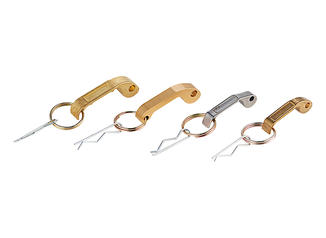
- For critical applications, apply a safety wire or locking clip through the cam arm holes to prevent accidental release.
Common Failure Modes and How to Prevent Them
- Gasket failure: The most common cause of leaks. Replace gaskets on a scheduled basis — at minimum annually in seasonal applications, monthly in high-cycle industrial use. Keep spare gaskets on site.
- Cam arm wear: Worn cam arms no longer generate sufficient clamping force. Inspect for bent, cracked, or deformed arms and replace fittings showing visible wear.
- Corrosion and pitting: Aluminum cam locks exposed to incompatible chemicals or saltwater will pit and weaken. Switch to stainless or PVDF if corrosion is observed.
- Cross-threading hose shanks: Overtightening or cross-threading the hose shank end into a pipe fitting damages both components. Use appropriate thread tape and torque.
- Disconnection under pressure: Never open cam arms while the line is pressurized. Post pressure-check procedures and tag lines appropriately in multi-user facilities.
Storage and Handling
Store cam lock fittings with dust caps on open female couplers to prevent contamination and protect the gasket from UV degradation (a particular issue for EPDM and nitrile). Keep fittings away from oils, solvents, and ozone-generating equipment when in storage. Stainless steel cam locks may be cleaned with dilute acid (passivation) annually to maintain corrosion resistance.
Pressure Ratings, Temperature Limits, and What the Numbers Mean
Every cam lock coupling carries a published maximum working pressure (MWP) and temperature range. These numbers are not conservative suggestions — they represent the engineering limits of the assembly. Operating above them risks coupling failure, personal injury, and environmental release.
Key relationships to understand:
- Pressure decreases with temperature: A 2-inch aluminum cam lock rated at 150 PSI at 70°F (21°C) may be derated to 90 PSI at 150°F (65°C). Always check the derating curve for elevated-temperature service.
- Larger sizes have lower MWP: A 1-inch aluminum cam lock may be rated at 250 PSI while a 6-inch version in the same material is often rated at only 75 PSI — larger diameters distribute load over a wider area, demanding more clamping force from the cam arms.
- Gasket material limits the temperature ceiling: Buna-N is limited to about 250°F (121°C). For steam or hot oil above that temperature, Viton or PTFE gaskets are required — and the coupling body must also tolerate those temperatures (polypropylene cannot).
- Surge pressure: Water hammer and pump start/stop surges can produce pressure spikes 2–3× the steady-state pressure. Factor surge into your pressure rating calculations, not just steady operating pressure.
Cam Lock Couplings in Hazardous and Regulated Environments
When cam lock fittings are used with flammable, toxic, or food-contact materials, additional design and compliance requirements apply:
Static Electricity and Bonding
Liquid flowing through a non-conductive hose can accumulate electrostatic charge. When using cam lock couplings to transfer flammable liquids, the entire system — tank, hose, coupling, receiving vessel — must be bonded and grounded per NFPA 77 (Recommended Practice on Static Electricity). Metal cam lock couplings provide electrical continuity through the fitting body, but bonding cables with clamps are still required across non-conductive hose sections.
ATEX / IECEx Classified Areas
In explosive atmospheres (Zone 1 or Zone 2 per ATEX classification), cam locks must be made from materials that do not produce sparks when struck or mated. Aluminum-on-aluminum can create sparks under impact. For classified hazardous areas, specify spark-free cam lock couplings made from brass, bronze, or non-sparking aluminum alloys, or use non-metallic PVDF/polypropylene couplings where chemical compatibility allows.
Food and Pharmaceutical Compliance
Cam lock couplings in food, beverage, and pharmaceutical applications must use FDA-compliant gasket materials (21 CFR Part 177 for elastomers). The coupling body should be 316L stainless steel with an internal surface roughness of Ra ≤ 0.8 μm for hygienic applications, or smoother for pharmaceutical use. 3-A Sanitary Standards (specifically 3-A SSI 74-06 for fittings) provide the most widely recognized certification for dairy and food service cam lock fittings.
Cam Lock Furniture Locks vs. Industrial Cam Lock Couplings
It is worth briefly distinguishing between two products that share the "cam lock" name but serve entirely different purposes:
The furniture cam lock (also called a cam nut or cam fastener) is a cylindrical metal fastener used in flat-pack furniture — the kind that comes with an Allen wrench and confusing pictograms. It consists of a small cylindrical body that sits in a pre-drilled hole and locks onto a peg inserted from an adjacent panel. Turning the cam body with a screwdriver rotates an offset lobe that traps the peg and pulls the joint tight. These are used in everything from IKEA shelves to office cubicle walls and electronics enclosures.
The camlock coupling (the subject of this article) is an entirely different industrial product — a fluid-handling connector used in hose and pipe systems. The only shared feature is the rotating cam mechanism that generates clamping force. In procurement and engineering documentation, always specify "cam lock coupling" or "cam and groove coupling" to avoid confusion with furniture hardware.
Frequently Asked Questions About Cam Locks
Are all camlock couplings interchangeable between brands?
Yes, in theory — and usually in practice. Because cam lock couplings follow the MIL-C-27487 / EN 14420-7 dimensional standard, a Type C coupler from one manufacturer should accept a Type C plug from any other brand in the same nominal size. However, manufacturing tolerances vary, and some cheaper imports may not hold the standard tightly. For critical applications, test cross-brand mating before relying on it in service.
Can cam lock couplings be used with compressed air?
Technically yes, but it is generally not recommended for high-pressure compressed air. An accidental disconnect under air pressure can cause the plug to eject with extreme force, posing a serious injury risk. If cam locks are used with compressed air, the system must be depressurized before disconnection, and safety clips must be installed on the cam arms. Dedicated pneumatic quick-connect fittings with internal shutoff valves are a safer choice for air lines.
What is the difference between a cam lock and a Storz coupling?
Both are quick-connect fluid couplings, but they differ in mechanism and primary application. A Storz coupling uses a symmetrical half-turn locking mechanism — both halves are identical, so there is no male/female distinction. Storz couplings are standard in fire service hose. Cam lock couplings have distinct male and female halves with lever-action cam arms, and are the standard in agriculture, petroleum, and chemical transfer. Storz couplings are generally rated to higher pressures in large diameters; cam locks offer a wider range of end-connection options.
How often should cam lock gaskets be replaced?
There is no single universal answer — it depends on fluid, temperature, and connection frequency. As a general guideline: inspect gaskets before every use in critical applications; replace annually in seasonal agricultural use; replace every 3–6 months in chemical processing or high-temperature service. If a gasket shows any cracking, hardening, swelling, or visible compression set when flat, replace it immediately. Gaskets are inexpensive; leaks and spills are not.
What size cam lock do I need?
Match the cam lock size to the inner diameter of your hose or pipe. Common sizes in industrial use range from ½ inch to 4 inches. Flow rate also matters — a 1-inch cam lock at 60 PSI passes roughly 40–60 gallons per minute depending on fluid viscosity, while a 3-inch cam lock at the same pressure handles 350–500 GPM. Undersizing creates excessive velocity, pressure drop, and erosion wear; oversizing wastes cost and adds unnecessary weight.
Do cam lock couplings require any tools to connect?
No — that is one of their primary advantages. The cam arm mechanism is fully hand-operated. No wrenches, clamps, or thread sealant are needed. This makes cam lock couplings particularly valuable in field conditions or where frequent connections and disconnections are required without a full tool kit on hand.