 英语
英语 俄语
俄语
Content
- 1 What Is a Bushing in Plumbing
- 2 Types of Plumbing Bushings and What Sets Them Apart
- 3 Materials Used for Plumbing Bushings and Why They Matter
- 4 How Bushings Fit Into Plumbing System Design
- 5 Installing a Plumbing Bushing Correctly
- 6 Bushings in Fire Protection Plumbing and the Role of Storz Coupling Systems
- 7 Common Questions About Plumbing Bushings
- 8 Selecting the Right Bushing for Your System
What Is a Bushing in Plumbing
A bushing in plumbing is a short, hollow fitting used to connect two pipes or fittings of different sizes within the same system. It acts as a reducer — one end matches the larger pipe diameter, the other end steps down to fit a smaller pipe or fitting. Unlike a coupling, which joins two pipes of the same diameter end to end, a bushing handles the size transition within a single compact piece. This makes bushings indispensable wherever a pipe system branches into different flow sizes, whether in residential water supply lines, industrial fire suppression networks, or heavy-duty firefighting hose assemblies that incorporate storz coupling connections.
The core purpose is straightforward: seal the junction between two mismatched diameters without leaking, and do it in a way that fits within tight spaces where a full reducer fitting would not. Most bushings are threaded on both the outside (male) and inside (female) ends, though flush bushings, hex bushings, and face bushings each follow slightly different geometry depending on the application.
Types of Plumbing Bushings and What Sets Them Apart
Not all bushings are interchangeable. The application determines which type is correct, and choosing the wrong one leads to leaks, stress cracking, or incompatible thread engagement. The main types used across plumbing and piping systems include:
Hex Bushing
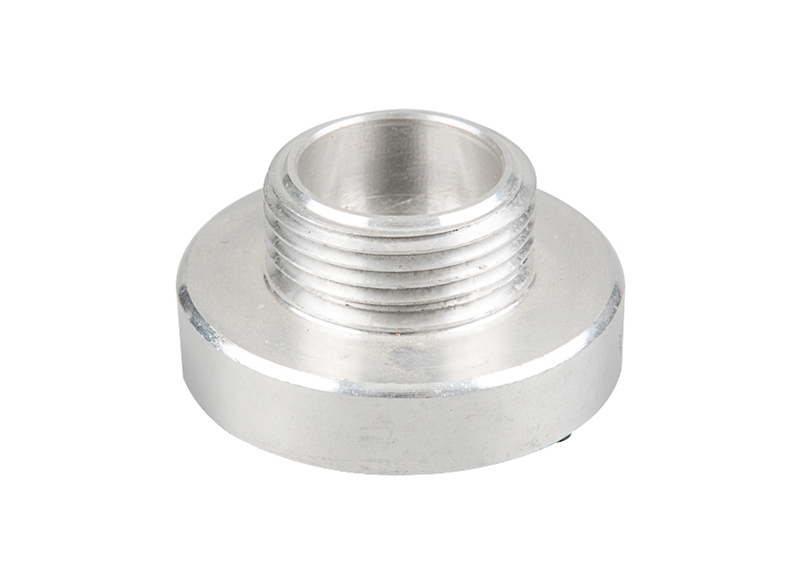
The most common type in commercial and industrial plumbing. The exterior is machined into a hexagonal shape, allowing a wrench to grip and tighten without slipping. Hex bushings are threaded male on the outside and female on the inside. They install directly into a tee, elbow, or coupling to reduce the outlet size. A typical application: installing a 1/2-inch pressure gauge into a 3/4-inch NPT port.
Flush Bushing (Face Bushing)
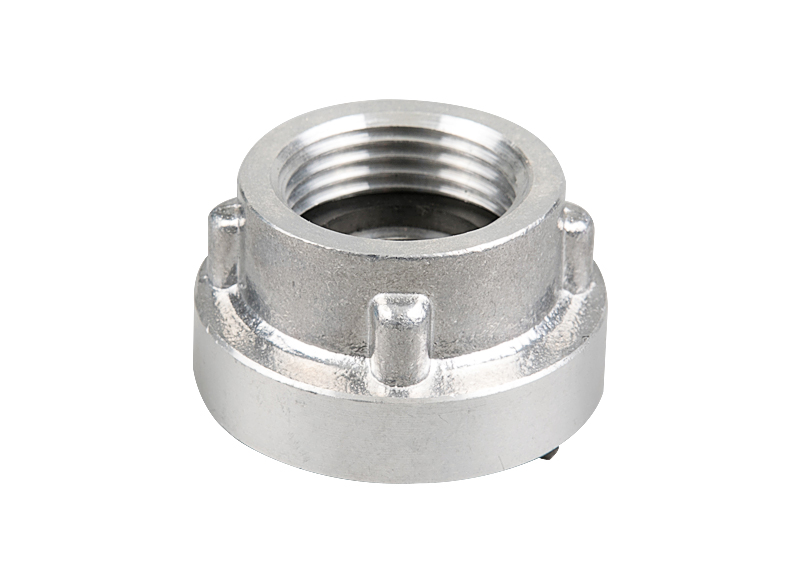
A flush bushing sits completely inside the receiving fitting, with its face flush to the end of the host fitting. It has female threads on the inside but no hex projection on the outside, making it useful where a hex bushing's external shoulder would cause clearance problems. Flush bushings are common in tight manifold assemblies.
Reducing Bushing
In PVC and CPVC systems, a reducing bushing is a slip or solvent-weld type without threads. It slides into the bell end of a larger fitting and provides a smaller hub for the incoming pipe. These are dominant in drain, waste, and vent (DWV) systems where pipe sizes change frequently through a single stack.
Pipe Bushing vs. Adapter — Key Distinction
A bushing differs from an adapter in that both ends of a bushing are the same thread type (male NPT and female NPT, for instance), while an adapter changes the thread type entirely — such as converting male NPT to a storz coupling thread or to a grooved mechanical end. When fire hose connections, standpipe reducers, or hydrant outlets need to transition from a threaded pipe connection to a quick-connect storz coupling interface, an adapter or threaded storz coupling fitting handles that task rather than a standard bushing.
| Bushing Type | Connection Style | Typical Use | Common Materials |
|---|---|---|---|
| Hex Bushing | Male NPT x Female NPT | Pressure gauges, valves, fittings | Brass, galvanized steel, stainless |
| Flush Bushing | Male NPT x Female NPT (no shoulder) | Manifolds, compact assemblies | Brass, stainless steel |
| Reducing Bushing (DWV) | Solvent weld / slip fit | Drain, waste, vent lines | PVC, ABS, CPVC |
| Adapter/Coupling Transition | NPT to Storz or grooved end | Firefighting, standpipe outlets | Aluminum, brass, ductile iron |
Materials Used for Plumbing Bushings and Why They Matter
Material selection directly affects service life, chemical compatibility, and pressure rating. A brass hex bushing that works perfectly in a potable water system can corrode rapidly in a saltwater or acidic process line. Here is a breakdown of the most widely specified materials:
Brass
The default choice for most commercial and residential applications. Brass bushings machine cleanly, resist corrosion in water and low-pressure gas service, and accept standard NPT threads reliably. Working pressure typically ranges from 125 PSI to 200 PSI depending on wall thickness and size. Brass is not suitable for systems carrying ammonia or high-concentration acids.
Galvanized Steel
Used in fire protection systems, gas distribution, and outdoor installations where pressure requirements exceed brass ratings. Galvanized hex bushings commonly see service pressures up to 300 PSI in black iron configurations. However, galvanizing can flake inside pipe systems over time, making it unsuitable for drinking water in most modern codes.
Stainless Steel
Specified for food processing, pharmaceutical, marine, and chemical processing lines. Type 316 stainless offers chloride resistance that 304 does not. Stainless bushings handle operating temperatures up to 800°F in steam service and remain non-reactive in most acidic environments. Cost is significantly higher — roughly 3x to 5x compared to brass for equivalent sizes.
PVC and CPVC
PVC reducing bushings dominate DWV systems. CPVC versions handle hot water up to 200°F and are pressure rated for supply lines. Schedule 40 PVC bushings are rated to 140 PSI at 73°F, dropping sharply as temperature rises. Neither material suits high-mechanical-stress environments.
Aluminum
Aluminum appears frequently in lightweight firefighting equipment. Storz coupling reducers and standpipe outlet adapters are often cast or machined from aluminum alloy. An aluminum storz coupling reducer bushing converting a 2.5-inch female thread outlet to a 1.5-inch storz coupling can weigh under 200 grams while handling 250 PSI working pressures.
Ductile Iron
Found in larger industrial and fire suppression systems. Ductile iron bushings and reducers are installed at hydrant outlets, pumping stations, and main riser connections where pressure ratings of 350 PSI and above are required. Superior resistance to mechanical impact makes them ideal for outdoor utility installations.
How Bushings Fit Into Plumbing System Design
Bushings solve a recurring design challenge: plumbing systems almost never run in a single pipe size from source to end use. Water supply lines step down from a 1-inch main to 3/4-inch branch lines and then to 1/2-inch fixture supply lines. Gas systems reduce from 1.25-inch or larger service lines to 3/4-inch or 1/2-inch appliance connections. Fire suppression standpipes drop from a 4-inch or 6-inch riser to 2.5-inch outlet connections, and fire hose assemblies may further reduce to a 1.5-inch storz coupling or threaded outlet at the hose valve cabinet.
At each transition point, the engineer or installer has a choice: use a reducing coupling (which occupies more axial length), a tee with a reducing outlet, or a bushing installed directly into an existing fitting. Bushings win when space is the primary constraint. A hex bushing threads directly into the side outlet of a tee, converting a 1-inch outlet to a 3/4-inch connection in less than 2 inches of added length. A reducing coupling doing the same job occupies 4 to 6 inches of pipe run.
Thread Standards and Compatibility
North American plumbing systems use NPT (National Pipe Taper) threads almost universally for threaded metallic connections. The taper angle is 1 degree 47 minutes, meaning the threads self-seal as they engage. Bushings must match the thread standard of the surrounding system — using a BSP (British Standard Pipe) bushing in an NPT system creates cross-threading and leaks. The two standards share the same thread form angle (60 degrees) but differ in pitch for most sizes. Key examples:
- 1/2-inch NPT: 14 threads per inch (TPI)
- 1/2-inch BSP: 14 TPI (same count, different taper — not interchangeable)
- 3/4-inch NPT: 14 TPI
- 1-inch NPT: 11.5 TPI
- 2-inch NPT: 11.5 TPI
In international fire suppression systems, storz coupling fittings use a completely different connection standard — a symmetrical quarter-turn locking mechanism that does not use threads at all. When a threaded standpipe outlet must interface with a storz coupling hose, a threaded storz coupling adapter replaces or supplements a standard bushing at the outlet. The adapter provides male NPT threads on one end and a storz coupling half on the other end. This combination is extremely common in European and increasingly North American firefighting infrastructure.
Pressure Drop Considerations Through a Bushing
Every diameter change introduces friction loss. A bushing — being abrupt and short — creates more turbulent transition than a tapered reducer over a longer run. For low-flow residential supply lines, this rarely matters. For high-flow firefighting systems, engineers calculate head loss carefully. A 2-inch to 1.5-inch threaded hex bushing typically carries an equivalent pipe length of 4 to 6 feet of the smaller diameter when calculating sprinkler system hydraulics under NFPA 13 methodology.
Installing a Plumbing Bushing Correctly
Incorrect installation is the primary reason bushings leak. The most common mistakes are under-tightening, over-tightening (which cracks PVC or strips brass threads), using the wrong sealant, and mismatching thread standards. Follow a consistent process to avoid all of these:
- Clean the threads. Wire-brush both the male and female threads to remove any scale, grit, or old sealant before applying new material. Thread damage causes most field leaks.
- Apply thread sealant correctly. For metal NPT connections, apply PTFE tape (starting at the first thread and wrapping clockwise two to three times) or a pipe dope rated for the service fluid. For gas service, use only gas-rated thread sealant. For PVC threaded bushings, use PTFE tape only — solvent-based dopes can stress-crack PVC.
- Thread by hand first. Engage at least two full turns by hand before applying a wrench. If the fitting resists hand-threading from the start, stop — the threads are likely mismatched or cross-threading.
- Tighten to specification. Metal NPT hex bushings typically seat at 2 to 3 turns past hand-tight using a pipe wrench. PVC threaded bushings should not exceed 1 to 2 turns past hand-tight. Over-tightening PVC splits the socket of the receiving fitting.
- Pressure test before covering. Always test at working pressure before the system is insulated, concealed in walls, or put into service. A slow drip at 80 PSI becomes a major leak at 150 PSI under surge conditions.
Bushings in Fire Protection Plumbing and the Role of Storz Coupling Systems
Fire protection plumbing involves some of the most demanding bushing applications because pressure requirements are high, system reliability is non-negotiable, and the fittings often sit unused for years before being called upon in an emergency. Within fire protection plumbing systems, bushings appear most frequently at:
- Hydrant outlet reducers — reducing a 4-inch or 2.5-inch pumper outlet to a 1.5-inch hose connection
- Standpipe hose valve cabinets — adapting the standpipe outlet to the local hose connection standard
- Sprinkler branch line reducers — stepping down from main branch lines to individual sprinkler head connections (typically 1-inch to 3/4-inch or 1/2-inch)
- Pump discharge manifolds — managing multiple outlet sizes from a single fire pump assembly
The storz coupling is the dominant quick-connect hose coupling standard in European fire departments and is increasingly adopted in North American high-rise construction and industrial fire protection. Unlike threaded couplings or pin-lug couplings, storz coupling fittings are gender-neutral — both ends of a storz coupling connection are identical, so hose sections can be assembled in any order without worrying about which end is male and which is female. This eliminates a common time-wasting mistake in firefighting operations.
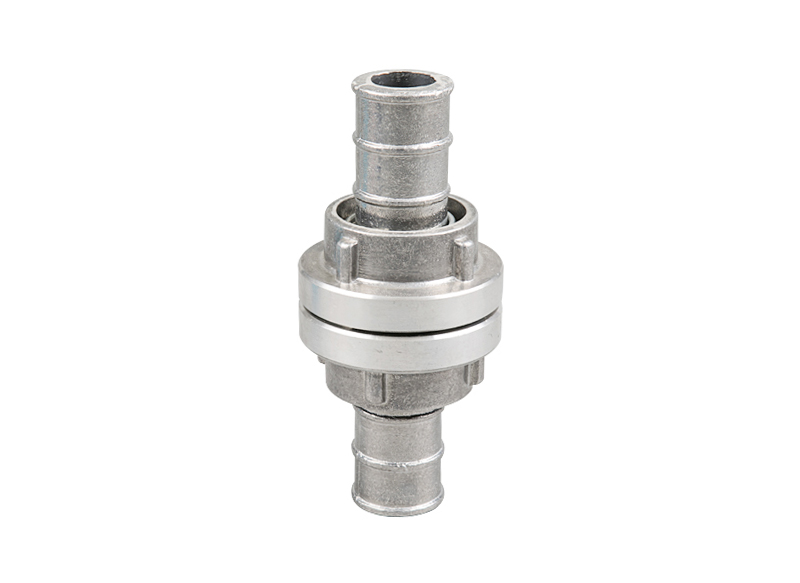
Where a threaded standpipe outlet meets a storz coupling hose system, a threaded-to-storz coupling reducer or adapter serves a function similar to a bushing — it transitions one connection type to another in a compact fitting. These adapters come in sizes ranging from 1.5-inch storz coupling to 2.5-inch storz coupling and larger, matching the requirements of the hose assembly being deployed. The aluminum alloy versions are particularly common because aluminum reduces the carried weight of hose packs without compromising the 250 PSI working pressure required for firefighting service.
Proper material selection for fire protection bushings and storz coupling adapters must also account for UV exposure if the fitting is installed on an exterior hydrant or outdoor standpipe connection box. Aluminum storz coupling fittings and brass bushings both perform well outdoors without painting or coating, while carbon steel or galvanized versions require periodic inspection and maintenance in coastal or high-humidity environments.
Common Questions About Plumbing Bushings
Can I use a bushing instead of a reducer coupling?
Yes, in most cases. A hex bushing threads directly into an existing fitting, saving the length of pipe and two additional joints that a reducer coupling would require. The trade-off is slightly higher friction loss and slightly more turbulence at the transition point. For domestic supply lines, this difference is negligible. For systems exceeding 100 GPM flow, an engineer should calculate whether the increased friction loss changes the hydraulic design.
What size bushing do I need?
A bushing is described by the larger (female) size first, then the smaller (male) size. A "1-inch by 3/4-inch hex bushing" has a 1-inch female NPT socket and a 3/4-inch male NPT thread. The female end threads into your existing 1-inch fitting, and the male end accepts your 3/4-inch connection. Always identify the existing fitting size first and the connection you need to make before ordering.
Do bushings reduce water pressure?
They reduce flow velocity through the larger upstream section and increase it through the smaller downstream section — this changes how pressure distributes along the line but does not itself cause significant pressure loss beyond the minor friction loss of the fitting. Pressure loss through a properly installed hex bushing in typical residential supply is under 0.5 PSI at standard household flow rates of 2 to 5 GPM per fixture.
How is a bushing different from a coupling?
A standard coupling joins two pipes of the same size end to end. A bushing joins two different sizes. A storz coupling, however, is an entirely different category — it is a quarter-turn locking hose coupling used in firefighting, not a size-reducing fitting. Despite sharing the word "coupling," storz coupling fittings handle hose-to-hose or hose-to-outlet connections and are not the same type of fitting as a pipe coupling used in building plumbing.
Can bushings be used on both gas and water lines?
Yes, but the material and sealant must match the service. Brass bushings rated for gas service are used on natural gas and propane lines with gas-rated thread sealant. Yellow PTFE tape is gas-rated; white PTFE tape is water service only in most markets — always check the product specification before use.
Selecting the Right Bushing for Your System
The decision for bushing selection is straightforward once you know the system parameters. Work through these four variables:
- Service fluid — water, gas, steam, chemicals, or firefighting water all have different material compatibility requirements
- Working pressure — verify the bushing's rated pressure exceeds the system's maximum operating pressure including surge
- Thread standard — confirm NPT, BSP, or specialty (such as storz coupling adapter threads) before purchasing
- Environmental exposure — indoor dry service differs from outdoor coastal or underground installations in corrosion requirements
For most residential and commercial water supply installations, a brass hex bushing in the correct size is the right answer. For fire protection systems involving storz coupling hose connections, aluminum or brass threaded-to-storz coupling adapters provide the same diameter-transition function as a bushing while converting the connection type to match the hose system. For DWV drain lines, PVC reducing bushings with solvent-weld joints handle the step-down between pipe sizes cleanly and permanently.
Understanding what a bushing does — bridge a size gap in compact form — makes it easier to identify the right fitting even when the application is unfamiliar. Whether the system carries household hot water, industrial process fluid, or pressurized firefighting water through a storz coupling network, the bushing solves the same core problem: connecting two different pipe sizes without wasting space or compromising system integrity.