 英语
英语 俄语
俄语
Content
- 1 What Is a Nipple in Plumbing: The Direct Answer
- 2 Types of Pipe Nipples and How Each One Is Used
- 3 Thread Standards Used on Pipe Nipples
- 4 Materials Used in Pipe Nipple Manufacturing
- 5 How King Combination Nipples Work and Where They Are Specified
- 6 How to Measure and Specify a Pipe Nipple Correctly
- 7 Installation Best Practices for Pipe Nipples
- 8 Common Problems with Pipe Nipples and How to Solve Them
- 9 Plumbing Code Requirements for Pipe Nipples
What Is a Nipple in Plumbing: The Direct Answer
A nipple in plumbing is a short length of pipe — typically threaded on both ends — used to connect two fittings, valves, or other components within a piping system. It acts as a connector or extender between two points where a longer pipe run is not needed. Nipples are manufactured from a wide range of materials including steel, stainless steel, brass, copper, and PVC, and they come in standardized lengths ranging from close (nearly no body length) to 12 inches or more.
In practical terms, every time a plumber connects a valve to a water supply line, attaches a fixture to a branch line, or makes a threaded joint in a gas or steam system, there is almost certainly a nipple involved. These components are so fundamental that professional plumbers carry dozens of sizes on every job truck.
King Combination Nipples represent one specialized but widely used category within this family of fittings, combining different thread types or diameters on each end to serve transition connections — a design detail covered in depth later in this article.
Types of Pipe Nipples and How Each One Is Used
Pipe nipples are not one-size-fits-all. The plumbing industry has standardized a range of nipple types, each designed for a specific installation scenario. Understanding which type to use — and why — prevents leaks, reduces labor time, and ensures code compliance.
Close Nipples
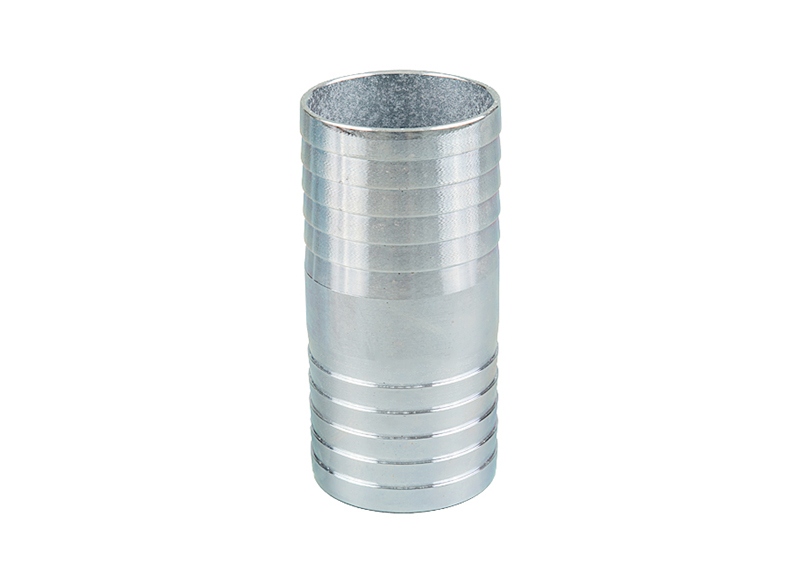
A close nipple has threads running along its entire length with little to no unthreaded center section. When two fittings are threaded onto each end, the nipple almost disappears inside the joint. Close nipples are used in extremely tight spaces where even a half-inch of exposed pipe would cause an interference problem. They are common in manifold assemblies, compressed air panels, and hydraulic blocks.
One practical limitation: because there is no wrench flat or unthreaded body, removing a close nipple after installation can be difficult. A specialty tool called a nipple extractor is often required if the nipple seizes or corrodes into place.
Short and Long Nipples
Short nipples have a small unthreaded section in the center — just enough to grip with a wrench. They typically run from 1 inch to 3 inches in overall length. Long nipples, by contrast, have a longer unthreaded barrel, usually between 3.5 inches and 6 inches, giving the installer more flexibility to position fittings at the correct spacing. Both types use tapered NPT (National Pipe Taper) threads in North American applications, which create a pressure-tight seal as the fittings are tightened.
Barrel Nipples (Hex Nipples)
A barrel nipple, sometimes called a hex nipple, has a hexagonal center section machined into the body. This flat wrench surface allows a standard open-end or adjustable wrench to tighten and loosen the fitting without slipping. Barrel nipples are particularly common in industrial steam and process piping where joints must be assembled with specific torque values and may require frequent maintenance access.
Reducing Nipples
A reducing nipple has a different pipe size on each end — for example, 3/4 inch NPT on one end and 1/2 inch NPT on the other. This allows the nipple to serve as both a connector and a size reducer in a single fitting, eliminating the need for a separate reducing bushing or coupling. Reducing nipples save both cost and installation space in tight mechanical rooms.
Combination Nipples and King Combination Nipples
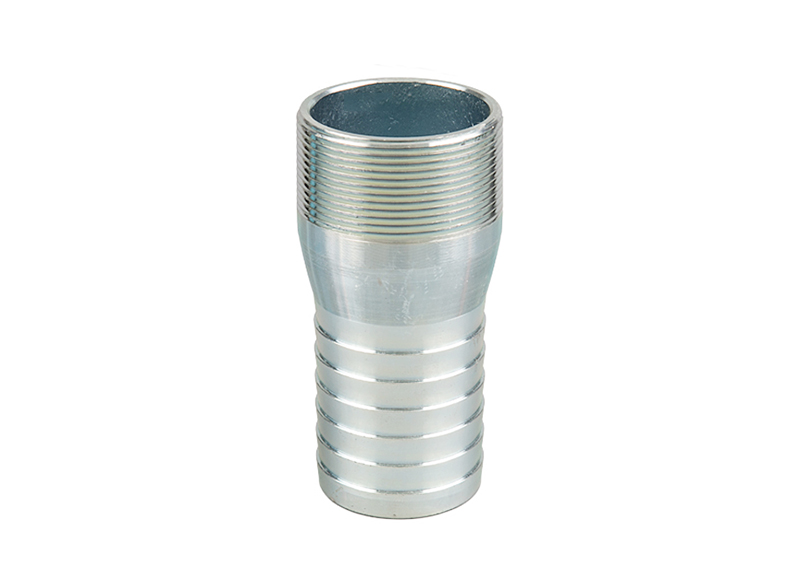
Combination nipples take the reducing concept a step further by combining different thread standards — not just different sizes — on each end. King Combination Nipples are a well-known product in this category, engineered to connect components that use incompatible thread types, such as a male NPT end on one side and a garden hose thread (GHT) or BSPT end on the other. This makes King Combination Nipples especially valuable in irrigation systems, industrial water treatment equipment, and international export machinery where multiple thread standards coexist in the same installation.
In the U.S. market, combination nipples that bridge NPT to GHT connections are among the most frequently ordered specialty fittings in landscape irrigation supply houses. The King Combination Nipple line is commonly stocked in brass and stainless steel to handle both potable water and chemical service applications.
Swaged Nipples
A swaged nipple is manufactured by mechanically reducing (swaging) one end of a pipe length to a smaller diameter, then threading both ends. The result is a smooth, gradual taper in the body itself. Swaged nipples are used in high-pressure systems where abrupt diameter changes would create turbulence or stress concentrations at the joint.
| Nipple Type | Thread Configuration | Typical Application | Common Materials |
|---|---|---|---|
| Close Nipple | Full thread, no center gap | Manifolds, tight assemblies | Steel, brass, stainless |
| Short / Long Nipple | Same size both ends, center unthreaded | General plumbing extensions | Steel, galvanized, brass, PVC |
| Barrel (Hex) Nipple | Same size, hex wrench flat | Steam and process piping | Carbon steel, stainless |
| Reducing Nipple | Different sizes, same thread standard | Size transitions, space-saving | Brass, stainless, steel |
| King Combination Nipples | Different thread standards each end | Irrigation, international systems | Brass, stainless steel |
| Swaged Nipple | Different sizes, tapered body | High-pressure systems | Carbon steel, alloy steel |
Thread Standards Used on Pipe Nipples
The thread standard on a nipple determines which fittings it can connect to, how much torque is needed, and whether the joint is inherently pressure-tight or requires sealant. Mixing incompatible thread standards is one of the most common sources of leaks in field-assembled plumbing — and one of the main reasons specialty fittings like King Combination Nipples exist.
NPT — National Pipe Taper
NPT is the dominant thread standard in North American plumbing and piping. It uses a 1°47' taper (approximately 3/4 inch per foot) that causes the male and female threads to wedge together as they are tightened, creating mechanical interference. This taper alone does not guarantee a leak-free seal — PTFE tape or pipe thread compound (pipe dope) must be applied to the male threads before assembly to fill the spiral leak path that remains even after full engagement.
Full engagement for NPT requires 3 to 4 turns of hand-tightening followed by 2 to 3 additional turns with a wrench — over-tightening can crack cast fittings or distort thin-wall nipples. Pipe sizes in NPT follow the IPS (Iron Pipe Size) system, where a 1/2" NPT nipple has an actual outside diameter of approximately 0.840 inches, not 0.500 inches. This discrepancy is a frequent source of confusion for first-time installers.
BSPT — British Standard Pipe Taper
BSPT uses a slightly different taper angle and thread pitch compared to NPT. Although the two standards are superficially similar, they are not interchangeable — forcing an NPT male into a BSPT female (or vice versa) produces a cross-threaded or leak-prone joint that may appear tight initially but will fail under pressure. BSPT is common in European, British Commonwealth, and much of the Asian-manufactured equipment imported into North American facilities.
GHT — Garden Hose Thread
Garden hose thread is a straight (non-tapered) thread standard defined by ASME B1.20.7. It is used on residential garden hose bibs, outdoor faucets, washing machine connections, and irrigation timer inlets. GHT is not compatible with NPT despite using similar-sized diameters — a 3/4" GHT female will appear to accept a 3/4" NPT male for a few turns, but the threads will cross and the joint will never seal reliably.
This is precisely where King Combination Nipples and similar combination nipple designs solve a real field problem. An irrigation controller or drip system component built around GHT connections needs to interface with an NPT water supply — a King Combination Nipple with NPT on one end and GHT on the other makes that transition cleanly in a single fitting rather than requiring an adapter chain that introduces multiple potential leak points.
NPS — National Pipe Straight
NPS threads have the same form as NPT but without the taper — the threads are parallel along their full length. They do not self-seal and are used in applications where a mechanical stop and separate seal (O-ring, gasket, or bonded seal washer) provides the pressure-tight connection. NPS is common on couplings, union nuts, and certain valve body connections.
Materials Used in Pipe Nipple Manufacturing
Material selection for a pipe nipple is driven by the fluid being carried, the operating temperature, the pressure rating, and the corrosion environment. Using the wrong material is not just a performance issue — it can create health hazards, code violations, and catastrophic failures in pressure systems.
Black Steel (Carbon Steel)
Black steel nipples are manufactured from ASTM A53 or A106 carbon steel pipe. They are the standard choice for natural gas, propane, steam, compressed air, and industrial oil systems. The "black" designation refers to the mill scale left on the pipe after hot rolling — it provides minimal corrosion resistance, so black steel nipples are not used for water service where external rust could be a problem.
Black steel nipples are pressure-rated to 3,000 psi in small diameters under standard Schedule 40 wall thickness, making them suitable for the vast majority of gas and steam applications encountered in commercial and industrial buildings.
Galvanized Steel
Galvanized nipples are carbon steel pipe that has been hot-dip coated with zinc to provide corrosion resistance. They are used in water distribution, fire suppression systems, and outdoor applications where the nipple is exposed to weather. Galvanized fittings should not be used in gas service — certain gas compositions can cause zinc to shed into the gas stream and contaminate downstream components like regulators and valves.
Over time, galvanized pipe accumulates mineral deposits and the zinc coating can degrade, contributing to reduced flow capacity in aging water systems. This is why most modern residential plumbing codes have moved toward copper or cross-linked polyethylene (PEX) for interior water supply, but galvanized nipples remain common for exterior hose bibs, sprinkler risers, and irrigation headers.
Brass
Brass nipples offer excellent corrosion resistance in potable water service, salt water, and many chemical environments. Brass is the material of choice for King Combination Nipples used in irrigation and potable water applications because it resists dezincification under most North American water chemistry conditions and provides a clean, smooth bore that does not accumulate scale as readily as galvanized steel.
Standard plumbing brass nipples are made from ASTM B43 seamless red brass or C36000 free-machining brass. They are suitable for service up to 250°F (121°C) at moderate pressures. Brass nipples are not recommended for ammonia service or certain high-chloride industrial fluids where brass can suffer stress corrosion cracking.
Stainless Steel
Type 304 and 316 stainless steel nipples are used in food processing, pharmaceutical, marine, and chemical processing applications where corrosion resistance must be maximized. Type 316 adds molybdenum to the alloy, which dramatically improves resistance to chloride pitting — critical in coastal installations and systems carrying saltwater or pool water chemistry.
Stainless steel combination nipples, including stainless King Combination Nipples, are specified in desalination equipment, reverse osmosis systems, and laboratory gas manifolds where purity and corrosion life are non-negotiable. The material cost is 3 to 6 times higher than brass, but the service life in aggressive environments can be 10 to 20 times longer.
PVC and CPVC
Plastic nipples are used in low-pressure, corrosive chemical drain and vent systems, swimming pool plumbing, and irrigation laterals. PVC is rated for cold water service (below 140°F/60°C); CPVC extends the temperature rating to approximately 200°F (93°C), making it suitable for hot water distribution in residential and light commercial buildings.
PVC nipples should never be used in gas service, compressed air above 150 psi, or any application with UV exposure unless specifically rated for outdoor use. Ultraviolet degradation makes standard PVC brittle within a few years when exposed to direct sunlight without protective coating.
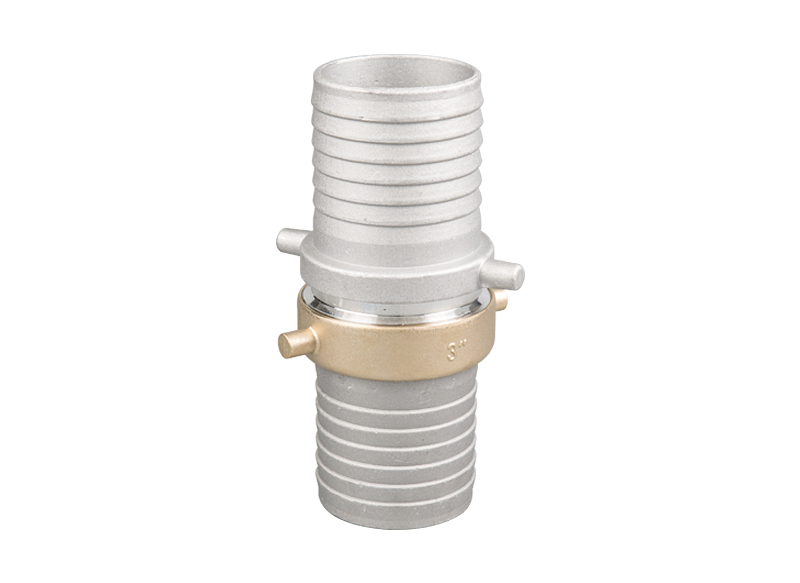
How King Combination Nipples Work and Where They Are Specified
King Combination Nipples occupy a specific and important niche in the broader nipple category. Unlike a standard nipple that uses the same thread standard on both ends, a combination nipple deliberately uses two different standards — or two different diameters under two different thread standards — to create a transition fitting in a single machined piece.
The "King" designation identifies a product line rather than a thread standard, and King Combination Nipples are available in a range of connection pairings. Common configurations include:
- NPT male × GHT male — connects a threaded pipe system to a garden hose outlet
- NPT male × BSPT male — bridges North American and European/Asian piping standards
- NPT female × GHT male — allows a threaded female port to accept a hose connection
- Reducing combinations with mixed thread standards — size and standard transitions in one fitting
The engineering advantage of using a King Combination Nipple instead of an adapter chain is elimination of intermediate joints. Every threaded joint in a piping system is a potential leak point. Reducing three fittings to one reduces potential failure points by two-thirds and typically produces a more compact, structurally sound assembly.
Irrigation System Applications
Residential and commercial irrigation is the largest single market for King Combination Nipples and similar combination nipple products. A typical municipal water meter outlet terminates in an NPT male stub. The irrigation timer, backflow preventer, and filter assembly that follows may use GHT inlets — a legacy of hose-bib-based system designs that were later industrialized for permanent installation.
A 3/4" NPT × 3/4" GHT King Combination Nipple is one of the ten most commonly ordered fittings in landscape irrigation supply catalogs in the western United States, where hose-thread irrigation valves remain prevalent in residential zones built before 2000. Brass versions are preferred for mainline service; plastic combination nipples are used in low-cost drip kits and seasonal systems where longevity is less critical.
Industrial and Export Equipment
Manufacturing facilities that produce equipment for both domestic and international markets frequently specify King Combination Nipples at service connection points. A compressor skid built to NPT standards internally may need BSPT-compatible service ports for the European customer — combination nipples allow that transition at a single point rather than requiring a re-engineered header assembly.
In chemical process equipment, where every fitting must be documented with material certifications, combination nipples simplify the bill of materials by reducing item count. Fewer line items mean fewer material traceability records to maintain, which lowers compliance overhead in facilities subject to FDA, EPA, or OSHA process safety management regulations.
Plumbing Fixture Connections
Combination nipples appear in plumbing fixture connections more often than most homeowners realize. The connection between a water softener and the household supply, between a washing machine box and the supply valve, and between a whole-house filter housing and the copper stub-out may all involve combination nipples that transition between thread standards or pipe material systems. King Combination Nipples in these applications are typically short — 1.5 to 3 inches — and made from lead-free brass to comply with NSF 61 potable water standards mandated by most U.S. state plumbing codes since 2014.
How to Measure and Specify a Pipe Nipple Correctly
Incorrect nipple specification is one of the leading causes of rework on plumbing projects. A nipple that is 1/2 inch too short will leave insufficient thread engagement; one that is too long will push a fitting out of alignment with adjacent components. Nipple measurement follows a consistent industry convention, but several details trip up even experienced plumbers.
Overall Length vs. Center-to-Face Dimension
Pipe nipples are specified by their overall length — measured from end-to-end including the threads. This is different from the center-to-face or face-to-face dimensions used to specify fittings and valves. When calculating how long a nipple needs to be, you must add the thread engagement depth (the amount of thread that disappears inside each fitting) back into the calculation to get the correct overall nipple length.
For 1/2" NPT fittings, thread engagement depth is approximately 0.53 inches per end. A nipple connecting two fittings that need a face-to-face gap of 2 inches requires an overall nipple length of approximately 2 + (2 × 0.53) = 3.06 inches — round up to 3.5 inches to be safe.
Nominal Pipe Size vs. Actual Dimensions
Pipe nipples are identified by nominal pipe size (NPS) — a designation that does not correspond to any actual measured dimension of the pipe. This convention dates to the 19th century when pipe and fitting interiors were standardized while wall thicknesses varied. The table below shows actual outside diameters for common nipple sizes:
- 1/4" NPS: 0.540" OD
- 3/8" NPS: 0.675" OD
- 1/2" NPS: 0.840" OD
- 3/4" NPS: 1.050" OD
- 1" NPS: 1.315" OD
- 1-1/4" NPS: 1.660" OD
- 1-1/2" NPS: 1.900" OD
- 2" NPS: 2.375" OD
When ordering King Combination Nipples or any specialty nipple from a supplier, always specify both ends using this NPS convention plus the thread standard — for example, "3/4" NPT × 3/4" GHT, brass, 2-inch overall length." Ambiguous specifications like "3/4 inch hose to pipe adapter" may result in the wrong product being shipped.
Wall Thickness and Schedule
Most commercial nipples are manufactured from Schedule 40 pipe, which provides sufficient pressure rating for the majority of plumbing, HVAC, and light industrial applications. Schedule 80 nipples use a heavier wall — the outside diameter is identical to Schedule 40 but the bore is smaller, giving higher pressure and corrosion allowances. Schedule 80 black steel nipples in 1/2" NPS are rated to approximately 5,400 psi working pressure, making them suitable for hydraulic pilot lines and high-pressure pneumatic circuits.
Installation Best Practices for Pipe Nipples
A correctly specified nipple can still leak or fail prematurely if installed improperly. The following practices reflect what experienced plumbers and pipefitters apply on every job, whether working with standard nipples or specialty King Combination Nipples.
Thread Sealant Application
PTFE tape (commonly called Teflon tape) should be wrapped clockwise around the male threads — viewed from the threaded end — in two to three layers for water and gas service, and four or more layers for larger diameters or aggressive fluids. The tape fills the spiral leak path inherent in tapered NPT threads without adding bulk that prevents proper engagement.
Pipe thread compound (pipe dope) is an alternative that many professionals prefer for gas service because it does not shred the way tape can in aged or re-used threads. Apply compound to the male threads only — never to the female — and spread it evenly over the first three to four threads.
For King Combination Nipples with one GHT end, the GHT connection typically uses a rubber washer rather than thread sealant — the washer compresses against a flat seat inside the hose coupling to create the seal. Do not apply tape or compound to GHT threads; it will interfere with the washer seal and may prevent full engagement.
Thread Engagement and Torque
Hand-tighten the nipple into the female fitting first to ensure the threads are correctly engaged before applying wrench torque. Cross-threading — which occurs when the male and female threads start at misaligned angles — is responsible for a significant portion of field leaks. If the nipple resists hand-tightening after the first two threads or feels rough, back it out completely and re-align before proceeding.
After hand-tight, apply 2 to 3 additional turns with a pipe wrench on sizes up to 1" NPS. On larger sizes (1-1/4" and above), 1.5 to 2 additional turns is typically sufficient. Over-tightening is a leading cause of cracked cast iron fittings and split brass bodies — more torque does not produce a better seal once the thread taper has fully wedged.
Avoiding Galvanic Corrosion
When a nipple of one metal is threaded into a fitting of a dissimilar metal, galvanic corrosion can attack the less noble material. The most common problematic pairing in plumbing is galvanized steel nipples connected directly to copper fittings — the steel corrodes preferentially within a few years in wet service, eventually causing the joint to fail.
Solutions include using brass nipples (which are electrochemically compatible with copper), installing a dielectric union between dissimilar metals, or specifying plastic-lined nipples for water service. King Combination Nipples in brass are inherently dielectric-safe at the NPT end when threaded into copper fittings, which is another reason brass is the preferred combination nipple material for potable water applications.
Pressure Testing After Installation
All new threaded pipe assemblies should be pressure tested before being covered by walls, insulation, or flooring. For water systems, hydrostatic testing at 1.5 times the working pressure for a minimum of 30 minutes is standard practice under most plumbing codes. For gas systems, a pneumatic test using nitrogen or compressed air (never oxygen) at 1.5 times the operating pressure for a minimum of 10 minutes is required.
Leak detection on threaded nipple joints during pressure testing can use commercially available bubble solution (preferred for gas), soapy water, or electronic leak detectors for very small leak rates. Electronic detectors can identify leaks as small as 0.001 standard cubic feet per hour — useful for precision gas systems where even very small losses are unacceptable.
Common Problems with Pipe Nipples and How to Solve Them
Even with correct material selection and proper installation, pipe nipples present a set of recurring problems that plumbers encounter on maintenance calls and renovation projects. Understanding these failure modes helps diagnose leaks faster and prevents recurring issues after repair.
Thread Galling on Stainless Steel
Stainless steel is prone to galling — a form of adhesive wear where the thread surfaces weld together under the friction and pressure of tightening. A galled stainless nipple cannot be backed out without destroying the fitting or the nipple. Prevention requires applying an anti-seize compound (nickel-based or copper-based) to the threads before installation. This is mandatory for stainless King Combination Nipples used in process systems where future disassembly will be required.
Corrosion at the Thread Roots
Galvanized and black steel nipples in water service corrode from the inside out over time. The thread roots — the deepest part of the thread profile — are the thinnest section of the nipple wall and the first to penetrate when through-corrosion occurs. A nipple that shows external rust staining at a threaded joint is likely corroding internally as well. Replacement is always preferable to adding sealant on the outside, which only masks the symptom.
Frozen or Seized Nipples
A nipple that has been in service for many years — particularly in water or steam service — may be impossible to turn without special tools due to thread corrosion, mineral buildup, or galling. Options include applying penetrating oil and waiting 24 to 48 hours, using a nipple extractor tool (which grips inside the bore), applying localized heat to the female fitting to expand it slightly, or cutting the nipple with a reciprocating saw and extracting the threaded stubs with an extractor set.
Incorrect Thread Standard Mismatch
Thread mismatch — connecting NPT to BSPT or NPT to GHT without an appropriate adapter — is a frequent source of frustrating, hard-to-diagnose leaks. The joint appears assembled and may even pass a brief pressure test, but it will leak under thermal cycling or vibration. The correct solution is always to replace the mismatched fitting with an appropriate combination nipple — such as a King Combination Nipple — rather than trying to make the incorrect assembly seal with extra tape or sealant.
Identifying a thread standard mismatch requires a thread gauge — a set of go/no-go gauges calibrated to NPT, GHT, and BSPT profiles. Most plumbing supply houses rent or loan thread gauges to contractors. Alternatively, the thread pitch (threads per inch) can be measured with a thread pitch gauge — NPT 3/4" uses 14 TPI while BSPT 3/4" uses 14 TPI as well, but the different taper angles make them distinguishable by careful examination of thread engagement depth.
Plumbing Code Requirements for Pipe Nipples
Pipe nipples in permanent plumbing installations must comply with applicable plumbing codes, which in most U.S. jurisdictions are based on the International Plumbing Code (IPC) or the Uniform Plumbing Code (UPC). Key code requirements include:
- Material compliance with ASTM or ASME standards specified in the code for the intended service
- Lead-free compliance for any nipple in contact with potable water — NSF 61 and NSF 372 certification required, maximum 0.25% weighted average lead content
- Pressure rating equal to or exceeding the maximum working pressure of the system
- Temperature rating appropriate for the service fluid — PVC nipples cannot be used in hot water systems above 140°F under most codes
- AGA (American Gas Association) or UL listing for nipples used in gas service
King Combination Nipples supplied for potable water service by reputable manufacturers carry NSF 61 certification for brass versions, confirming compliance with lead leaching standards. Always verify certification before specifying combination nipples or any threaded fitting in a new potable water installation — code inspectors in California, Vermont, and Maryland have particularly rigorous lead-free requirements enforced at the point of inspection.