 英语
英语 俄语
俄语
Content
- 1 What Is a Pipe Nipple
- 2 Anatomy and Dimensions of a Pipe Nipple
- 3 Types of Pipe Nipples by Length
- 4 Common Materials Used in Pipe Nipple Manufacturing
- 5 Threading Standards: NPT, BSP, and Thread Engagement
- 6 How Pipe Nipples Are Manufactured
- 7 Pipe Nipple Sizing Chart
- 8 Pressure and Temperature Ratings by Schedule and Material
- 9 Thread Sealant Options Compared
- 10 Quality Inspection Points Before Installation
- 11 Storage and Handling Guidelines
- 12 Cost Factors and Buying Considerations
- 13 What Are King Combination Nipples
- 14 Pipe Nipple vs Pipe Coupling vs Barbed Fitting
- 15 How to Select the Right Pipe Nipple for Your Application
- 16 Installation Best Practices
- 17 Common Applications Across Industries
- 18 Maintenance and Troubleshooting
- 19 Frequently Asked Questions
- 19.1 What is the difference between a nipple and a pipe fitting?
- 19.2 How is pipe nipple length measured?
- 19.3 Can a pipe nipple be cut to a custom length?
- 19.4 What size hose fits a King combination nipple?
- 19.5 Is Schedule 80 always better than Schedule 40 for nipples?
- 19.6 Why do some nipples leak even with thread sealant applied?
- 19.7 Why is the outside diameter of a nipple larger than its nominal size?
- 19.8 Can PTFE tape and pipe dope be used together on the same joint?
- 19.9 How many times can a pipe nipple be reused after disassembly?
- 19.10 What causes galling on stainless steel nipple threads?
- 19.11 Do plastic pipe nipples need thread sealant?
What Is a Pipe Nipple
A pipe nipple is a short piece of pipe, threaded on both ends, used to join two fittings, valves, or other threaded components together. Unlike a full-length pipe run, a nipple typically measures between half an inch and twelve inches long, and its entire purpose is connection rather than fluid transport over distance. Most nipples on the market today are cut from Schedule 40 or Schedule 80 pipe stock, then threaded on a lathe or threading machine to match NPT (National Pipe Taper) or BSP (British Standard Pipe) specifications.
In plumbing, HVAC, industrial piping, and hydraulic assembly work, a pipe nipple functions as the connective tissue of a system. Whenever two female-threaded ports need to be bridged, whether that's a valve body and a tee, or a pump outlet and a gauge, a nipple is almost always the part doing that job. The term itself comes from the resemblance of the short, rounded, double-ended piece to a baby bottle nipple, a naming convention that has stuck in the trade for well over a century.
Anatomy and Dimensions of a Pipe Nipple
Every pipe nipple is defined by four measurements: nominal pipe size, overall length, thread length, and wall thickness (schedule). Understanding how these interact is the difference between ordering a part that fits and ordering one that has to be sent back.
Ranges from 1/8 inch to 12 inches in most catalogs, though 1/2 inch through 4 inches covers roughly 80 percent of commercial and industrial demand.
Measured from end to end, including both threaded sections. Standard lengths run in fixed increments: 2 inch, 2.5 inch, 3 inch, 4 inch, 5 inch, 6 inch, 8 inch, 10 inch, and 12 inch.
Governed by ANSI/ASME B1.20.1 taper pipe thread geometry, thread length grows with diameter. A 1/2 inch NPT nipple carries roughly 0.43 inch of usable thread per end.
Schedule 40 is standard wall; Schedule 80 is extra heavy. Schedule 80 nipples resist thread-cutting stress better and are the default choice wherever a nipple is shorter than 1.5 inches, since so little parent metal remains once threads are cut.
Types of Pipe Nipples by Length
Length classification is the single most practical way to sort pipe nipples, since it dictates how much unthreaded body remains between the two threaded ends.
Close Nipple
Threaded along its entire length with no unthreaded shoulder in between. Used where fittings need to sit almost flush against each other, such as joining two elbows back to back. Because there is no gap for a wrench to grip safely, close nipples are more prone to over-torquing damage during installation.
Short Nipple
Leaves a small unthreaded band, usually under an inch, between the two threaded ends. This gap gives a wrench or pipe tongs a clean surface to grip, reducing thread damage compared to a close nipple.
Long Nipple
Anything from roughly 3 inches up to 12 inches, with a substantial unthreaded shank in the middle. Long nipples are common wherever a fixed physical offset is needed, such as extending a valve outlet past insulation or cladding.
Common Materials Used in Pipe Nipple Manufacturing
Material selection changes almost everything about a nipple: its pressure rating, its corrosion behavior, and its cost per piece.
| Material | Typical Standard | Best Suited For |
|---|---|---|
| Black Carbon Steel | ASTM A733 / A53 | Gas lines, steam, general industrial piping |
| Galvanized Steel | ASTM A733 | Water lines, outdoor exposure, moderate corrosion resistance |
| Stainless Steel 304/316 | ASTM A312 base pipe | Food processing, pharmaceutical, marine, chemical service |
| Brass | ASTM B687 | Potable water, HVAC, instrumentation, low-pressure gas |
| PVC / CPVC | ASTM D1785 | Chemical drainage, irrigation, corrosive fluid transport |
Brass and stainless steel nipples command a premium, often three to five times the price of an equivalent black steel nipple, but they pay that back in service life whenever the fluid or atmosphere is aggressive. Galvanized nipples sit in the middle, offering a zinc coating that resists surface rust for years longer than uncoated black steel in outdoor or humid installations.
Threading Standards: NPT, BSP, and Thread Engagement
Thread compatibility is where most field problems actually start. A nipple that looks correct can still leak or fail to seat if its thread form doesn't match the mating fitting.
- NPT (National Pipe Taper) is the dominant standard across North America, relying on a tapered thread that wedges tighter as it's turned in, sealing on thread interference rather than a gasket.
- BSPT (British Standard Pipe Taper) looks similar to NPT but uses a different thread angle, 55 degrees versus 60 degrees, and will cross-thread if forced onto an NPT fitting.
- BSPP (British Standard Pipe Parallel) is a straight, non-tapered thread that seals against a bonded washer or O-ring rather than thread compression.
- NPSM (National Pipe Straight Mechanical) is a straight thread used where a mechanical joint, not a pressure seal, is the goal, such as a swivel connection.
A properly made up NPT joint should achieve hand-tight engagement plus two to three additional turns with a wrench. Under-engagement leaves visible thread showing and invites leaks under vibration; over-engagement risks splitting the fitting body, particularly on cast iron or brass parts.
How Pipe Nipples Are Manufactured
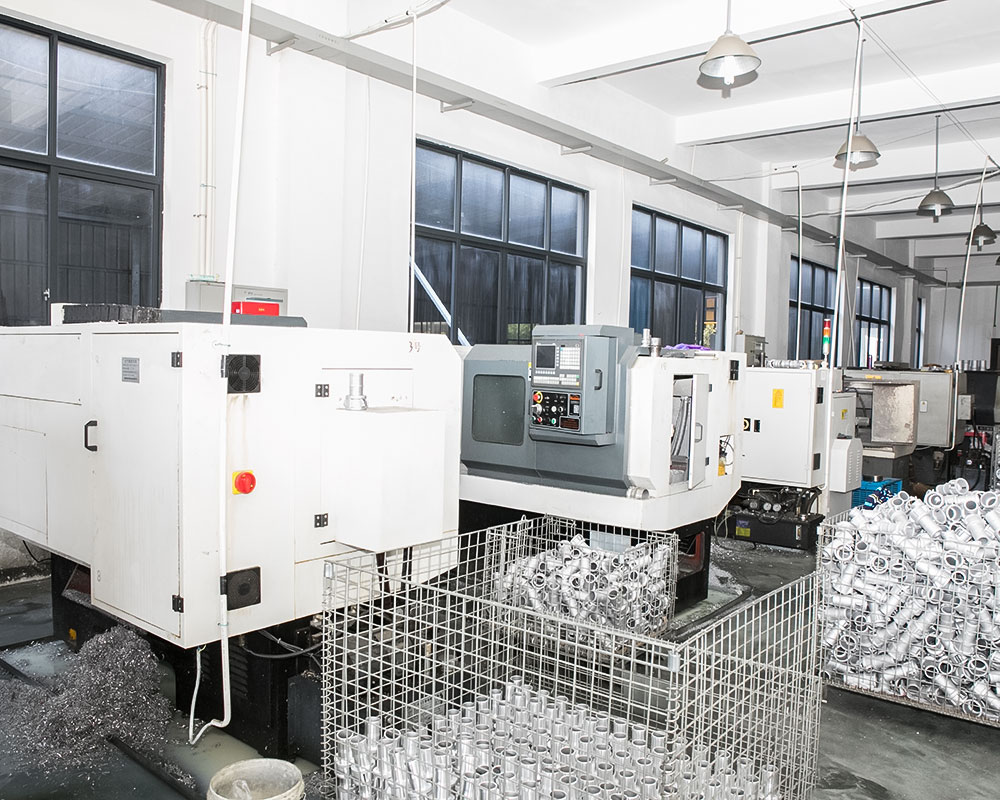
Understanding the manufacturing sequence explains why certain nipples cost more, why some lengths are always in stock while others are special-order, and why quality varies so much between suppliers.
Pipe Selection and Cutting
Mill-certified pipe stock in the required schedule is cut to length on a bandsaw or cold saw, with a small allowance added for facing.
Facing and Deburring
Both cut ends are faced square and the interior burr is removed so the bore stays clear and doesn't restrict flow or catch debris.
Thread Cutting
A pipe threading lathe cuts NPT or BSP threads to depth on both ends in a single chucking, holding concentricity between the two threaded sections.
Surface Finishing
Depending on material, the nipple is left black, hot-dip galvanized, zinc-plated, or passivated (for stainless) to reach its final corrosion resistance level.
Inspection and Packing
Thread gauges check pitch diameter and taper on a sampling basis, then nipples are bundled by size and length for shipment.
Because close nipples require threading almost the entire body in one continuous pass, they demand tighter lathe control than long nipples, which is part of why close nipples are not always cheaper than a slightly longer short nipple despite using less material.
Pipe Nipple Sizing Chart
Nominal pipe size does not equal actual outside diameter, a detail that trips up buyers unfamiliar with pipe sizing conventions. The table below lists the actual outside diameter and approximate thread count per inch for the most commonly ordered sizes.
| Nominal Size | Actual Outside Diameter | Threads Per Inch (NPT) |
|---|---|---|
| 1/8 inch | 0.405 inch | 27 |
| 1/4 inch | 0.540 inch | 18 |
| 3/8 inch | 0.675 inch | 18 |
| 1/2 inch | 0.840 inch | 14 |
| 3/4 inch | 1.050 inch | 14 |
| 1 inch | 1.315 inch | 11.5 |
| 1 1/4 inch | 1.660 inch | 11.5 |
| 1 1/2 inch | 1.900 inch | 11.5 |
| 2 inch | 2.375 inch | 11.5 |
This mismatch between nominal size and actual diameter dates back to how iron pipe was originally specified by its approximate inside bore, a convention that stuck even as wall thickness standards evolved. A 1/2 inch nipple, for instance, has an outside diameter of 0.840 inch, not 0.500 inch, which surprises anyone measuring with calipers for the first time.
Thread Sealant Options Compared
The sealant chosen for a nipple joint affects both how easily it can be disassembled later and how well it tolerates the service fluid.
PTFE Tape
Inexpensive, fast to apply, and suitable for most water, air, and low-pressure gas joints. Overwrapping can cause tape shreds to enter the bore, so wraps should stay to two or three clean passes.
Pipe Dope (Paste Sealant)
Fills thread irregularities better than tape and is the standard choice for gas, oil, and higher-pressure service, though cure time before pressurizing varies by product.
Anaerobic Thread Sealant
Cures only in the absence of air once threads are engaged, forming a rigid bond well suited to hydraulic systems where vibration would otherwise back a joint out over time.
PTFE Paste
Combines the lubricity of tape with the gap-filling behavior of paste, often specified for stainless-to-stainless joints where galling risk is highest.
Quality Inspection Points Before Installation
A few minutes of visual and dimensional inspection before a nipple goes into a system catches the majority of defects that would otherwise surface as a leak weeks later.
Thread crest and root are smooth and free of tearing, which usually indicates a dull or misaligned die on the manufacturing lathe.
Bore is free of scale, weld slag, or manufacturing debris that could travel downstream to a valve seat or orifice.
Nipple wall shows no visible thinning or discoloration from over-aggressive thread cutting, particularly on short and close lengths.
Coating, whether galvanizing or plating, is intact and unbroken across the threaded sections, not just the smooth body.
Stamped or printed markings match the ordered size, schedule, and material, since visually similar nipples can carry very different pressure ratings.
Storage and Handling Guidelines
Nipples are small, inexpensive, and easy to treat carelessly in a warehouse or on a truck, yet mishandling is a common and preventable source of field failures.
- Store threaded ends capped or plugged to keep out dirt, moisture, and stray metal shavings that accelerate corrosion inside the bore.
- Keep black steel and galvanized stock separated from stainless steel to avoid carbon steel particles embedding in the stainless surface, a condition that leads to surface rust spotting known as free iron contamination.
- Avoid stacking heavy bundles directly on top of small-diameter nipples, which can bow a long nipple's unthreaded shank over time.
- Rotate stock on a first-in, first-out basis in humid or coastal environments, where even galvanized coatings will eventually show white rust if left unmoved for years.
Cost Factors and Buying Considerations
Nipple pricing looks simple on a per-piece basis but is actually driven by several compounding factors worth understanding before placing a bulk order.
| Cost Driver | Effect on Price |
|---|---|
| Material | Largest single factor; stainless and brass can run several times the cost of black steel per piece |
| Length | Longer nipples use more raw pipe stock, raising material cost roughly in proportion to length |
| Schedule | Schedule 80 uses thicker, heavier stock, adding modest cost over Schedule 40 at the same size |
| Coating | Galvanizing and plating add a finishing step and typically a moderate premium over black finish |
| Order Volume | Bulk orders in standard sizes and lengths reduce per-piece cost significantly versus small custom-cut runs |
Buyers who standardize on a small set of common lengths across a project, rather than specifying a custom length for every connection, generally see meaningfully lower per-unit pricing, since standard lengths are produced in continuous runs while custom lengths require line changeovers.
What Are King Combination Nipples
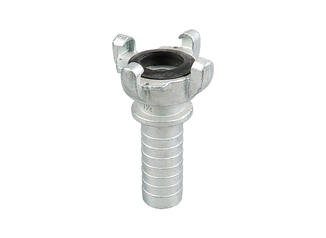
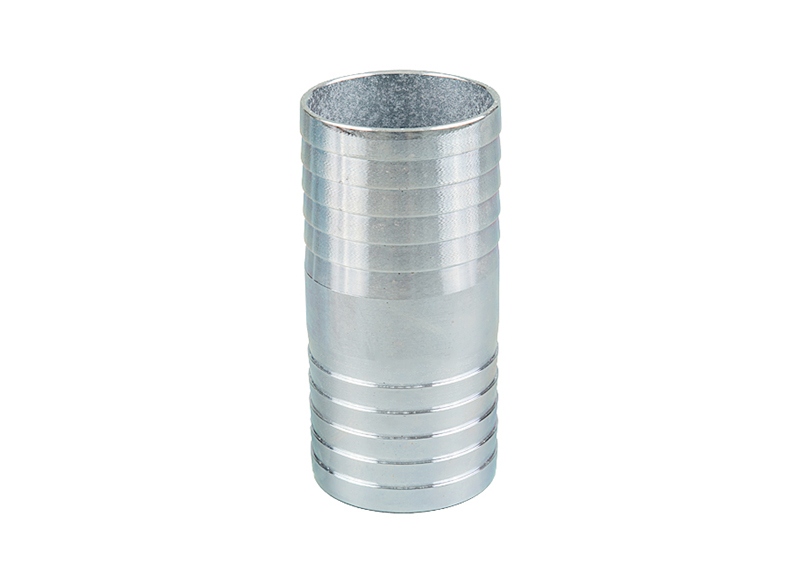
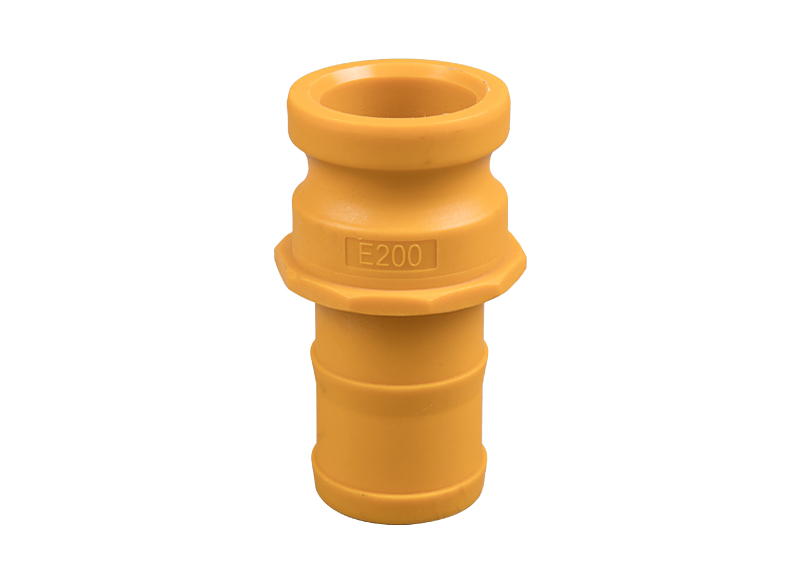
A King combination nipple, sometimes just called a combination nipple, is a hose-to-pipe adapter that pairs a male pipe thread on one end with a hose barb or hose shank on the other. Rather than joining two threaded fittings, it exists specifically to bridge rigid pipe systems and flexible hose lines, which is why it shows up so often in air compressor setups, wash-down stations, agricultural spraying rigs, and portable fluid transfer equipment.
The design solves a recurring problem on job sites: a compressor or pump has a threaded outlet, but the hose that needs to attach has no thread at all, only an inside diameter that a barb can grip and a clamp can seal. King combination nipples are typically machined from brass or plated steel, sized to match common hose bore diameters (3/8 inch, 1/2 inch, 3/4 inch, and 1 inch being the most requested), and finished with annular barbs that bite into the hose wall to resist blow-off under pressure surges.
Selecting the right combination nipple comes down to matching three things at once: the pipe thread size on the fixed side, the hose inside diameter on the barbed side, and the expected working pressure. A mismatch on any one of these is the most common cause of hose pop-off failures reported in compressed air and irrigation service.
Pipe Nipple vs Pipe Coupling vs Barbed Fitting
These three parts are frequently confused because they all sit in the same general category of "small connector," but each solves a different problem.
| Part | Thread Configuration | Primary Function |
|---|---|---|
| Pipe Nipple | Male thread on both ends | Bridges two female-threaded fittings or extends a run a fixed distance |
| Pipe Coupling | Female thread on both ends | Joins two male-threaded pipe ends in a straight line |
| Barbed / Combination Fitting | Male thread on one end, barb on the other | Transitions from rigid threaded pipe to flexible hose |
How to Select the Right Pipe Nipple for Your Application
Confirm the nominal pipe size matches both mating fittings; a nipple that is one size off will not seat regardless of how much thread sealant is applied.
Measure the required overall length by accounting for the depth each fitting's female thread will consume, not just the visible gap between components.
Match the schedule to the pressure class of the system; Schedule 80 is the safer default anywhere the nipple is under 2 inches long.
Select material based on the fluid, temperature, and external atmosphere, not price alone; a brass nipple in a saltwater-adjacent installation can outlast three galvanized replacements.
Verify thread standard compatibility, especially on imported equipment, where BSPT and NPT parts can look interchangeable but are not.
Installation Best Practices
Correct installation extends nipple life dramatically and prevents the two most common failure modes: thread stripping and leak paths.
- Clean both thread surfaces of debris, old sealant, and cutting oil residue before assembly.
- Apply PTFE tape or a rated pipe thread sealant, wrapping tape in the direction of the thread so it doesn't unwind on installation.
- Thread by hand first to confirm the parts are not cross-threaded before reaching for a wrench.
- Use a backup wrench on close and short nipples to avoid transmitting torque stress through the unsupported threaded section.
- Pressure test the joint before covering it with insulation, drywall, or soil backfill.
Field data compiled by mechanical contractors consistently shows that close nipples fail at a noticeably higher rate than short or long nipples in high-vibration equipment rooms, precisely because there is no unthreaded shank left to absorb flex. Where vibration is a known factor, specifying a short nipple instead of a close nipple, even at a slightly larger footprint, is a simple way to cut callback rates.
Common Applications Across Industries
Plumbing and Water Supply
Connecting shutoff valves, water heaters, and hose bibbs to rigid supply lines.
HVAC Systems
Linking gauges, gas valves, and burner assemblies on furnaces and boilers.
Compressed Air and Pneumatics
Joining regulators, filters, and lubricators along an air line, plus combination nipples for hose drops.
Agricultural and Irrigation
Attaching sprayer hoses and drip lines to rigid header pipe using combination nipples.
Industrial Process Piping
Instrumentation take-offs, pressure gauge stems, and small-bore process connections.
Fire Protection
Short nipples used at sprinkler head drops and standpipe test connections.
Maintenance and Troubleshooting
Most nipple-related service calls trace back to one of three root causes, and recognizing the symptom quickly saves diagnostic time.
| Symptom | Likely Cause | Corrective Action |
|---|---|---|
| Persistent weeping at the joint | Insufficient thread engagement or degraded sealant | Disassemble, clean threads, reapply sealant, retighten to proper depth |
| Cracked nipple body | Over-torque or repeated vibration on a close nipple | Replace with a short or long nipple of matching schedule |
| Rust staining at galvanized joints | Zinc coating worn through at the threads during installation | Switch to a nipple with factory-sealed thread coating or upgrade to stainless |
| Hose blows off a combination nipple | Undersized barb-to-hose fit or missing clamp | Match barb diameter precisely to hose bore and use a properly rated clamp |
Frequently Asked Questions
What is the difference between a nipple and a pipe fitting?
A nipple is a specific type of fitting, a short section of threaded pipe. The broader term "fitting" also covers elbows, tees, couplings, unions, and caps, none of which are simply a length of threaded pipe stock.
How is pipe nipple length measured?
Overall length is measured from the outer face of one thread to the outer face of the opposite thread, including both threaded ends, not just the unthreaded center shank.
Can a pipe nipple be cut to a custom length?
Yes, a longer stock nipple can be cut and rethreaded on-site with a portable pipe threading machine, though this requires enough remaining unthreaded body to recut a full thread length.
What size hose fits a King combination nipple?
Combination nipples are sized to the hose's inside diameter, most commonly 3/8 inch, 1/2 inch, 3/4 inch, and 1 inch, and the barb should always be matched to that dimension rather than the outside diameter of the hose.
Is Schedule 80 always better than Schedule 40 for nipples?
Not necessarily better in every case, but generally safer for shorter nipples since thread cutting removes proportionally more wall material on Schedule 40 stock, leaving less margin against cracking.
Why do some nipples leak even with thread sealant applied?
Leaks after sealant application usually point to insufficient thread engagement, a mismatched thread standard such as BSPT against NPT, or sealant applied over dirty or damaged threads that can no longer seat correctly.
Why is the outside diameter of a nipple larger than its nominal size?
Nominal pipe size reflects a historical approximation of the inside bore, not the outside diameter. A 1/2 inch nipple actually measures 0.840 inch across, a legacy naming convention carried forward from early iron pipe standards.
Can PTFE tape and pipe dope be used together on the same joint?
Yes, some installers combine a light wrap of tape with a thin layer of dope for extra insurance on critical joints, though most manufacturers only require one or the other for a properly cut thread.
How many times can a pipe nipple be reused after disassembly?
A nipple can typically be reused once or twice if the threads show no visible damage, but each disassembly removes a small amount of sealant-bearing surface, so heavily cycled joints in critical service are usually replaced rather than reused indefinitely.
What causes galling on stainless steel nipple threads?
Galling happens when friction during tightening generates enough heat to cause the mating thread surfaces to cold-weld together, a risk unique to stainless-on-stainless assembly. Anti-seize compound or PTFE paste substantially reduces this risk.
Do plastic pipe nipples need thread sealant?
PVC and CPVC nipples generally still benefit from PTFE tape at threaded connections, since the tape acts as a lubricant during assembly and helps distribute sealing pressure evenly around the thread.