 英语
英语 俄语
俄语
Content
Although hose clamps are cheap and easy to use, they are by no means perfect. In many professional or demanding applications, they are actually looked down upon.
Can they be replaced? Absolutely. And the alternatives are often stronger, more aesthetically pleasing, and more durable.
If you're willing to spend a little more money or put in a little effort, the following solutions will easily outperform ordinary hose clamps:
1. Crimp Sleeves/Ferrules – For "permanent" rather than "temporary" connections
This is an industrial-grade method, and the most common connection method you'll find on high-pressure oil lines or professional equipment.
• Principle: Instead of using screws to tighten, a complete metal cylinder (usually aluminum, copper, or stainless steel) is placed over the pipe, and then a special hydraulic crimping tool or manual crimping machine is used to deform the metal cylinder, causing it to bite firmly into the hose.
• Advantages:
Unbeatable strength: Can withstand far greater pressure than ordinary hose clamps, eliminating the possibility of "bursting."
Minimalist appearance: No protruding screw heads, smooth to the touch, and looks very professional and neat.
Even pressure distribution: It applies 360-degree even pressure, unlike screw clamps which rely mainly on the screw for tightening, which can easily damage the pipe.
• Disadvantages: Once crimped, it cannot be removed; you have to cut the pipe to replace it. You also need a special crimping tool.
2. Quick Connects / Push-to-Connect – For "instant connection and disconnection"
If you're tired of having to find a screwdriver and spend a long time unscrewing the clamp every time you need to disconnect a pipe, then this is the perfect solution.
• Principle: Just like the connectors used for watering gardens or the connectors on air pumps. Push it in, and it locks with a "click"; press the release ring, and you can pull it out directly.
• Advantages:
Efficiency king: Connection and disconnection only take one second, and no tools are needed.
Self-sealing: It has a built-in O-ring, providing a seal as soon as it's inserted, unlike hose clamps where you have to repeatedly check if it's tightened properly. Rotational Freedom: Many quick connectors allow the tubing to rotate freely after being connected, preventing the connector from loosening due to twisting of the tube.
• Disadvantage: Expensive. Also requires high precision in the outer diameter of the tubing; a rough surface on the tubing may cause leaks.
3. Heat Shrink Clamps – The "Black Technology" for Aesthetics Enthusiasts
These are very popular in modified cars or high-end electronic equipment cooling systems.
• Principle: It looks like a piece of ordinary wide black tape. After being fitted, a heat gun is used to heat it, causing it to shrink dramatically (memory effect) with great force, directly tightening the soft tube onto the connector.
• Advantages:
Never Loosens: It has no mechanical structure, so there are no problems with screws loosening. It relies on the retraction force of the material molecules to maintain tightness.
Perfect Fit: Regardless of whether the connector is round or slightly flattened, it can perfectly conform to the shape without any gaps.
Aesthetically Pleasing: After installation, it looks like a seamless piece of black tubing, very discreet, without metallic luster, and will not rust.
• Disadvantage: Requires a heat gun for installation and a knife to cut it open for removal; it is also a single-use product.
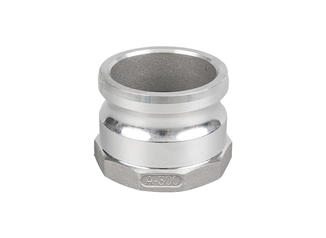
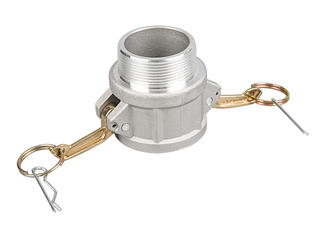
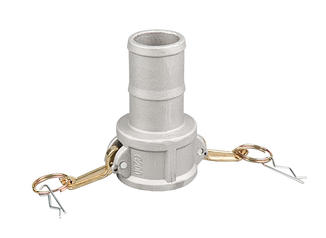
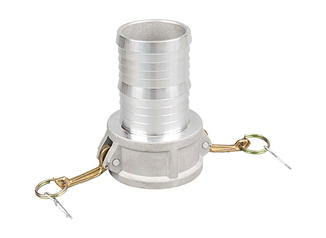
4. Camlock Fittings – The "Nemesis" of Thick Pipes
If you are connecting very thick water or oil pipes, ordinary clamps are difficult to tighten, so this is the solution.
• Principle: Two levers are flipped, using the principle of a cam to pull and lock the connector tightly.
• Advantages:
Excellent Operation: No need to turn screws; simply press two handles, and it feels very secure.
Vibration Resistant: Very suitable for pumps or machines that vibrate constantly, completely resistant to loosening due to vibration.
• Disadvantage: Large and bulky, generally used in industrial or high-flow applications; not suitable for small pipes.