 英语
英语 俄语
俄语
Content
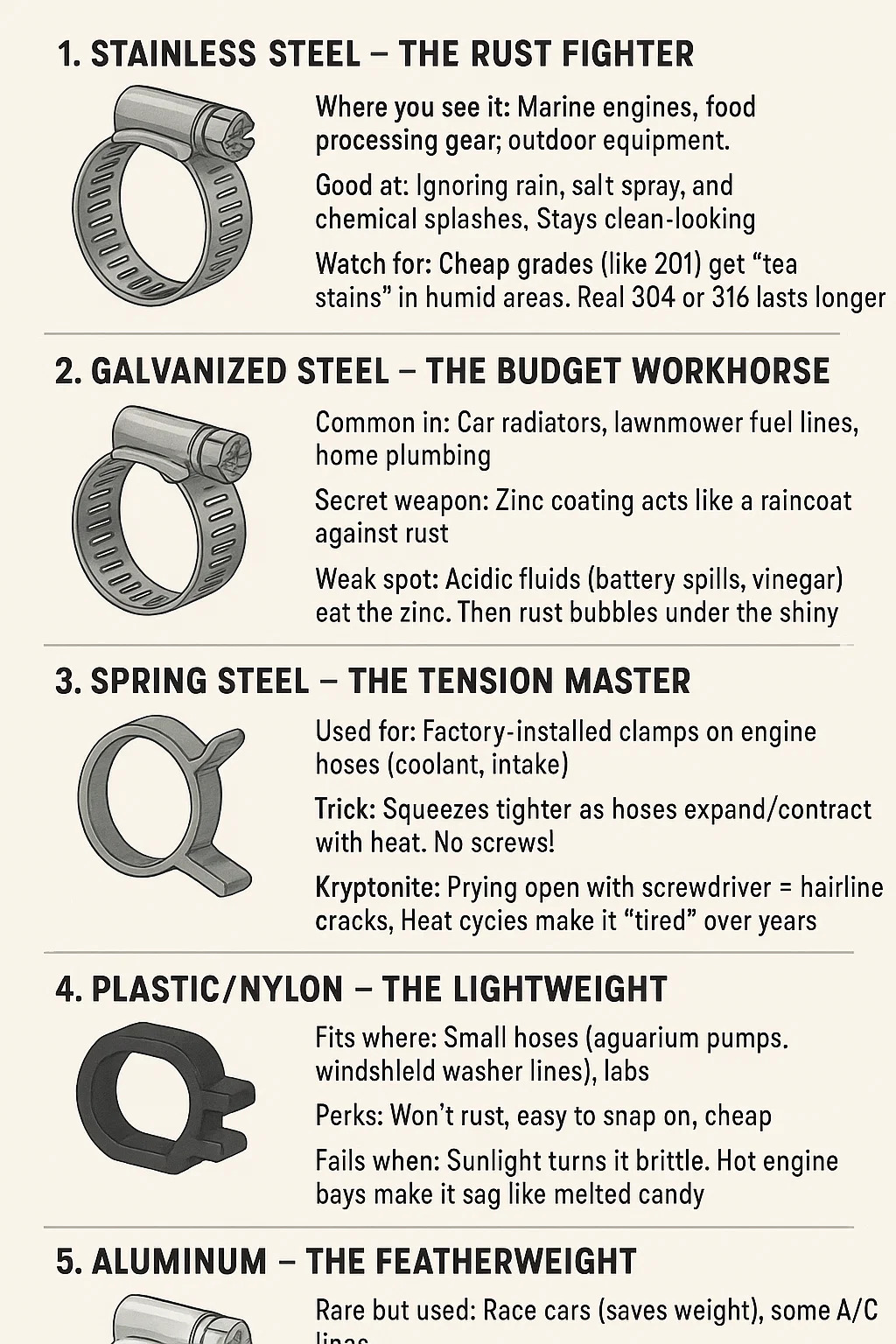
Here's a breakdown of hose clamp materials and how they hold up in the wild:
1. Stainless Steel – The Rust Fighter
Where you see it: Marine engines, food processing gear, outdoor equipment.
Good at: Ignoring rain, salt spray, and chemical splashes. Stays clean-looking.
Watch for: Cheap grades (like 201) get "tea stains" in humid areas. Real 304 or 316 lasts longer.
2. Galvanized Steel – The Budget Workhorse
Common in: Car radiators, lawnmower fuel lines, home plumbing.
Secret weapon: Zinc coating acts like a raincoat against rust.
Weak spot: Acidic fluids (battery spills, vinegar) eat the zinc. Then rust bubbles under the shiny coat.
3. Spring Steel – The Tension Master
Used for: Factory-installed clamps on engine hoses (coolant, intake).
Trick: Squeezes tighter as hoses expand/contract with heat. No screws!
Kryptonite: Prying open with screwdriver = hairline cracks. Heat cycles make it "tired" over years.
4. Plastic/Nylon – The Lightweight
Fits where: Small hoses (aquarium pumps, windshield washer lines), labs.
Perks: Won’t rust, easy to snap on, cheap.
Fails when: Sunlight turns it brittle. Hot engine bays make it sag like melted candy.
5. Aluminum – The Featherweight
Rare but used: Race cars (saves weight), some A/C lines.
Pros: Light, decent corrosion resistance.
Cons: Soft metal. Overtightening crushes it. Salt turns it into chalky powder.
Material Cheat Sheet
| Material | Best For | Will Fail If… |
|---|---|---|
| Stainless | Boats, chemicals | Low-grade steel masquerading |
| Galvanized | Budget fixes | Acid touches it |
| Spring steel | Factory engines | Forced open with tools |
| Plastic | Low-pressure toys | Left in sun or heat |
| Aluminum | Weight-sensitive | Crushed or salted |