 英语
英语 俄语
俄语
Content
For polyethylene pipe, commonly called poly pipe in irrigation, rural water supply, and industrial fluid transfer, the best clamp choices are stainless steel worm gear clamps for accessible and reusable joints, plus pinch or ear clamps for permanent, buried, or pressure-sensitive connections. Large-diameter poly pipe and higher working pressures call for T-bolt or heavy-duty band clamps. The right choice depends on pipe diameter, fitting barb geometry, system pressure, and whether the joint will ever need to be reopened.
The Short Answer: Which Clamps Work Best on Poly Pipe?
Poly pipe does not glue like PVC. The joint depends on the pipe being stretched over a barbed fitting, and the clamp holds the pipe in place with radial compression. The clamp must be matched to the pipe’s outside diameter after the pipe is pushed onto the barb, not just to the nominal pipe size. The table below gives a practical first-pass selection.
| Clamp Type | Best Use | Reusable? | Relative Cost |
|---|---|---|---|
| Stainless steel worm gear | General above-ground lines, easily reopened joints | Yes | Low to medium |
| Pinch or ear clamp | Permanent and buried connections, sprinkler systems | No | Low |
| Spring clamp | Low-pressure temporary lines | Yes | Very low |
| T-bolt or heavy-duty band | 2-inch and larger pipe, higher pressure or vacuum | Yes | Medium to high |
This table is only a starting point. The sections below explain why these differences matter and how to apply them on actual jobs.
How Clamps Work on Poly Pipe
Poly pipe is soft and flexible. A barbed insert stretches the pipe wall, and the clamp must hold the pipe onto the barb without cutting into the polyethylene. If the clamp is too small, it can cut the pipe; if it is too large, it may not create enough compression. This is why matching the clamp range to the real outside diameter of the pipe is more important than matching the nominal pipe size alone.
Barbed Fittings and Clamping Force
The barb creates the mechanical lock. The clamp’s job is to keep the pipe expanded around the barb, especially when the line is pressurized or the temperature changes. Correct placement is critical.
- The clamp band must sit behind the barb, not on the smooth barrel.
- The fitting must be fully inserted so the pipe reaches the shoulder of the fitting.
- The clamp should apply even pressure around the full circumference of the pipe.
Stainless Steel Worm Gear Clamps
Worm gear clamps are the most common above-ground option for poly pipe from 1/2 inch to 2 inches. They are easy to install, reuse, and adjust. An all-stainless steel version resists corrosion in irrigation and outdoor use. A thicker band, such as 12 mm, distributes force better than a narrow slotted band and is less likely to dig into the pipe.
The main weakness is over-tightening. In an irrigation forum discussion, one installer observed that worm clamps often strip around the time they feel tight, and that screw clamps are best kept for main-line service. That matches common field experience: the clamp is not usually the weak point, the applied torque is. Use a screwdriver or nut driver rather than a ratchet, and stop when the band is snug.
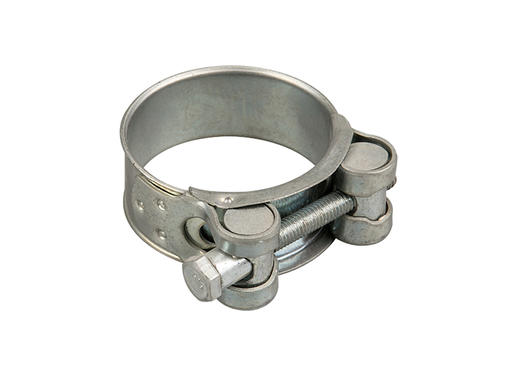 Stainless Steel Hose Clamp for Polyethylene Water LinesThis rigid stainless steel clamp suits water, oil, or liquefied gas connections. It offers a standard universal structure, making it a practical choice for buried or sprinkler service where consistent tension matters.View Product →
Pinch or Ear Clamps
Pinch clamps, also called ear clamps or crimp clamps, are designed for polyethylene and polybutylene water-service lines. They are especially popular in sprinkler systems and buried connections. A stainless steel ear clamp is compressed with a pincer tool, and it holds constant tension as the pipe expands and contracts. Because there is no thread, it cannot be over-tightened. The trade-off is that it is not reusable; you cut it off when service is needed.
Spring Clamps
Spring clamps are a quick and inexpensive option for low-pressure, temporary lines such as drip irrigation or transfer hose. They apply a fixed spring force, but that force can change with age and temperature. Spring clamps are not suitable for buried lines, high pressure, or large diameter pipe.
T-Bolt and Heavy-Duty Band Clamps
For pipe larger than 2 inches, or for systems with high pressure, vacuum, or frequent temperature swings, a T-bolt clamp or heavy-duty band clamp offers a wider band and more even compression. The wider band reduces the risk of cutting into soft polyethylene and provides a stronger hold on thick-wall poly pipe. These clamps are reusable and can be retensioned, which makes them useful on suction lines and pump discharge lines. Wide European-style T-bolt clamps are also common on hydraulic suction lines, as referenced in tractor and equipment repair discussions.
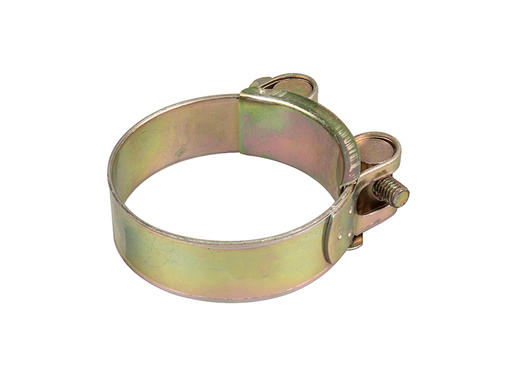 Heavy Duty Reusable T-Bolt Clamp for Large PipesA versatile carbon steel or stainless clamp with a wide adjustable range, ideal for high-pressure or temperature-swing systems. Reusable and recyclable, it provides even compression for thick-wall poly pipe and suction lines.View Product →
Sizing and Selection by Poly Pipe Diameter
The first number to check is the actual outside diameter of the pipe after it is pushed over the barb. For example, a 1-inch IPS poly pipe has an OD of about 1.315 inches, so a clamp that covers 1.25 to 1.5 inches is usually correct. Metric poly pipe is measured differently, so always measure the pipe OD with a caliper before ordering clamps.
| Nominal Size | Typical OD (IPS) | Recommended Clamp | Why |
|---|---|---|---|
| 1/2 in | 0.84 in | Worm gear or pinch clamp, 0.75–1.0 in range | Small barb fittings are easy to overtighten |
| 3/4 in | 1.05 in | Worm gear or pinch clamp, 0.9–1.25 in range | Typical sprinkler lateral size |
| 1 in | 1.32 in | Worm gear or pinch clamp, 1.25–1.5 in range | Most common branch-line size |
| 1.5 in | 1.90 in | Heavy-duty band clamp or T-bolt, 1.75–2.25 in range | Larger pipe needs a wider band |
| 2 in | 2.38 in | T-bolt clamp, 2.25–2.75 in range | High pressure and suction use |
Pressure rating also matters. For pipes working above 80 psi, use a wider band clamp and verify the fitting’s pressure rating. For vacuum service, a T-bolt clamp with a strong band is safer than a narrow worm clamp.
Installation Guidelines That Protect the Joint
Correct installation matters more than clamp brand. The following sequence is used by contractors on poly pipe systems.
- Cut the pipe square and remove any burrs or loose plastic.
- Warm the pipe end in hot water until it becomes soft. Never use a torch; flames can damage the polyethylene.
- Push the pipe firmly over the barbed fitting until it seats against the fitting shoulder.
- Position the clamp or ear directly behind the barb, not on the smooth part of the fitting.
- For a worm gear clamp, tighten until the band is snug, then give one-quarter to one-half turn. Compare with other clamps on the same line for consistency.
- After 24 hours, check the joint again, because poly pipe can cold-flow and loosen slightly.
For high-pressure or safety-critical lines, add a separate safety clamp downstream of the coupling. A safety clamp can prevent blow-off if the primary clamp fails.
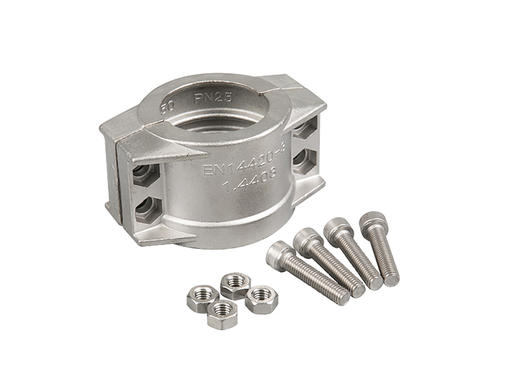 Adjustable Safety Clamp Coupling for Hose FittingsThis screw-type safety clamp secures ducting and hose fittings, helping prevent blow-off on critical lines. Adjustable with a screwdriver and reusable, it supports OEM customization for industrial or automotive applications.View Product →
For complete connection details, see our guide on how to install hose coupling correctly.
Common Mistakes That Ruin Poly Pipe Clamp Joints
- Using a clamp that is too large, so it never creates enough compression.
- Over-tightening with a wrench, which strips the worm gear or cuts the pipe.
- Heating poly pipe with a flame to make assembly easier, which weakens the pipe.
- Reusing an old corroded clamp that no longer closes evenly.
- Placing the clamp on the smooth barrel of the fitting instead of behind the barb.
- Ignoring UV-damaged poly pipe, which becomes brittle and cracks under clamp pressure.
Frequently Asked Questions
What clamp is least likely to damage poly pipe?
A pinch or ear clamp with a smooth stainless steel band is least likely to cut or stress the pipe, because it does not use a threaded band that can be over-tightened. If you need a reusable clamp, choose a stainless worm gear clamp with a wide band and tighten it gently.
Can I use a regular worm gear clamp on poly pipe?
Yes, if it is stainless steel and the band width is suitable. Avoid narrow slotted clamps designed only for rubber hose. Match the clamp range to the actual outside diameter of the pipe over the barb.
Do I need two clamps on each poly pipe fitting?
Usually one clamp per barb is enough when the fitting is fully inserted and the clamp is correctly positioned. For high-pressure lines or pipe larger than 2 inches, adding a second clamp on the same barb can help, but only if it does not overlap the barb.
Should I use spring clamps on irrigation poly pipe?
Spring clamps are suitable only for low-pressure, temporary drip or sprinkler lines. For underground or pressurized systems, use a pinch clamp or a stainless worm gear clamp.
What size clamp do I need for 1-inch poly pipe?
Measure the outside diameter of the pipe after it is pushed over the fitting. For 1-inch IPS poly pipe, the OD is about 1.315 inches, so a clamp that covers 1.25 to 1.5 inches is usually correct. Check the clamp range printed on the package.