 英语
英语 俄语
俄语
Content
- 1 The Short Answer: Yes, with Controlled Conditions
- 2 Why Galvanic Corrosion Happens Between Stainless Steel and Aluminum
- 3 The Surface Area Ratio Determines How Fast Damage Occurs
- 4 Environmental Conditions Decide Whether the Reaction Accelerates
- 5 Three Real-World Cases Where Stainless and Aluminum Work Together
- 6 Six Ways to Prevent Galvanic Corrosion Between Stainless and Aluminum
- 7 What This Means for Camlock Couplings and Hose Fittings
- 8 Frequently Asked Questions
- 8.1 Can stainless steel bolts be used on aluminum?
- 8.2 What happens if stainless steel touches aluminum in saltwater?
- 8.3 Does anodized aluminum resist galvanic corrosion from stainless steel?
- 8.4 Is it acceptable to connect an aluminum pipe to a stainless steel pipe directly?
- 8.5 How long before galvanic corrosion becomes visible?
- 9 Final Takeaway
A maintenance manager at a beverage bottling plant contacted us with a practical problem. His washdown line used aluminum camlock fittings on the hose end, and he wanted to switch the pump-side connection to stainless steel for better durability. The question was straightforward: would the two metals create a corrosion problem in a line that handled chlorinated water daily? It is one of the most common material compatibility questions in industrial fluid handling. The answer depends on electrochemical potential, exposed surface area, and the environment—not on a simple yes or no.
The Short Answer: Yes, with Controlled Conditions
Stainless steel and aluminum are compatible when the galvanic couple is properly managed. The direct answer is yes, you can use them together, but only if you control three variables: the ratio of cathode-to-anode surface area, the presence of an electrolyte, and the integrity of any isolation or coating layer.
In real installations, assemblies such as stainless steel fasteners on aluminum structures have performed reliably for decades in construction, solar power, and transportation. The word to focus on is "controlled." When any one of those three variables is ignored, galvanic corrosion drives rapid, localized attack on the aluminum side of the joint.
Why Galvanic Corrosion Happens Between Stainless Steel and Aluminum
Galvanic corrosion is an electrochemical process. When two different metals are connected through an electrolyte—water with dissolved salts, humidity, condensation, or process chemicals—electrons flow from the more active metal to the less active one. Aluminum sits near the anodic end of the galvanic series, while stainless steel sits near the cathodic end. According to galvanic series data published in the ASM Metals Handbook, the potential difference between aluminum 6061 and 316 stainless steel in seawater is roughly 0.85 volts.
The consequence is that aluminum becomes the sacrificial anode. It releases metal ions into the electrolyte and corrodes preferentially in order to protect the stainless steel. The visible symptoms are pitting, white powder formation, and gradual wall thinning on the aluminum component, sometimes followed by unexpected failure at threaded or clamped connections.
| Metal or Alloy | Potential (V vs SCE) |
|---|---|
| Magnesium | -1.60 |
| Zinc | -1.00 |
| Aluminum 6061-T6 | -0.85 |
| Carbon steel | -0.68 |
| 316 stainless steel (active) | -0.15 |
| 316 stainless steel (passive) | +0.05 |
| Titanium | +0.10 |
The larger the gap in potential, the stronger the driving force for galvanic attack. The 0.85 V difference between aluminum and 316 stainless is considered substantial; compare that to the roughly 0.17 V difference between aluminum and carbon steel, which still presents risk but produces a slower reaction in the same environment.
The Surface Area Ratio Determines How Fast Damage Occurs
The ratio between the cathode area (stainless steel) and the anode area (aluminum) is the single most important factor in predicting corrosion damage. When the anode is large relative to the cathode, the same corrosion current spreads across a broad area, so the penetration rate stays low. When the anode is small relative to the cathode, that current concentrates in a small zone and drives rapid pitting or perforation.
A stainless steel bolt holding down an aluminum plate is a favorable arrangement. The small stainless head acts as a small cathode and the large aluminum plate acts as a large anode; the distributed attack is usually negligible, especially indoors. The reverse arrangement—a large stainless steel surface with aluminum fasteners—is dangerous. Marine engineers in particular warn against using aluminum bolts or rivets on stainless structures, because the large stainless cathode accelerates attack on the small aluminum fasteners until they fail.
| Configuration | Cathode-to-Anode Ratio | Expected Result |
|---|---|---|
| Stainless bolt in large aluminum plate | 1:50 or lower | Mild, distributed attack |
| Large stainless panel with aluminum bolts | 50:1 or higher | Severe, rapid attack |
| Stainless flange mated to aluminum coupling | 1:1 to 5:1 | Moderate to localized pitting |
| Equal-area stainless and aluminum plates | 1:1 | Noticeable attack on aluminum |
Environmental Conditions Decide Whether the Reaction Accelerates
The electrical conductivity of the surrounding medium is the accelerator. A perfectly dry joint between stainless steel and aluminum has essentially no galvanic activity because no electrolyte connects them. The moment moisture, condensation, or chemical residue forms a conductive path, the cell activates.
| Environment | Risk Level | Typical Applications |
|---|---|---|
| Seawater and salt spray | Severe | Marine hardware, coastal processing plants |
| Outdoor humidity and rainfall | Moderate to high | Building facades, rooftop equipment |
| Indoor heated and dry | Low | HVAC rooms, dry assembly areas |
| Chlorinated water or acid fumes | Severe | Food processing, water treatment, pools |
| Intermittent wet-dry cycling | High | Washdown lines, outdoor machinery |
Intermittent wet-dry cycles are especially destructive because the electrolyte concentrates salts and contaminants as water evaporates, raising the conductivity of each subsequent wetting. This explains why washdown lines, marine equipment, and outdoor process skids show corrosion far earlier than protected indoor installations.
Three Real-World Cases Where Stainless and Aluminum Work Together
It is not all bad news. Several established industries combine stainless steel and aluminum every day, and their design techniques are worth copying.
- Solar panel mounting racks — Manufacturers use stainless steel bolts on aluminum extruded frames across millions of rooftop and utility-scale installations. The practice works because the fastener is small relative to the frame surface, and isolator washers break the electrical path between the bolt head and the aluminum rail.
- Aluminum boats with stainless hardware — Painted aluminum hulls regularly carry stainless cleats, rail fittings, and propeller hardware. The critical details are full paint coverage on the aluminum, a thick sealant layer under the stainless fitting, and no exposed aluminum at the joint edge.
- Stainless steel instrument flanges on aluminum process piping — In chemical plants and semiconductor facilities, transition joints work when a dielectric gasket is installed between the flange faces and insulating sleeves are used on all bolts.
What these examples share is a deliberate interruption of the electrical circuit. The metals are touching physically, but they are not connected electrochemically because an isolating or coating layer sits between them.
Six Ways to Prevent Galvanic Corrosion Between Stainless and Aluminum
If your system requires both metals, apply any combination of these controls. The more measures you combine, the longer the assembly will last.
- Insert a dielectric barrier — Nylon washers, rubber gaskets, PTFE tape, and plastic bushings all stop metal-to-metal contact. This is the most direct and inexpensive method.
- Coat the stainless steel surface — Powder coating, painting, or plating the cathodic side lowers the effective cathode area and cuts the driving force significantly.
- Apply sealant at the junction — A continuous bead of polyurethane or silicone sealant blocks water from entering the crevice where the two metals meet. The sealant must be checked periodically because UV and thermal cycling degrade it.
- Choose a fastener material closer to aluminum in the series — Zinc-plated steel, galvanized steel, or aluminum fasteners reduce the potential difference compared with stainless, slowing the reaction on the aluminum structure.
- Keep the cathode smaller than the anode — Design the assembly so that any stainless surface area stays smaller than the adjacent aluminum. This is a fundamental rule in marine hardware design.
- Create a drainage path — Do not allow water to pool around the joint. Orient the assembly so water drains away from the contact area, and add weep holes where needed.
What This Means for Camlock Couplings and Hose Fittings
The compatibility question shows up daily in industrial fluid transfer. Aluminum camlock couplings dominate agricultural water transfer and fuel handling because they are light, inexpensive, and corrosion-resistant in freshwater. Stainless steel camlocks are the standard in chemical processing, marine lines, and food-grade applications where contamination control and chloride resistance matter.
If you currently run an aluminum Type A camlock coupling on a water transfer hose and want to connect it to a stainless steel pump outlet, stop and consider the contact point. A wet, chlorinated environment will create galvanic activity at that interface. One practical solution is to keep the aluminum hose assembly separate and use a short stainless-to-aluminum transition secured by a dielectric gasket, or choose a coupling material that isolates the two metals altogether.
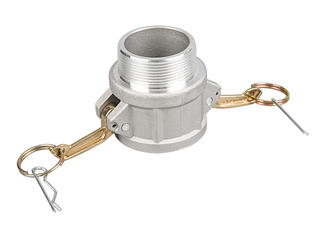
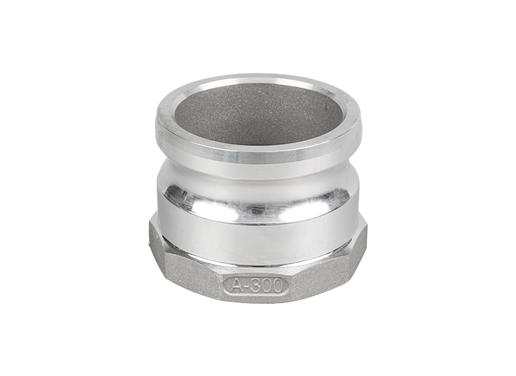 Wholesale Aluminum type A camlock coupling Suppliers, Factory - Ningbo Chili HarNingbo Chili Hardware Co., Ltd is China wholesale Aluminum type A camlock coupling Suppliers and factory,Standard: Our camlock coupling a...View Product →
On the pump side, a stainless steel Type A camlock coupling is the right long-term choice for aggressive fluids, seawater contact, and frequent washdown duty. For the transition zone, a nylon Type A camlock coupling acts as an electrical and thermal insulator between the two metals, breaking the galvanic circuit completely while still delivering strong mechanical performance.
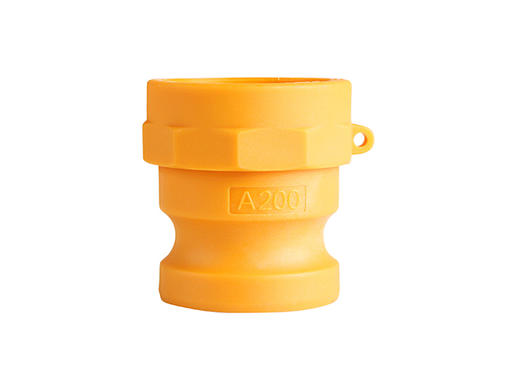 Wholesale Nylon type A camlock coupling Suppliers, Factory - Ningbo Chili HardwaNingbo Chili Hardware Co., Ltd is China wholesale Nylon type A camlock coupling Suppliers and factory,Standard: Our camlock coupling are ...View Product →
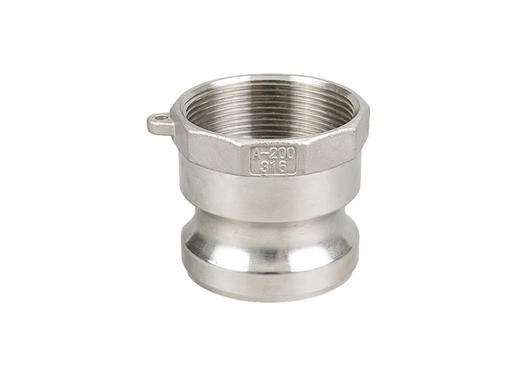 Wholesale Stainless steel type A camlock coupling Suppliers, Factory - Ningbo ChNingbo Chili Hardware Co., Ltd is China wholesale Stainless steel type A camlock coupling Suppliers and factory,Standard: Our camlock cou...View Product →
Beyond camlocks, the same logic applies to flanges, Storz connections, and pin lug couplings. If you are designing a new system, review the guide to selecting the right camlock coupling before choosing materials. And if you are already committed to stainless fittings, familiarizing yourself with stainless steel camlock fitting basics will help you spot potential contact points early. A separate comparison of stainless steel camlock advantages over other materials also clarifies when upgrading is worthwhile.
Frequently Asked Questions
Can stainless steel bolts be used on aluminum?
Yes, stainless steel bolts are routinely used on aluminum assemblies, including solar racking, bicycle frames, and automotive parts. The small surface area of the bolt relative to the aluminum structure keeps corrosion rates low. For best results, fit a nylon or plastic washer under the bolt head and the nut, and use a thread-locking compound that also acts as a moisture barrier.
What happens if stainless steel touches aluminum in saltwater?
Saltwater is the most aggressive electrolyte for a stainless-aluminum couple. The high chloride content breaks down passive films on both metals, and the resulting corrosion rate on aluminum can be severe—measurable in millimeters per year. Boating industry guidelines recommend complete isolation between stainless hardware and aluminum hulls or components, using thick non-metallic backing plates and sealant bedding.
Does anodized aluminum resist galvanic corrosion from stainless steel?
Anodizing helps but does not eliminate the risk. The anodic oxide layer is a good electrical insulator, but it is thin and easily scratched at fastener contact points. In practice, anodized aluminum with stainless fasteners performs well in dry or mildly humid environments, but the anodized layer must be intact. Where the coating is damaged, localized galvanic attack can still occur.
Is it acceptable to connect an aluminum pipe to a stainless steel pipe directly?
Direct metal-to-metal threading or flanging of aluminum pipe to stainless steel pipe is not recommended in wet or outdoor service. The stainless flange acts as a large cathode, and the aluminum pipe end acts as a concentrated anode. The practical fix is a dielectric union, a non-metallic coupler such as nylon or polypropylene, or a short spool piece with isolating gaskets at both faces.
How long before galvanic corrosion becomes visible?
There is no universal timeline. In a marine environment, visible white aluminum oxide powder and pitting can appear within 6 to 12 weeks on an unprotected joint. In a dry indoor environment, the same pairing might show no corrosion for decades. The deciding factors are electrolyte exposure, surface area ratio, and the specific alloys used.
Final Takeaway
Stainless steel and aluminum are compatible when the galvanic cell is intentionally broken. Control the surface area ratio, keep the joint dry or sealed, and use isolation components such as nylon washers, dielectric gaskets, or non-metallic couplers. In industrial fluid handling, the easiest way to avoid the problem altogether is to pick a single metal for a continuous line or to use a polymer coupling at the transition point. With these precautions, the two metals can coexist safely in almost any service.