 英语
英语 俄语
俄语
Content
- 1 What Are Stainless Steel Sanitary Pipe Fittings?
- 2 Material Grade: 304 vs. 316L — Which Should You Specify?
- 3 Interior Surface Finish: The Parameter That Decides Cleaning Performance
- 4 Main Types of Stainless Steel Sanitary Pipe Fittings
- 5 Tri-Clamp, Butt-Weld, or Threaded: Choosing the Right Connection
- 6 A Practical Selection Checklist for Sanitary Fittings
- 7 Common Specification Mistakes That Create Problems in the Plant
- 8 Connecting Hoses to Sanitary Lines: Ferrules, Camlocks, and Clamps
- 9 What to Check Before You Place an Order
- 10 Frequently Asked Questions About Stainless Steel Sanitary Pipe Fittings
- 10.1 What is the difference between sanitary fittings and ordinary stainless steel pipe fittings?
- 10.2 Is 316L always better than 304 for sanitary service?
- 10.3 What surface finish do food-contact fittings need?
- 10.4 Can a tri-clamp line and a camlock hose be connected together?
- 10.5 Which gasket material is best for hot caustic CIP?
- 10.6 Can tri-clamp gaskets be reused?
- 11 Final Advice
Stainless steel sanitary pipe fittings are the standard connection solution for hygienic fluid systems, and the fastest route to a correct specification is to decide three things first: material grade, interior surface finish, and connection type. Fix those three, and the rest of the selection work becomes a routine sizing exercise. Starting the other way — with price, brand, or catalogue photos — is how CIP failures, product contamination, and premature corrosion appear long before the line is due for replacement.
Sanitary fittings are not simply stainless steel fittings with a prettier polish. The meaningful differences are inside the bore: a surface smooth enough to be cleaned, transitions free of crevices and threads, and weld details prepared for clean-in-place (CIP) and sterilize-in-place (SIP) operation. The rest of this article explains the materials, finishes, connection types, and buying rules you need to specify them correctly the first time.
What Are Stainless Steel Sanitary Pipe Fittings?
Stainless steel sanitary pipe fittings are the components used to connect, branch, reduce, or terminate piping systems that carry fluids in contact with food, beverages, dairy, pharmaceutical, cosmetics, and biotechnology products. The standard component set includes weld ferrules, tri-clamp unions, elbows, tees, reducers, adapters, and caps.
A fitting can only be called sanitary if it meets three design conditions. First, the internal geometry must be smooth and free of threads, recesses, and sharp corners where product could be trapped. Second, the interior surface must be controllable to a specified roughness so that bacteria have no place to anchor and cleaning detergents can reach every wetted area. Third, the fitting must disconnect easily for inspection, manual cleaning, or product changes.
Most sanitary fittings are dimensioned by the outside diameter (OD) of the tube rather than by nominal pipe size. The common dimensional families are ISO 2037 for international food processing, DIN 11850 for European-installed plants, ASTM A270 for North American equipment, and ASME BPE for bioprocessing systems. The same nominal size is not interchangeable between these families, so confirming the standard is the first step of any inquiry.
Material Grade: 304 vs. 316L — Which Should You Specify?
Two stainless steel grades dominate sanitary installations: 304 (1.4301) and 316L (1.4404). The L in 316L stands for low carbon — a maximum of about 0.03% carbon — which prevents the carbide precipitation, or sensitisation, that weakens welds and reduces corrosion resistance. 316L also contains roughly 2.0% to 3.0% molybdenum, and that molybdenum is the real reason 316L is preferred wherever chlorides, acids, and cleaning chemicals are present.
| Property | 304 (1.4301) | 316L (1.4404) |
|---|---|---|
| Carbon, max | 0.08% | 0.03% |
| Chromium | 18–20% | 16–18% |
| Nickel | 8–10.5% | 10–14% |
| Molybdenum | None | 2–3% |
| Typical application | Neutral food and water lines without chlorides | CIP chemicals, brine, pharmaceuticals, seafood processing |
| Relative cost | Baseline | Approx. 10–15% higher |
If a line carries only neutral fluids such as softened water and low-chloride products, 304 can provide perfectly adequate service. For any process exposed to CIP chemicals, brine, seafood, pharmaceuticals, or washdown with chlorinated water, 316L is the safer default. The extra cost of 316L is a small fraction of the cost of replacing corroded fittings or losing a batch to contamination.
When evaluating suppliers, ask for the lot-specific composition data corresponding to the heat, and check the molybdenum percentage directly. A 316L fitting whose documentation does not show molybdenum should be treated as suspect.
Interior Surface Finish: The Parameter That Decides Cleaning Performance
The interior surface finish of a sanitary fitting is the single most functional specification on the drawing. Microorganisms cling far more easily to rough surfaces, and rough surfaces demand longer wash cycles and higher cleaning energy. Surface roughness is expressed as Ra (average roughness in micrometres); a lower Ra means a smoother bore.
Practical benchmarks vary by industry. A widely used starting point is Ra 0.8 µm or lower for general food contact, Ra 0.6 µm or lower for dairy and beverage lines, and Ra 0.4 µm or lower for pharmaceutical and biotech systems. Mechanically polished finishes of 180 or 240 grit reach these targets; electropolishing can then reduce the roughness by another 30% to 50% while forming a chromium-enriched passive layer that resists corrosion.
These ranges align with guidance used in 3-A SSI and ASME BPE referenced installations, 2023 editions. Because the exterior of a fitting can be mirror-polished while the interior remains rough, buyers should require that representative samples be measured with a surface roughness tester before mass production. The bore finish is what determines hygienic performance, not the appearance of the outer shell.
Main Types of Stainless Steel Sanitary Pipe Fittings
A hygienic line is assembled from a small number of repeatable components. The table below summarises the main types, their function, and where each is typically used.
| Fitting type | Function | Typical application |
|---|---|---|
| Weld ferrule | Creates the weld-to-clamp interface on a tube end | Tank nozzles, line terminations |
| Tri-clamp union | Quick assembly and disassembly without tools | Daily cleaning, frequent changeovers |
| 90° and 45° elbows | Change the flow direction | Compact line routing |
| Equal and reducing tees | Branch a line | Mixing, distribution, cleaning loops |
| Reducers | Change the tube diameter | Transitions between process stages |
| Threaded adapters | Connect hose or instruments | Low-pressure access, manual lines |
| Caps and plugs | Close an unused end | Future expansion, blanking off |
For plants that already run tri-clamp connections, the weld ferrule is the item to keep in stock, because it bridges any stainless steel tube end into a clampable hygienic connection. If you are building a hygienic connection from scratch, stainless steel sanitary ferrules come in 304 or 316L and are machined to match the tube OD and clamp size you use.
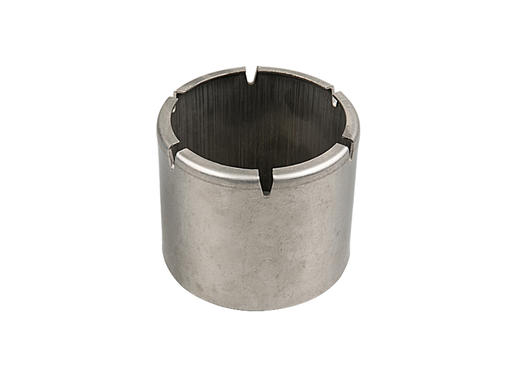 Wholesale Stainless steel Ferrule Suppliers, Factory - Ningbo Chili Hardware Co.Ningbo Chili Hardware Co., Ltd is China wholesale Stainless steel Ferrule Suppliers and factory,View Product →
Tri-Clamp, Butt-Weld, or Threaded: Choosing the Right Connection
The connection method determines how the fitting behaves during cleaning, inspection, and maintenance. There are three widely used families, and each balances hygiene, installation cost, and flexibility differently.
Tri-clamp connections
A tri-clamp connection consists of two weld ferrules, one gasket, and an outer clamp. It opens in seconds without special tools, which is why it dominates food, dairy, and pharmaceutical plants where lines are opened daily. The gasket is the weakest component of the joint, so it must be compatible with both the product and the cleaning chemicals.
Butt-weld connections
Butt-welding produces a permanent joint with no gasket and no crevice, giving the highest hygienic integrity and leak resistance. The trade-off is that the line must be cut whenever the joint has to be opened. Butt-welds are therefore the standard for long fixed distribution circuits that are cleaned exclusively in place.
Threaded connections
Threaded connections are familiar and cheap, but the thread profile creates recesses where product can accumulate, so they are generally avoided in true hygienic product contact. They remain practical for utility lines such as compressed air, water, and steam where the line is not subjected to the same cleaning regime.
The same trade-off applies on the flexible side of a system. The performance characteristics of stainless steel hose joints explain how these joint designs behave when hoses, rather than rigid tubes, are being connected.
A Practical Selection Checklist for Sanitary Fittings
Work through these six steps in order, and most specification decisions make themselves.
- Identify the fluid and its chloride content. Brine, pickles, and seawater-like products force a move from 304 to 316L.
- Confirm the maximum operating temperature and pressure. These determine wall thickness and gasket selection.
- Set the interior finish target. Use Ra 0.6 µm or better for most food and beverage service, and Ra 0.4 µm for pharmaceutical lines.
- Match the connection standard of the existing plant. ISO 2037, DIN 11850, ASTM A270, or ASME BPE must be stated explicitly.
- Decide how often the line is opened. High-frequency points favour tri-clamp; permanent distribution lines favour butt-weld.
- Choose gaskets after the cleaning chemical, not before. The volume and type of CIP caustic and acid decide the gasket material.
The numbers used most often in sanitary process design are a practical reference. Many installations run at 10 to 16 bar design pressure at ambient temperature, and CIP cycles between 80°C and 95°C using 1% to 3% caustic and acid steps. EPDM gaskets cover these temperatures comfortably; PTFE offers the broadest chemical compatibility; FKM (fluororubber) is reserved for oils, hydrocarbons, and high-temperature media. Typical process parameters are drawn from process design literature and published gasket technical data; confirm final values with the process engineer before purchasing.
Common Specification Mistakes That Create Problems in the Plant
Most sanitary fitting problems are not visible in the catalogue; they are discovered on the installation floor. The following mistakes appear repeatedly in procurement:
- Mixing dimension standards. ISO 2037 and DIN 11850 have different ODs for the same nominal diameter; a mixed order will not align.
- Ordering by NPS instead of tube OD. A conventional pipe DN25 is not the same size as a sanitary tube DN25, and the difference becomes obvious only at installation.
- Ignoring the internal weld seam. Ferrules that are not prepared with the right bore finish create a collection point at every weld.
- Choosing 304 when CIP uses chlorinated chemicals. Pitting appears near gaskets and welds within months.
- Buying fittings without matching gaskets and clamps. Ferrule dimensions and clamp sizes must correspond to the same gasket standard.
- Judging quality by the outer surface. Exterior polish says nothing about the bore finish, which is the surface that matters.
The reliable way to avoid these mistakes is to send the supplier three exact numbers in the first inquiry: the tube outside diameter (51 mm, for instance, or 2 in. OD), the dimensional standard, and the wall thickness. Ambiguity in these three numbers causes most dimension-related returns.
Connecting Hoses to Sanitary Lines: Ferrules, Camlocks, and Clamps
Not every hygienic process is hard-piped. Tanker unloading, portable transfer, CIP skid hookups, and filling machines routinely use flexible hoses, and the fittings at the hose ends need the same discipline as the welded piping.
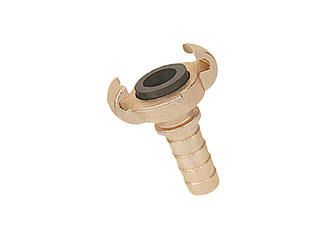
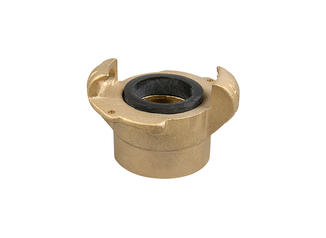
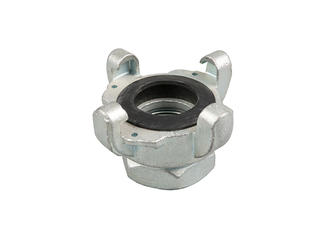
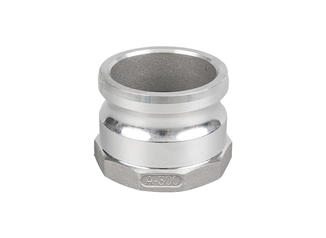
Where a full tri-clamp joint is not available, a stainless steel camlock coupling is the quick alternative: the male and female halves lock in seconds, and the gasket is replaceable. A stainless steel Type A camlock coupling is the typical starting point for a hose-side male connection. For a broader picture of how these products behave in pipeline systems, the basic knowledge of stainless steel camlock fittings and pipeline products covers the common combinations.
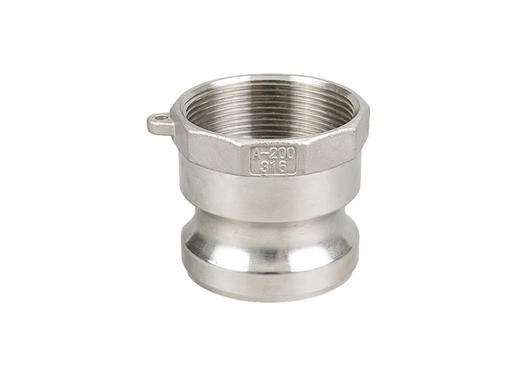 Wholesale Stainless steel type A camlock coupling Suppliers, Factory - Ningbo ChNingbo Chili Hardware Co., Ltd is China wholesale Stainless steel type A camlock coupling Suppliers and factory,Standard: Our camlock cou...View Product →
On the hose side, silicone or braided PTFE hoses fitted on barbed stems are reliably secured with stainless steel hose clamps, which keep the assembly tight through repeated cleaning cycles and are reusable after inspection.
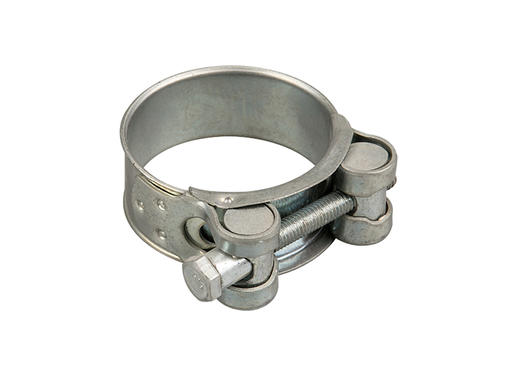 Wholesale Stainless steel hose clamp Suppliers, Factory - Ningbo Chili Hardware Ningbo Chili Hardware Co., Ltd is China wholesale Stainless steel hose clamp Suppliers and factory,Stainless steel hose clamp Structure: ...View Product →
Selecting the whole connection set — tube, ferrules, hose ends, clamps, and gaskets — from the same material family avoids galvanic problems and keeps spare parts simple.
What to Check Before You Place an Order
The final filter is the supplier. Because the production floor is invisible to most buyers, the interview should focus on material sourcing, fabrication control, and inspection rather than marketing language.
Ningbo Chili Metal Products Co., Ltd. has manufactured stainless steel hose couplings and related components since 2004, and its product range covers ferrules, camlock couplings, hose clamps, and flanges under the same roof. The factory is located in Cixi, Zhejiang, roughly 100 km from Ningbo port and 120 km from Shanghai port, which keeps export logistics short for customers in North America, Europe, Australia, the Middle East, Southeast Asia, and South Africa. The company's corporate values and quality approach give buyers a clear picture of how orders are handled before the first inquiry is sent.
Ask the manufacturer how material batches are tracked, how the interior finish of samples is verified, and whether inspection can be arranged before mass production. A supplier that answers with data and procedures is usually a safer partner than one that answers with promises.
Frequently Asked Questions About Stainless Steel Sanitary Pipe Fittings
What is the difference between sanitary fittings and ordinary stainless steel pipe fittings?
Ordinary fittings may have internal threads, sharp corners, and unpolished bores, which trap product and resist cleaning. Sanitary fittings are designed with smooth crevice-free bores, controlled surface roughness, and quick-disconnect options suited to CIP and SIP.
Is 316L always better than 304 for sanitary service?
Not always. For neutral, low-chloride products, 304 performs adequately at lower cost. 316L is better when the line sees chlorides, acids, brine, aggressive CIP chemicals, or pharmaceutical requirements; its molybdenum content is the deciding factor.
What surface finish do food-contact fittings need?
A common benchmark is Ra 0.6 µm or lower for dairy and most food products, and Ra 0.4 µm or lower for pharmaceutical or biotech contact surfaces. Confirm the figure in your own specification and verify it with a roughness tester.
Can a tri-clamp line and a camlock hose be connected together?
Yes. A stainless steel camlock coupling can be joined to a ferrule-based line through the appropriate adapter, but check the pressure rating, the gasket compatibility, and the hygienic requirement before making the connection permanent.
Which gasket material is best for hot caustic CIP?
EPDM is usually the first choice for CIP at 80°C to 95°C with caustic and acid cycles. PTFE covers a wider chemical range, and FKM (fluororubber) is used where oils or high temperatures rule out EPDM. Match the gasket to the cleaning chemical, not only to the product.
Can tri-clamp gaskets be reused?
Tri-clamp gaskets deform in service, and the cost of a gasket is negligible compared with the cost of a lost batch. Replacing gaskets after each disassembly, or at least on a strict inspection schedule, is the safe practice.
Final Advice
The decisions that settle most sanitary fitting requirements fit into a short list: use 316L whenever there is doubt, set an interior finish of Ra 0.4 to 0.6 µm for product contact, prefer tri-clamp where the line must open regularly, and match every fitting to the exact tube OD, standard, and wall thickness of the installed line. Buy from a manufacturer that produces the supporting components in the same material family, and ask for verifiable data before you commit.
These are small decisions at the ordering stage, but they are the same decisions that keep a hygienic line leak-free, easy to clean, and in reliable operation for years of continuous service.