 英语
英语 俄语
俄语
Content
- 1 The Direct Answer: Tri-Clamp and Tri-Clover Are the Same Connection
- 2 Why Two Names Exist: The Tri-Clover History
- 3 Anatomy of a Tri-Clamp or Tri-Clover Connection
- 4 How the Tri-Clover Sealing Mechanism Works
- 5 Tri-Clamp Sizes and How to Measure Them Correctly
- 6 Material Grades, Surface Finish, and Sanitary Standards
- 7 Gasket Selection: Matching the Elastomer to the Process
- 8 Tri-Clamp vs Other Hygienic and Industrial Connection Systems
- 9 Cleaning, Sterilization, and Maintenance of Tri-Clamp Assemblies
- 10 Installation Steps and Best Practices
- 11 Applications by Industry
- 12 Purchasing Checklist: What to Specify
- 13 Frequently Asked Questions
- 13.1 Are tri-clamp and tri-clover the same fitting?
- 13.2 How do I identify the right tri-clamp size?
- 13.3 What pressure ratings are typical for tri-clamp fittings?
- 13.4 Can a tri-clamp fitting handle steam sterilization?
- 13.5 How often should the gasket be replaced?
- 13.6 Are components from different manufacturers interchangeable?
- 14 Final Thoughts
If you are comparing tri-clamp vs tri-clover fittings for a dairy, beverage, or pharmaceutical process line, the direct answer is this: the two terms describe the same connection. A tri-clover fitting is a tri-clamp fitting, and every standard component, including the ferrule, gasket, and clamp, is interchangeable between the two names without modification. The name Tri-Clover is a historic trademark; tri-clamp is the generic description of the same three-segment clamping design.
When you request a quote using either name, you will receive the same product standard, usually manufactured to ISO 2852 or 3-A geometry. The actual differences between suppliers lie in material grade, surface finish, gasket quality, and machining precision. Those are the details that matter when you are building a hygienic process line.
The Direct Answer: Tri-Clamp and Tri-Clover Are the Same Connection
Naming confusion is common with pipe fittings, but there is no functional difference here. Both names refer to a sanitary union built from two ferrules, one gasket, and an external clamp with three linked segments. The three-segment clamp is what makes the design "tri." The clamp, not the fitting itself, is the three-part component.
If you see "TC" on a process drawing, it means tri-clamp. If a supplier's catalog says tri-clover, it sends the same product. This interchangeability is by design, because the product geometry is standardized rather than protected by a single brand.
The key facts to remember are:
- Same ferrule dimensions and tolerances under ISO 2852.
- Same gasket profiles and sizes.
- Same clamp sizes, gasket grooves, and bolt patterns.
- Components from different manufacturers are generally interchangeable when specified to the same standard.
Why Two Names Exist: The Tri-Clover History
Tri-Clover was not originally a generic product name. It was a brand used by the Tri-Clover Division of Ladish Co., a Wisconsin-based manufacturer that developed and sold the sanitary clamp connection. The design became so widely copied that the product name Tri-Clamp also became part of everyday industrial vocabulary.
In a later round of industry consolidation, the trademark passed to Alfa Laval. By that point, the word Tri-Clover was already being used generically to describe the style of connection rather than a specific supplier. This is a classic example of a brand name becoming a common noun.
The generic name tri-clamp comes directly from the hardware. The clamp has three curved segments joined by a hinge. When the clamp is closed around the two ferrules, the three segments distribute the clamping load evenly around the gasket.
- Mid-1900s: the Tri-Clover brand introduces the sanitary clamp design in the United States.
- 1960s to 1980s: dimensional standards emerge as the design is copied across the food and dairy industries.
- 2010s to present: ISO 2852 and 3-A SSI became the reference standards; tri-clamp is the standard term around the world.
Anatomy of a Tri-Clamp or Tri-Clover Connection
A complete tri-clamp assembly has three components. That simplicity is exactly why it dominates hygienic piping.
Ferrule (Weld End)
The ferrule is a short stainless steel stub with a flat sealing face on one end and a groove around the outside. It is welded to the pipe or tubing. Two ferrules face each other to form the joint, with the gasket sitting between their flat faces.
Gasket
The gasket is a ring that matches the ferrule face. Its inner bore is nearly flush with the pipe bore, and its outer edge is captured by the ferrule grooves. When the clamp is tightened, the gasket compresses slightly and produces a crevice-free seal.
Clamp
The clamp is a hinged collar made up of three segments. It wraps around the outer grooves of the two ferrules and presses them together. Standard clamps use a single bolt or wing nut; larger lines use double-bolt clamps to spread the load.
| Component | Function | Typical Material |
|---|---|---|
| Ferrule | Welds to tube and holds the gasket in position | 304 or 316L stainless steel |
| Gasket | Compresses between ferrule faces to seal the bore | EPDM, silicone, PTFE, Viton, Buna-N |
| Clamp | Draws the ferrules together with even radial pressure | Stainless steel or zinc-plated steel |
How the Tri-Clover Sealing Mechanism Works
The sealing principle is best described as evenly distributed compression. The raised lip of each ferrule fits into a matching channel on the inside of the clamp. As the bolt is tightened, the clamp pulls both ferrules toward the gasket. The gasket is compressed but remains fully contained inside the joint.
This design gives three practical benefits that are hard to match with other fittings:
- No threads in the product path means no wear particles, no thread paste, and no trapped product.
- A single-bolt clamp opens in seconds, making the joint ideal for lines that are disassembled daily for washing or product changeovers.
- The internal bore is smooth and nearly continuous, leaving no dead space where bacteria can grow.
Because the gasket stays confined, the joint remains tight over many assembly cycles. The practical limit is the gasket itself, which is why gasket material selection matters more than the clamp brand.
Tri-Clamp Sizes and How to Measure Them Correctly
Tri-clamp sizes are always based on the outer diameter of the tube, not the inner diameter and not the outside diameter of the clamp ring. This is the most common reason for ordering the wrong size.
| Nominal Size (inch) | Tube Outer Diameter (mm) | Typical Service |
|---|---|---|
| 1/2 | 12.7 | Laboratory lines, sampling points |
| 3/4 | 19.05 | Pilot plant, additive lines |
| 1 | 25.4 | Beverage, dairy, and cosmetic lines |
| 1-1/2 | 38.1 | Transfer lines, manifolds, CIP supply |
| 2 | 50.8 | Main process lines, CIP return |
| 2-1/2 | 63.5 | Larger transfer systems |
| 3 | 76.2 | High-flow process lines |
| 4 | 101.6 | Large product lines, tank outlet manifolds |
| 6 | 152.4 | Big process piping, utility lines |
Standard dimensions for these sizes are published in ISO 2852 and DIN 32676. When you are matching an existing installation, first determine whether the connection follows the ISO or the DIN geometry, because the gasket profile and ferrule lip dimensions can differ slightly.
A practical measurement tip: measure the tube OD that slides into the ferrule, not the diameter of the ferrule lip and not the width of the clamp. A 2-inch tri-clamp fits 2-inch OD tubing, even though the outside of the ferrule lip is visibly wider than 2 inches.
Material Grades, Surface Finish, and Sanitary Standards
Hygienic lines also need to survive cleaning chemicals, hot water, steam, and aggressive products. Material grade and surface finish therefore need to be specified rather than assumed.
304 vs 316L Stainless Steel
Type 304 is the economical choice for food and beverage work with low chloride exposure. Type 316L is preferred for pharmaceutical, biotech, and processes with chlorides or acids. The "L" means lower carbon content, which improves weldability and reduces the risk of intergranular corrosion after welding.
| Material | Typical Surface Finish | Best Suited To | Notes |
|---|---|---|---|
| 304 SS | 0.8 micron Ra mechanical polish | Food, dairy, beverages | Lower cost, good general corrosion resistance |
| 316L SS | 0.4 micron Ra mechanical polish or electropolish | Pharma, biotech, chemical | High corrosion resistance, clean welds |
| 316L electropolished | 0.4 micron Ra and better | WFI, ultrapure water, semiconductor | Smoothest surface, easiest to clean |
Surface finish directly affects cleanability. A rougher surface traps product residue and bacteria, while a polished surface cleans faster and lowers biofilm risk. The 3-A Sanitary Standards and ISO 2852 set the expected ranges, but your purchase order should state the Ra value instead of relying on defaults.
If your piping layout also needs flanged ferrule ends or loose ferrules for other connection types, a manufacturer with in-house machining, such as Ningbo Chili Metal Products, can supply matching stainless steel ferrules in the same material and finish family.
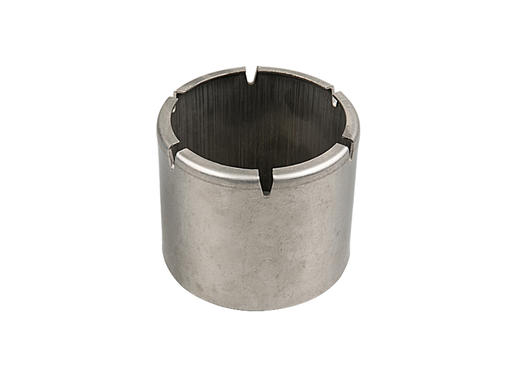 Wholesale Stainless steel Ferrule Suppliers, Factory - Ningbo Chili Hardware Co.Ningbo Chili Hardware Co., Ltd is China wholesale Stainless steel Ferrule Suppliers and factory,View Product →
Gasket Selection: Matching the Elastomer to the Process
The gasket is the only wear part in a tri-clamp connection. Picking the wrong elastomer is the fastest way to create leaks, product contamination, or premature failure. Use temperature range only as a first filter; chemical compatibility is just as important.
| Gasket Material | Typical Temperature Range | Common Applications |
|---|---|---|
| EPDM | -40°C to 150°C | Water, dairy, CIP chemicals, steam |
| Silicone | -50°C to 200°C | Food and pharmaceutical products; avoid strong acids and high-pressure steam |
| PTFE | -100°C to 260°C | Aggressive chemicals; higher temperature; less elastic |
| Viton (FKM) | -20°C to 200°C | Oils, fuels, solvents, mineral acids |
| Buna-N (NBR) | -30°C to 120°C | Oil and fuel duty; economical |
Silicone can withstand high air temperature but will struggle with concentrated caustic and some solvents. PTFE resists almost everything, yet its low elasticity means the clamp torque has to be controlled carefully to avoid cold flow. EPDM remains the standard for food and beverage CIP systems because it combines steam resistance, caustic resistance, and long service life.
Tri-Clamp vs Other Hygienic and Industrial Connection Systems
Tri-clamp is the most widely used sanitary connection, but it is not the only option. The best choice depends on how often the line is opened and how much dead space is acceptable.
| Connection Style | Disassembly | Dead Space | Typical Application |
|---|---|---|---|
| Tri-Clamp (ISO 2852) | Fast, tool-less | Low | Standard hygienic processes |
| I-Line (alignment ring) | Fast | Very low | High-purity pharmaceutical lines |
| Butt-Weld | Permanent | None | Long-term fixed lines |
| Bevel Seat | Slow, union nut | Moderate | Older dairy and beverage plants |
| DIN 32676 | Fast | Low | European projects; metric dimensions |
Choose butt-weld when the line will never need routine opening and gasket change is not acceptable. Choose I-Line when dead space tolerance is extremely tight. For standard food, beverage, and pharmaceutical production, tri-clamp gives the best balance of cost, speed, cleanability, and industry acceptance.
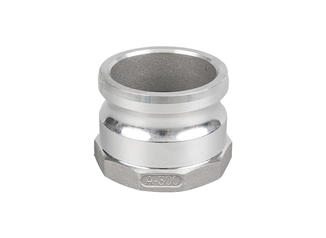
Outside sanitary processing, tri-clamp is usually overkill. For water, air, oil, and general chemical transfer, a camlock coupling connects faster, costs less, and is easier to replace. A stainless steel camlock type A coupling is a common choice for non-hygienic quick-connect suction and discharge lines.
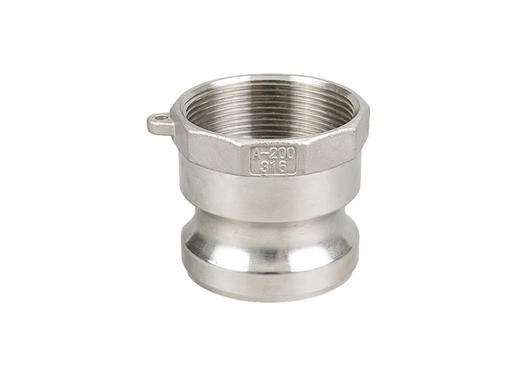 Wholesale Stainless steel type A camlock coupling Suppliers, Factory - Ningbo ChNingbo Chili Hardware Co., Ltd is China wholesale Stainless steel type A camlock coupling Suppliers and factory,Standard: Our camlock cou...View Product →
Engineers comparing joining methods for stainless steel tubing systems can also review our overview of different types of connections for stainless steel hoses to see how the options fit together.
Cleaning, Sterilization, and Maintenance of Tri-Clamp Assemblies
Tri-clamp became the default in food and pharmaceutical plants partly because of CIP (clean-in-place) and SIP (sterilize-in-place) processes. In CIP, the assembled line is flushed in place with hot water, caustic, acid, and sometimes steam. In SIP, steam at 121°C or higher passes through the line to destroy microorganisms.
The smooth ferrule bore and the contained gasket ensure that cleaning solutions reach every surface in contact with the product. There are no threads, crevices, or gasketed pockets where residue can hide. That direct exposure is the core reason regulators and industry guidelines accept tri-clamp for hygienic duty.
Follow this maintenance routine to keep your connections reliable:
- Replace gaskets at the first sign of cracking, hardening, permanent set, or sticky residue.
- Inspect ferrule faces for weld splatter, scratches, and pitting during every shutdown.
- Re-tighten clamps after the first thermal cycle; gaskets settle and bolts lose preload.
- Avoid overtightening, which over-compresses the gasket and shortens its life.
- Store spare gaskets in a cool, dark place away from ozone and UV.
Installation Steps and Best Practices
Correct installation is a matter of weld quality, gasket alignment, and even clamping. The following steps apply to both new lines and maintenance rebuilds.
- Weld the ferrules to the tubing with clean TIG or orbital welding. On the product side, the weld should be smooth, fully penetrated, and free of pores.
- Remove weld discoloration completely. Any heat tint in the product-contact area increases corrosion risk.
- Set the gasket between the two ferrule faces and confirm it is centered. A misplaced gasket will leak quickly.
- Open the clamp and place it around the ferrules until the internal channel engages both lips.
- Tighten the bolt or wing nut evenly until the segments close without forcing. The ferrule faces should pull into the gasket at the same rate around the circumference.
- Support the pipe on both sides of large-diameter joints before final tightening, so the weight of the line does not misalign the ferrules.
On high-pressure or high-temperature lines, use a double-bolt clamp and check the clamp manufacturer's torque recommendation if one is published.
Applications by Industry
Tri-clamp fittings appear wherever a process line must be hygienic, disassembled quickly, or cleaned in place. The size range in the table below is a practical guide, not a strict rule.
| Industry | Typical Applications | Common Sizes |
|---|---|---|
| Food and Beverage | Dairy, beer, soft drinks, sauces, edible oils | 1 to 4 inch |
| Pharmaceutical | API synthesis, buffer preparation, WFI loops | 1/2 to 2 inch |
| Biotech | Fermentation, cell culture, media handling | 1/2 to 3 inch |
| Cosmetics | Creams, lotions, shampoo, toothpaste | 1 to 2 inch |
| Water Treatment | High-purity water, CIP skids, filtration banks | 1 to 6 inch |
| Semiconductor | Ultrapure water, chemical delivery manifolds | 1/2 to 2 inch |
Distilleries, wineries, ice cream plants, and edible-oil facilities use the same hardware. The common thread is product safety: the connection prevents contamination, cleans without disassembly, and can be inspected quickly.
Purchasing Checklist: What to Specify
Because tri-clamp and tri-clover products are standardized, the buying risk is not the name. It is the small details. Use this checklist when preparing an RFQ or purchase order.
- Connection standard: ISO 2852, DIN 32676, or the customer-specific geometry used in your plant.
- Nominal size from the tube OD, never from the clamp outer width.
- Ferrule material: 304 stainless steel versus 316L stainless steel.
- Gasket material matched to product, temperature, and CIP chemicals.
- Clamp style: single-bolt standard, double-bolt high-pressure, or wing nut.
- Surface finish: state the Ra value for product-contact surfaces.
- Spare gaskets and clamps in the same order to avoid later mismatches.
- Supplier qualification: buy from a manufacturer that controls material, machining, and finishing.
A single source for ferrules, gaskets, and clamps keeps dimensional tolerances consistent across the whole system. This matters most when expanding an existing plant, where new components must seal against older hardware made to the same standard.
Frequently Asked Questions
Are tri-clamp and tri-clover the same fitting?
Yes. Tri-Clover is the historical trademark of the original manufacturer, and tri-clamp is the generic term for the same three-segment clamp design. Ferrules, gaskets, and clamps are interchangeable between the two names.
How do I identify the right tri-clamp size?
Measure the outer diameter of the tubing that fits inside the ferrule. The nominal size equals that tube OD rating in inches. Do not measure the clamp ring or the ferrule lip, since both are wider than the nominal size.
What pressure ratings are typical for tri-clamp fittings?
Ratings depend on tube size, wall thickness, gasket choice, and clamp type. For standard single-bolt clamps at ambient temperature, commonly published ratings range from roughly 100 psi on large 4 to 6 inch lines to about 250 psi on small 1 inch lines. Double-bolt high-pressure clamps extend the range upward. Always verify against the manufacturer's pressure-temperature table.
Can a tri-clamp fitting handle steam sterilization?
The stainless steel ferrules can, but the gasket sets the temperature limit. EPDM is suitable for steam service up to about 150°C, and PTFE or special high-temperature gaskets are used where more is required. Match the gasket to the SIP cycle.
How often should the gasket be replaced?
Inspect gaskets at every scheduled maintenance shutdown. Replace them if they show compression set, cracks, or leaks. Many plants assign a fixed interval, such as every 6 to 12 months, based on the frequency of CIP cycles and thermal loading.
Are components from different manufacturers interchangeable?
When all parts are made to ISO 2852 dimensions, ferrules, gaskets, and clamps from different brands will generally fit and seal. The practical risk is differences in gasket hardness and finish quality. Ordering the full assembly from one source reduces that risk.
Final Thoughts
The tri-clamp vs tri-clover question has a clear answer: they are the same hygienic connection system under two different names. The real engineering work begins after that, with the right size, material, surface finish, gasket, and clamp type for the process.
Start by measuring your existing tubing OD, confirm the standard used in your plant, and select a gasket that matches your cleaning agents and operating temperature. When the hardware comes from a manufacturer with in-house production and a broad coupling portfolio, such as Ningbo Chili Metal Products, the full set of ferrules, clamps, and alternative industrial fittings can be coordinated from one source.
Whether the drawing calls it tri-clamp, tri-clover, or TC, the fitting at the end of the pipe behaves the same. Specify the geometry like an engineer, buy from a supplier that can prove material quality, and the rest is routine.